
If you are building a hardware product, you have probably heard the terms EVT, DVT, and PVT thrown around in meetings, timelines, and manufacturer emails. But what do these acronyms actually mean, and why should every hardware founder understand them before committing to a production schedule?
EVT DVT PVT product development stages are the three critical validation gates that transform your prototype into a manufacturable, market-ready product. Skipping or rushing through any of them is one of the most expensive mistakes a hardware startup can make. According to industry data, approximately 90% of hardware startups fail, and a significant portion of those failures trace back to inadequate validation during development.
This guide breaks down each stage — what happens, what deliverables you should expect, how long each takes, and how to avoid the pitfalls that derail products between the prototype bench and the factory floor.
What Are EVT, DVT, and PVT in Product Development?
Before diving into the details, let us define the three validation stages in the hardware product development process:
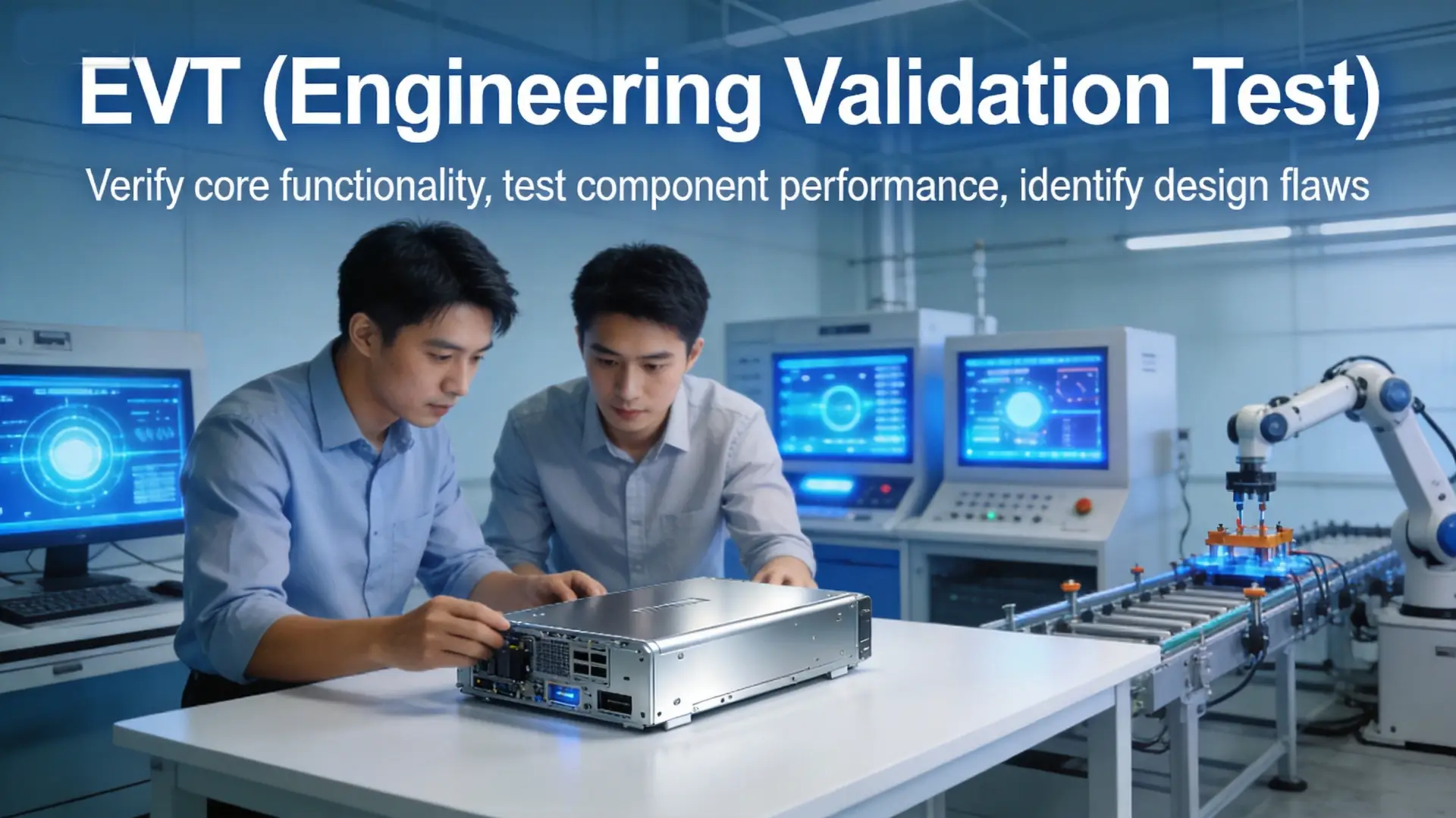
- EVT (Engineering Validation Test): The first build using production-intent tooling. The goal is to verify that the engineering design works as intended and to identify any functional issues before committing to full tooling.
- DVT (Design Validation Test): A refinement phase that validates the product design against all specifications — mechanical, electrical, environmental, and regulatory. This is where the design gets “locked.”
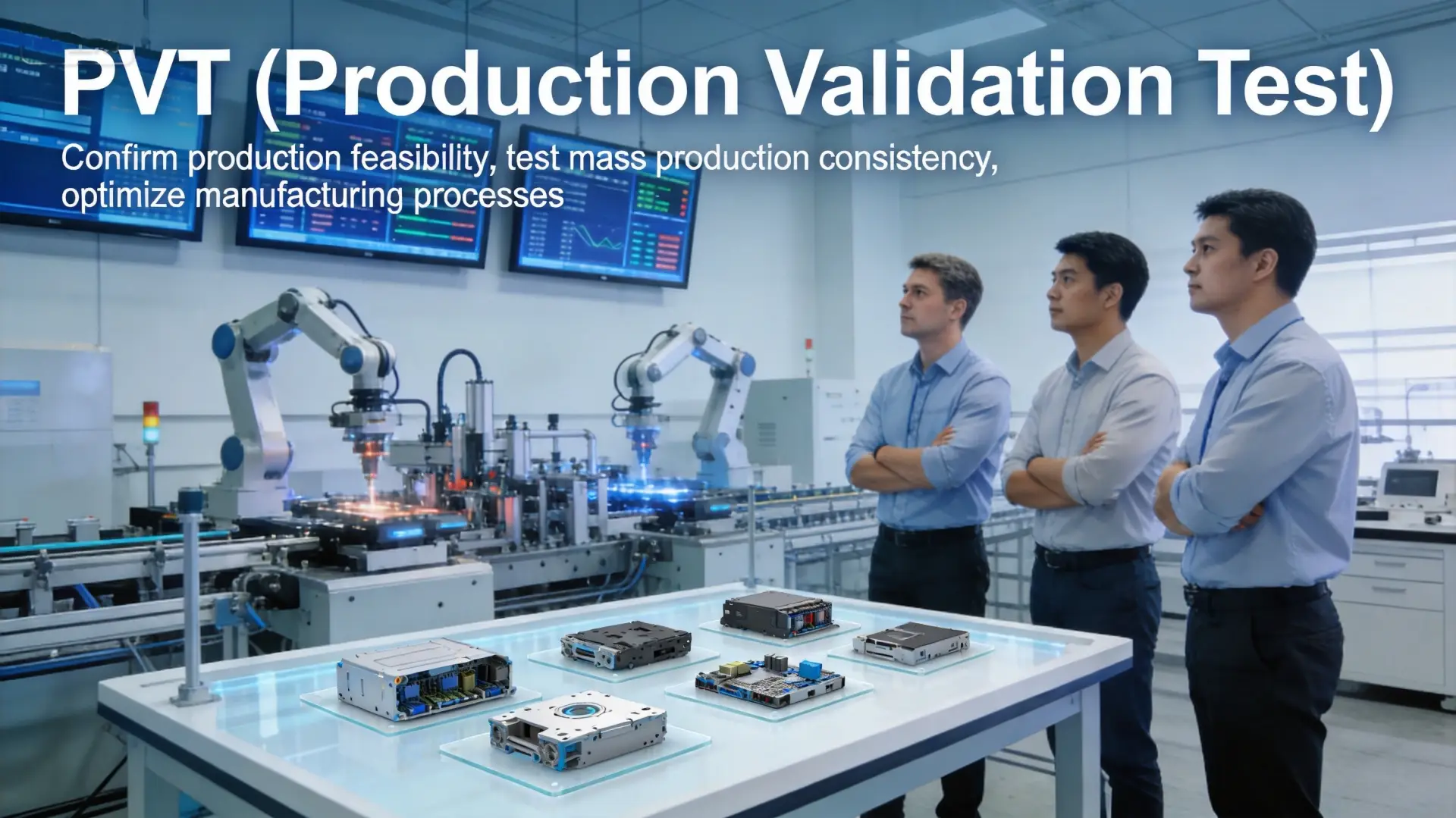
- PVT (Production Validation Test): The final validation gate before mass production. PVT confirms that the manufacturing process can consistently produce units that meet all quality standards at scale.
These stages sit within the broader NPI process (New Product Introduction), which spans from proof of concept all the way to mass production. Understanding where EVT, DVT, and PVT fit in that timeline is essential for budgeting and planning.
Stage 1: EVT (Engineering Validation Test)
Purpose of EVT
The Engineering Validation Test phase exists to answer one fundamental question: Does our design actually work when built with production-grade components and processes?
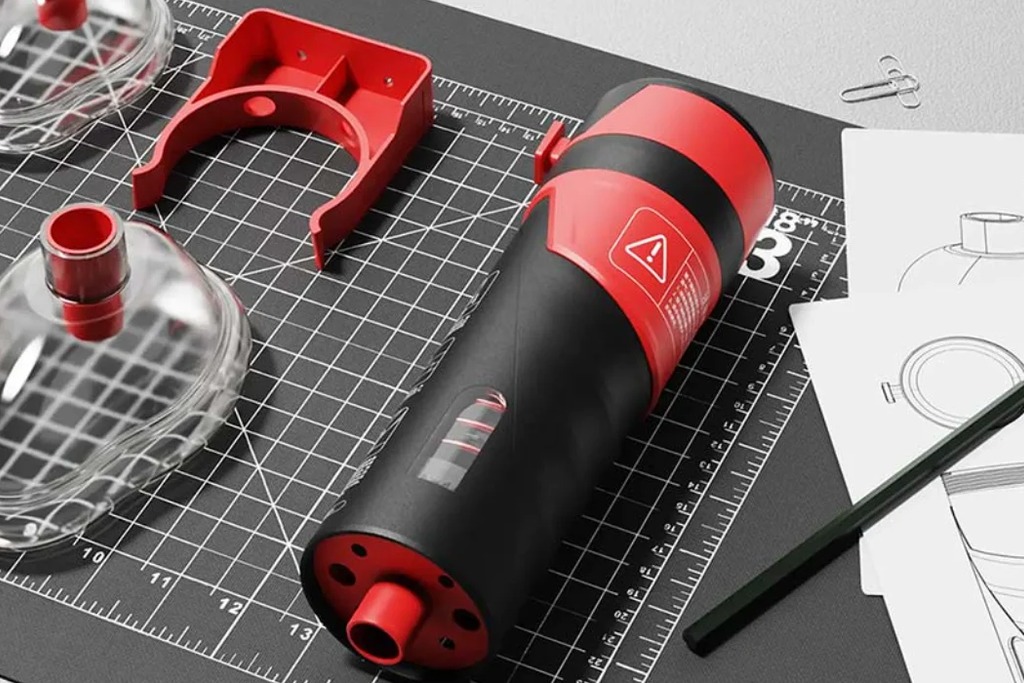
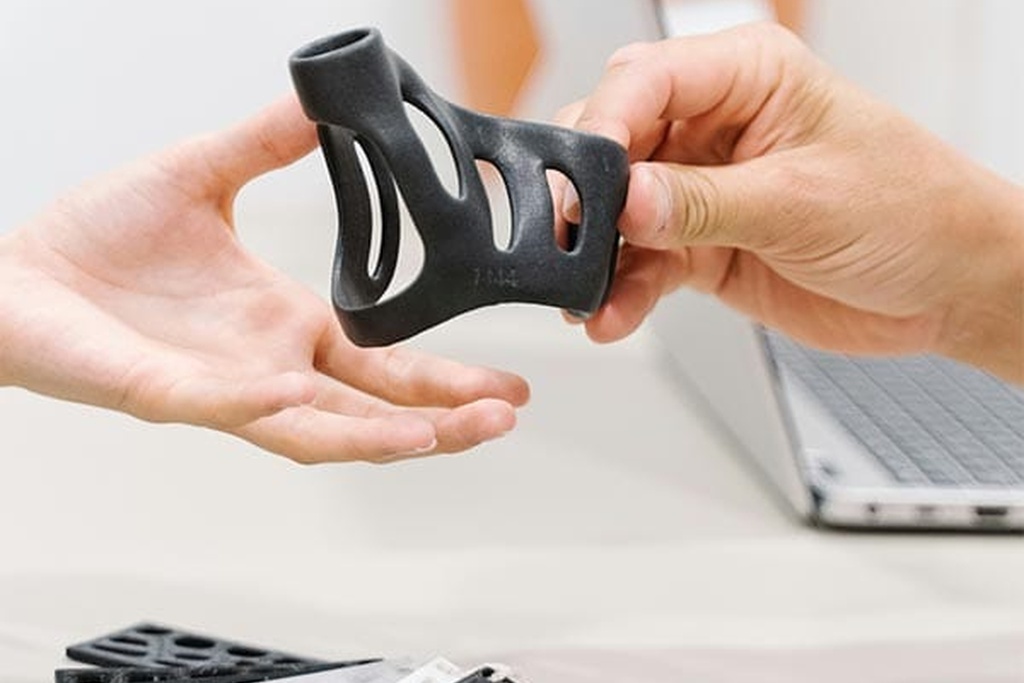
Unlike your earlier proof-of-concept prototypes — which may have used development boards, hand-soldered connections, and 3D-printed enclosures — EVT units are built using the actual manufacturing processes and materials planned for production. This is the first reality check.
What Happens During EVT
A typical EVT build involves:
- PCBA fabrication: First articles from the production PCB layout, assembled on real SMT lines
- Tooling soft molds or rapid tooling: For plastic enclosure parts, using aluminum molds or high-fidelity 3D printing to simulate production surfaces
- Functional testing: Does the product boot up? Does the firmware run? Do all sensors, radios, and interfaces perform as designed?
- Thermal analysis: Early thermal testing to identify hot spots and cooling issues
- Dimensional checks: Verify that mechanical parts fit together correctly and that tolerances are achievable
EVT Deliverables
| Deliverable | Description |
|---|---|
| EVT Build Report | Documented results of all functional tests |
| Bug List (Bugs 1-20) | Prioritized list of engineering issues found |
| BOM Review | Initial bill of materials with cost estimates |
| DFM Feedback | Manufacturing partner’s first design-for-manufacturing review |
| Test Plan v1 | Preliminary test plan for the DVT phase |
Typical EVT Timeline and Quantity
- Units built: 10-50 pieces
- Duration: 4-8 weeks
- Iterations: Often requires 1-2 re-spins to fix critical bugs
Common EVT Pitfalls
Many hardware founders make the same mistakes during EVT:
Underestimating the scope. EVT is not a “final check.” It is the first time your design meets production reality. Expect to find issues — that is the point.
Skipping DFM review. Sending EVT designs to the factory without a prior design for manufacturing review means you will discover expensive problems at the worst possible time.
Over-specifying tolerances. Tightening every dimension “to be safe” drives up cost and lead time without improving quality. Specify tight tolerances only where function requires it.
According to the American Society for Quality (ASQ), catching a defect during EVT costs roughly 10x less than catching the same defect during mass production. This multiplier grows exponentially as you move through the development cycle.

Stage 2: DVT (Design Validation Test)
Purpose of DVT
Design Validation Test is where your product design gets locked. The goal is to confirm that the product meets all design specifications — not just that it works, but that it works reliably under the conditions it will face in the real world.
If EVT asks “Does it work?”, DVT asks “Does it work everywhere, for everyone, under all expected conditions?”
What Happens During DVT
DVT is significantly more comprehensive than EVT:
- Full production tooling: Injection molds are now cut in hardened steel (T0/T1 tooling). The parts coming out of these molds represent what the final product will look like.
- Complete PCBA with production firmware: All components are the final, production-sourced parts. Firmware is the release-candidate version.
- Reliability testing: Drop tests, vibration tests, temperature cycling, humidity exposure, salt spray, and UV exposure testing per your product’s target standards.
- Regulatory pre-compliance testing: EMC pre-scans, RF testing, and safety pre-assessments to identify issues before formal certification lab visits.
- Packaging validation: Testing the product with its final packaging through simulated shipping (ISTA protocols).
- Usability testing: Real users interact with the production-intent product to identify UX issues.
DVT Deliverables
| Deliverable | Description |
|---|---|
| DVT Test Report | Comprehensive results of all reliability and performance tests |
| Design Freeze Documentation | Final CAD files, Gerbers, firmware release candidate |
| Certification Pre-Compliance Report | EMC, RF, and safety pre-test results |
| Updated BOM | Finalized bill of materials with locked pricing |
| Packaging Test Report | ISTA shipping test results and packaging design approval |
| Cosmetic Standard | Approved color, material, and finish (CMF) samples |
Typical DVT Timeline and Quantity
- Units built: 50-200 pieces
- Duration: 6-12 weeks
- Iterations: May require 1-2 tooling revisions (T1, T2)
Critical DVT Decision Points
DVT is where the most consequential design decisions get finalized. Before exiting DVT, you must have clear answers to:
- Are all critical dimensions within tolerance? If not, can the mold be modified, or does the design need to change?
- Does the product pass all reliability targets? A failure in drop testing or thermal cycling at DVT stage means redesign — not a shortcut.
- Is the BOM cost within target? If component costs have crept above your margin threshold, DVT is the last practical stage to make changes.
- Are certification tests on track? CE FCC certification timelines should be mapped and lab slots booked before DVT closes.
Stage 3: PVT (Production Validation Test)
Purpose of PVT
Production Validation Test is the final gate before mass production. PVT answers: Can the factory consistently produce this product at the required quality level, at the required rate, at the required cost?
This is not about the design anymore — the design should be frozen. PVT is about the process.
What Happens During PVT
PVT runs the production line as if it were a real mass production order:
- Full production run: Units are assembled using the actual production line, tools, fixtures, and operators who will build your product at scale.
- Line balancing and cycle time validation: Confirming that the assembly process can hit the target units-per-hour rate.
- Yield rate measurement: Tracking the percentage of units that pass all tests on the first attempt. Target yield should exceed 95% before approving mass production.
- Quality control process validation: Incoming inspection, in-process QC, and final QA procedures are all tested and documented.
- Packaging and shipping validation: Final packaging line run, including labeling, barcoding, and carton sealing.
- AQL sampling: Statistical quality sampling per ISO 2859-1 standards to confirm batch quality.
PVT Deliverables
| Deliverable | Description |
|---|---|
| PVT Run Report | Complete production run data including yield rates and cycle times |
| Quality Control Plan | Approved incoming, in-process, and final inspection procedures |
| Assembly Work Instructions | Documented, step-by-step assembly procedures for the production line |
| Final AQL Report | Statistical quality results from the PVT batch |
| Mass Production Approval | Formal sign-off from engineering, quality, and manufacturing teams |
| Updated Cost Model | Final unit cost based on actual PVT production data |
Typical PVT Timeline and Quantity
- Units built: 100-500 pieces (sometimes called “pilot run” or “trial production”)
- Duration: 2-6 weeks
- Iterations: Usually 1 pass; additional runs if yield is below target
The PVT Go/No-Go Decision
The PVT review meeting is where the final decision to proceed with mass production is made. Key metrics that must pass:
| Metric | Target |
|---|---|
| First-pass yield | > 95% |
| Cycle time | Within 10% of target |
| Cosmetic defect rate | < 2% |
| Functional test pass rate | > 99% |
| Packaging integrity | 100% pass ISTA protocol |
If any metric falls short, the correct action is to identify the root cause, implement a fix, and run another PVT batch. Proceeding to mass production with unresolved PVT issues is the single highest-risk decision in hardware development.
EVT DVT PVT: Comparison Overview
To help you visualize how these three stages relate, here is a side-by-side comparison:
| Aspect | EVT | DVT | PVT |
|---|---|---|---|
| Primary Question | Does the design work? | Does it meet all specs reliably? | Can we manufacture it consistently? |
| Tooling | Soft tooling / rapid prototyping | Hard production tooling (T0-T2) | Full production tooling |
| PCBA | First production PCB, may have rework | Final production PCBA, no rework | Full production line assembly |
| Firmware | Development version | Release candidate | Final release version |
| Units | 10-50 | 50-200 | 100-500 |
| Duration | 4-8 weeks | 6-12 weeks | 2-6 weeks |
| Key Tests | Functional, thermal, fit | Reliability, pre-compliance, usability | Yield, cycle time, AQL |
| Design Changes | Expected and acceptable | Only critical fixes | Frozen — process changes only |
How EVT DVT PVT Fits Into the Full Product Development Timeline
Understanding these validation stages in isolation is useful, but they only make sense as part of the complete development journey. Here is how they fit:
If you are building a hardware product, you have probably heard the terms EVT, DVT, and PVT thrown around in meetings, timelines, and manufacturer emails. But what do these acronyms actually mean, and why should every hardware founder understand them before committing to a production schedule?
EVT DVT PVT product development stages are the three critical validation gates that transform your prototype into a manufacturable, market-ready product. Skipping or rushing through any of them is one of the most expensive mistakes a hardware startup can make. According to industry data, approximately 90% of hardware startups fail, and a significant portion of those failures trace back to inadequate validation during development.
This guide breaks down each stage — what happens, what deliverables you should expect, how long each takes, and how to avoid the pitfalls that derail products between the prototype bench and the factory floor.
What Are EVT, DVT, and PVT in Product Development?
Before diving into the details, let us define the three validation stages in the hardware product development process:
- EVT (Engineering Validation Test): The first build using production-intent tooling. The goal is to verify that the engineering design works as intended and to identify any functional issues before committing to full tooling.
- DVT (Design Validation Test): A refinement phase that validates the product design against all specifications — mechanical, electrical, environmental, and regulatory. This is where the design gets “locked.”
- PVT (Production Validation Test): The final validation gate before mass production. PVT confirms that the manufacturing process can consistently produce units that meet all quality standards at scale.
These stages sit within the broader NPI process (New Product Introduction), which spans from proof of concept all the way to mass production. Understanding where EVT, DVT, and PVT fit in that timeline is essential for budgeting and planning.
Stage 1: EVT (Engineering Validation Test)
Purpose of EVT
The Engineering Validation Test phase exists to answer one fundamental question: Does our design actually work when built with production-grade components and processes?
Unlike your earlier proof-of-concept prototypes — which may have used development boards, hand-soldered connections, and 3D-printed enclosures — EVT units are built using the actual manufacturing processes and materials planned for production. This is the first reality check.
What Happens During EVT
A typical EVT build involves:
- PCBA fabrication: First articles from the production PCB layout, assembled on real SMT lines
- Tooling soft molds or rapid tooling: For plastic enclosure parts, using aluminum molds or high-fidelity 3D printing to simulate production surfaces
- Functional testing: Does the product boot up? Does the firmware run? Do all sensors, radios, and interfaces perform as designed?
- Thermal analysis: Early thermal testing to identify hot spots and cooling issues
- Dimensional checks: Verify that mechanical parts fit together correctly and that tolerances are achievable
EVT Deliverables
| Deliverable | Description |
|---|---|
| EVT Build Report | Documented results of all functional tests |
| Bug List (Bugs 1-20) | Prioritized list of engineering issues found |
| BOM Review | Initial bill of materials with cost estimates |
| DFM Feedback | Manufacturing partner’s first design-for-manufacturing review |
| Test Plan v1 | Preliminary test plan for the DVT phase |
Typical EVT Timeline and Quantity
- Units built: 10-50 pieces
- Duration: 4-8 weeks
- Iterations: Often requires 1-2 re-spins to fix critical bugs
Common EVT Pitfalls
Many hardware founders make the same mistakes during EVT:
Underestimating the scope. EVT is not a “final check.” It is the first time your design meets production reality. Expect to find issues — that is the point.
Skipping DFM review. Sending EVT designs to the factory without a prior design for manufacturing review means you will discover expensive problems at the worst possible time.
Over-specifying tolerances. Tightening every dimension “to be safe” drives up cost and lead time without improving quality. Specify tight tolerances only where function requires it.
According to the American Society for Quality (ASQ), catching a defect during EVT costs roughly 10x less than catching the same defect during mass production. This multiplier grows exponentially as you move through the development cycle.
Stage 2: DVT (Design Validation Test)
Purpose of DVT
Design Validation Test is where your product design gets locked. The goal is to confirm that the product meets all design specifications — not just that it works, but that it works reliably under the conditions it will face in the real world.
If EVT asks “Does it work?”, DVT asks “Does it work everywhere, for everyone, under all expected conditions?”
What Happens During DVT
DVT is significantly more comprehensive than EVT:
- Full production tooling: Injection molds are now cut in hardened steel (T0/T1 tooling). The parts coming out of these molds represent what the final product will look like.
- Complete PCBA with production firmware: All components are the final, production-sourced parts. Firmware is the release-candidate version.
- Reliability testing: Drop tests, vibration tests, temperature cycling, humidity exposure, salt spray, and UV exposure testing per your product’s target standards.
- Regulatory pre-compliance testing: EMC pre-scans, RF testing, and safety pre-assessments to identify issues before formal certification lab visits.
- Packaging validation: Testing the product with its final packaging through simulated shipping (ISTA protocols).
- Usability testing: Real users interact with the production-intent product to identify UX issues.
DVT Deliverables
| Deliverable | Description |
|---|---|
| DVT Test Report | Comprehensive results of all reliability and performance tests |
| Design Freeze Documentation | Final CAD files, Gerbers, firmware release candidate |
| Certification Pre-Compliance Report | EMC, RF, and safety pre-test results |
| Updated BOM | Finalized bill of materials with locked pricing |
| Packaging Test Report | ISTA shipping test results and packaging design approval |
| Cosmetic Standard | Approved color, material, and finish (CMF) samples |
Typical DVT Timeline and Quantity
- Units built: 50-200 pieces
- Duration: 6-12 weeks
- Iterations: May require 1-2 tooling revisions (T1, T2)
Critical DVT Decision Points
DVT is where the most consequential design decisions get finalized. Before exiting DVT, you must have clear answers to:
- Are all critical dimensions within tolerance? If not, can the mold be modified, or does the design need to change?
- Does the product pass all reliability targets? A failure in drop testing or thermal cycling at DVT stage means redesign — not a shortcut.
- Is the BOM cost within target? If component costs have crept above your margin threshold, DVT is the last practical stage to make changes.
- Are certification tests on track? CE FCC certification timelines should be mapped and lab slots booked before DVT closes.
Stage 3: PVT (Production Validation Test)
Purpose of PVT
Production Validation Test is the final gate before mass production. PVT answers: Can the factory consistently produce this product at the required quality level, at the required rate, at the required cost?
This is not about the design anymore — the design should be frozen. PVT is about the process.
What Happens During PVT
PVT runs the production line as if it were a real mass production order:
- Full production run: Units are assembled using the actual production line, tools, fixtures, and operators who will build your product at scale.
- Line balancing and cycle time validation: Confirming that the assembly process can hit the target units-per-hour rate.
- Yield rate measurement: Tracking the percentage of units that pass all tests on the first attempt. Target yield should exceed 95% before approving mass production.
- Quality control process validation: Incoming inspection, in-process QC, and final QA procedures are all tested and documented.
- Packaging and shipping validation: Final packaging line run, including labeling, barcoding, and carton sealing.
- AQL sampling: Statistical quality sampling per ISO 2859-1 standards to confirm batch quality.
PVT Deliverables
| Deliverable | Description |
|---|---|
| PVT Run Report | Complete production run data including yield rates and cycle times |
| Quality Control Plan | Approved incoming, in-process, and final inspection procedures |
| Assembly Work Instructions | Documented, step-by-step assembly procedures for the production line |
| Final AQL Report | Statistical quality results from the PVT batch |
| Mass Production Approval | Formal sign-off from engineering, quality, and manufacturing teams |
| Updated Cost Model | Final unit cost based on actual PVT production data |
Typical PVT Timeline and Quantity
- Units built: 100-500 pieces (sometimes called “pilot run” or “trial production”)
- Duration: 2-6 weeks
- Iterations: Usually 1 pass; additional runs if yield is below target
The PVT Go/No-Go Decision
The PVT review meeting is where the final decision to proceed with mass production is made. Key metrics that must pass:
| Metric | Target |
|---|---|
| First-pass yield | > 95% |
| Cycle time | Within 10% of target |
| Cosmetic defect rate | < 2% |
| Functional test pass rate | > 99% |
| Packaging integrity | 100% pass ISTA protocol |
If any metric falls short, the correct action is to identify the root cause, implement a fix, and run another PVT batch. Proceeding to mass production with unresolved PVT issues is the single highest-risk decision in hardware development.
EVT DVT PVT: Comparison Overview
To help you visualize how these three stages relate, here is a side-by-side comparison:
| Aspect | EVT | DVT | PVT |
|---|---|---|---|
| Primary Question | Does the design work? | Does it meet all specs reliably? | Can we manufacture it consistently? |
| Tooling | Soft tooling / rapid prototyping | Hard production tooling (T0-T2) | Full production tooling |
| PCBA | First production PCB, may have rework | Final production PCBA, no rework | Full production line assembly |
| Firmware | Development version | Release candidate | Final release version |
| Units | 10-50 | 50-200 | 100-500 |
| Duration | 4-8 weeks | 6-12 weeks | 2-6 weeks |
| Key Tests | Functional, thermal, fit | Reliability, pre-compliance, usability | Yield, cycle time, AQL |
| Design Changes | Expected and acceptable | Only critical fixes | Frozen — process changes only |
How EVT DVT PVT Fits Into the Full Product Development Timeline
Understanding these validation stages in isolation is useful, but they only make sense as part of the complete development journey. Here is how they fit:
The entire EVT-DVT-PVT sequence typically spans 16-30 weeks for a moderately complex hardware product. Adding the concept-to-POC phase and the post-PVT mass production ramp, a complete product development cycle from idea to first shipment usually takes 6-12 months.
Factors that extend this timeline include:
- Complex mechanical designs requiring multiple tooling iterations
- Regulatory certification requirements (medical, automotive, aerospace)
- Supply chain constraints on key components
- Firmware complexity and integration challenges
- Changes in scope or feature additions mid-development
Best Practices for Managing EVT DVT PVT Stages
1. Plan Validation Before You Build
Do not wait until EVT to think about DVT. Define your test plans, acceptance criteria, and exit gates before the first EVT unit is built. This prevents scope creep and keeps each phase focused.
2. Involve Your Manufacturing Partner Early
The most successful hardware programs engage their manufacturing partner during the concept phase, not after EVT. Early DFM input prevents the most expensive design changes. Learn more about why this matters in our guide on prototype manufacturing in China.
3. Build in Buffer Time
Every experienced hardware founder knows that development timelines are optimistic by nature. Add 20-30% buffer to each validation stage. A “12-week” EVT phase should be budgeted as 15-16 weeks in your project plan.
4. Document Everything
Detailed build reports, test results, and issue trackers are not bureaucratic overhead — they are your institutional memory. When a problem surfaces at PVT that originated in EVT, documentation is what lets you trace the root cause quickly.
5. Define Clear Exit Criteria
Each validation stage should have explicit, measurable exit criteria agreed upon before the phase begins. “Looks good” is not an exit criterion. “95% first-pass yield on functional test” is.
Cost Considerations: Budgeting for Validation Stages
One of the most common budgeting errors for hardware startups is underestimating the cost of validation. Here is a rough framework:
| Stage | Typical Cost Range (Consumer Product) |
|---|---|
| EVT | $15,000 – $50,000 |
| DVT | $30,000 – $100,000 |
| PVT | $20,000 – $60,000 |
| Total Validation | $65,000 – $210,000 |
These ranges vary significantly based on product complexity, unit cost, tooling requirements, and testing scope. Medical devices and automotive products will be substantially higher. What is consistent across all categories is that validation typically represents 20-40% of total development cost before mass production.
“The cost of fixing a defect increases by 10x at each stage of product development. Finding a bug at EVT costs $100. That same bug found at mass production costs $10,000 — or more, if it reaches customers.” — Industry rule of thumb, supported by ASQ defect cost data
When to Consider a Professional Development Partner
Managing EVT, DVT, and PVT stages effectively requires deep expertise in hardware engineering, manufacturing processes, quality systems, and supply chain management. For first-time hardware founders, this combination of skills is rarely available in-house.
A professional product development partner with experience across all three validation stages can:
- Accelerate timelines by anticipating issues before they surface
- Reduce costs by optimizing designs for manufacturing from day one
- De-risk certification by building compliance into the design, not bolting it on at the end
- Provide continuity across the entire EVT-DVT-PVT-to-mass-production journey
Considering professional support for your hardware product? OPD Design has guided 100+ hardware products through EVT, DVT, and PVT to successful mass production. Explore our product development services to see how we can help you navigate each validation stage with confidence.
Frequently Asked Questions
What is the difference between EVT and DVT?
EVT (Engineering Validation Test) focuses on verifying that the core engineering design works correctly when built with production-grade components. DVT (Design Validation Test) goes further, validating that the product meets all design specifications including reliability, regulatory compliance, cosmetic standards, and packaging requirements. EVT asks “Does it work?” while DVT asks “Does it work reliably under all conditions?”
How long does the full EVT DVT PVT process take?
The complete EVT, DVT, and PVT validation sequence typically takes 16-30 weeks for a standard consumer electronics product. More complex products — such as medical devices or products with challenging mechanical designs — may require 30-40 weeks or more. Always build in 20-30% buffer time for unexpected issues.
Can I skip EVT and go straight to DVT?
No. Skipping EVT is one of the most costly mistakes in hardware development. EVT catches fundamental engineering issues when they are relatively cheap to fix. Without EVT, those same issues surface during DVT or even mass production, where the cost of correction is 10-100x higher. EVT is an investment in risk reduction.
How many units should I build at each stage?
Typical build quantities are: EVT (10-50 units), DVT (50-200 units), and PVT (100-500 units). The exact quantity depends on your testing requirements — reliability testing alone may consume 20-50 units per test category. Plan your build quantities based on your test plan, not arbitrary numbers.
What happens if a stage fails?
Each validation stage should have predefined exit criteria. If those criteria are not met, the correct action is to identify the root cause, implement a fix, and re-run the relevant tests. Proceeding to the next stage with unresolved failures is the leading cause of mass production problems. Budget and schedule should always account for the possibility of re-spins.
How much does EVT DVT PVT cost?
Total validation costs typically range from $65,000 to $210,000 for consumer products, representing 20-40% of total development cost before mass production. Costs vary based on product complexity, tooling requirements, testing scope, and whether you are working with a contract manufacturer or an end-to-end development partner.
Conclusion
Understanding and properly executing EVT, DVT, and PVT validation stages is non-negotiable for any hardware founder serious about bringing a product to market. These three gates protect you from the most common and costly failure modes in hardware development: design flaws that surface after tooling, reliability issues that reach customers, and manufacturing processes that cannot achieve target yields.
The founders who succeed in hardware are not those who rush fastest through development — they are the ones who validate thoroughly at each stage, build realistic schedules, and partner with experienced teams who have navigated these waters before.
Ready to move your product through EVT, DVT, and PVT with confidence? OPD Design provides end-to-end product development support from concept to mass production, with deep expertise in every validation stage. Contact our team to discuss your project.
The entire EVT-DVT-PVT sequence typically spans 16-30 weeks for a moderately complex hardware product. Adding the concept-to-POC phase and the post-PVT mass production ramp, a complete product development cycle from idea to first shipment usually takes 6-12 months.
Factors that extend this timeline include:
- Complex mechanical designs requiring multiple tooling iterations
- Regulatory certification requirements (medical, automotive, aerospace)
- Supply chain constraints on key components
- Firmware complexity and integration challenges
- Changes in scope or feature additions mid-development
Best Practices for Managing EVT DVT PVT Stages
1. Plan Validation Before You Build
Do not wait until EVT to think about DVT. Define your test plans, acceptance criteria, and exit gates before the first EVT unit is built. This prevents scope creep and keeps each phase focused.
2. Involve Your Manufacturing Partner Early
The most successful hardware programs engage their manufacturing partner during the concept phase, not after EVT. Early DFM input prevents the most expensive design changes. Learn more about why this matters in our guide on prototype manufacturing in China.
3. Build in Buffer Time
Every experienced hardware founder knows that development timelines are optimistic by nature. Add 20-30% buffer to each validation stage. A “12-week” EVT phase should be budgeted as 15-16 weeks in your project plan.
4. Document Everything
Detailed build reports, test results, and issue trackers are not bureaucratic overhead — they are your institutional memory. When a problem surfaces at PVT that originated in EVT, documentation is what lets you trace the root cause quickly.
5. Define Clear Exit Criteria
Each validation stage should have explicit, measurable exit criteria agreed upon before the phase begins. “Looks good” is not an exit criterion. “95% first-pass yield on functional test” is.
Cost Considerations: Budgeting for Validation Stages
One of the most common budgeting errors for hardware startups is underestimating the cost of validation. Here is a rough framework:
| Stage | Typical Cost Range (Consumer Product) |
|---|---|
| EVT | $15,000 – $50,000 |
| DVT | $30,000 – $100,000 |
| PVT | $20,000 – $60,000 |
| Total Validation | $65,000 – $210,000 |
These ranges vary significantly based on product complexity, unit cost, tooling requirements, and testing scope. Medical devices and automotive products will be substantially higher. What is consistent across all categories is that validation typically represents 20-40% of total development cost before mass production.
“The cost of fixing a defect increases by 10x at each stage of product development. Finding a bug at EVT costs $100. That same bug found at mass production costs $10,000 — or more, if it reaches customers.” — Industry rule of thumb, supported by ASQ defect cost data
When to Consider a Professional Development Partner
Managing EVT, DVT, and PVT stages effectively requires deep expertise in hardware engineering, manufacturing processes, quality systems, and supply chain management. For first-time hardware founders, this combination of skills is rarely available in-house.
A professional product development partner with experience across all three validation stages can:
- Accelerate timelines by anticipating issues before they surface
- Reduce costs by optimizing designs for manufacturing from day one
- De-risk certification by building compliance into the design, not bolting it on at the end
- Provide continuity across the entire EVT-DVT-PVT-to-mass-production journey
Considering professional support for your hardware product? OPD Design has guided 100+ hardware products through EVT, DVT, and PVT to successful mass production. Explore our product development services to see how we can help you navigate each validation stage with confidence.
Frequently Asked Questions
What is the difference between EVT and DVT?
EVT (Engineering Validation Test) focuses on verifying that the core engineering design works correctly when built with production-grade components. DVT (Design Validation Test) goes further, validating that the product meets all design specifications including reliability, regulatory compliance, cosmetic standards, and packaging requirements. EVT asks “Does it work?” while DVT asks “Does it work reliably under all conditions?”
How long does the full EVT DVT PVT process take?
The complete EVT, DVT, and PVT validation sequence typically takes 16-30 weeks for a standard consumer electronics product. More complex products — such as medical devices or products with challenging mechanical designs — may require 30-40 weeks or more. Always build in 20-30% buffer time for unexpected issues.
Can I skip EVT and go straight to DVT?
No. Skipping EVT is one of the most costly mistakes in hardware development. EVT catches fundamental engineering issues when they are relatively cheap to fix. Without EVT, those same issues surface during DVT or even mass production, where the cost of correction is 10-100x higher. EVT is an investment in risk reduction.
How many units should I build at each stage?
Typical build quantities are: EVT (10-50 units), DVT (50-200 units), and PVT (100-500 units). The exact quantity depends on your testing requirements — reliability testing alone may consume 20-50 units per test category. Plan your build quantities based on your test plan, not arbitrary numbers.
What happens if a stage fails?
Each validation stage should have predefined exit criteria. If those criteria are not met, the correct action is to identify the root cause, implement a fix, and re-run the relevant tests. Proceeding to the next stage with unresolved failures is the leading cause of mass production problems. Budget and schedule should always account for the possibility of re-spins.
How much does EVT DVT PVT cost?
Total validation costs typically range from $65,000 to $210,000 for consumer products, representing 20-40% of total development cost before mass production. Costs vary based on product complexity, tooling requirements, testing scope, and whether you are working with a contract manufacturer or an end-to-end development partner.
Conclusion
Understanding and properly executing EVT, DVT, and PVT validation stages is non-negotiable for any hardware founder serious about bringing a product to market. These three gates protect you from the most common and costly failure modes in hardware development: design flaws that surface after tooling, reliability issues that reach customers, and manufacturing processes that cannot achieve target yields.
The founders who succeed in hardware are not those who rush fastest through development — they are the ones who validate thoroughly at each stage, build realistic schedules, and partner with experienced teams who have navigated these waters before.
Ready to move your product through EVT, DVT, and PVT with confidence? OPD Design provides end-to-end product development support from concept to mass production, with deep expertise in every validation stage. Contact our team to discuss your project.