
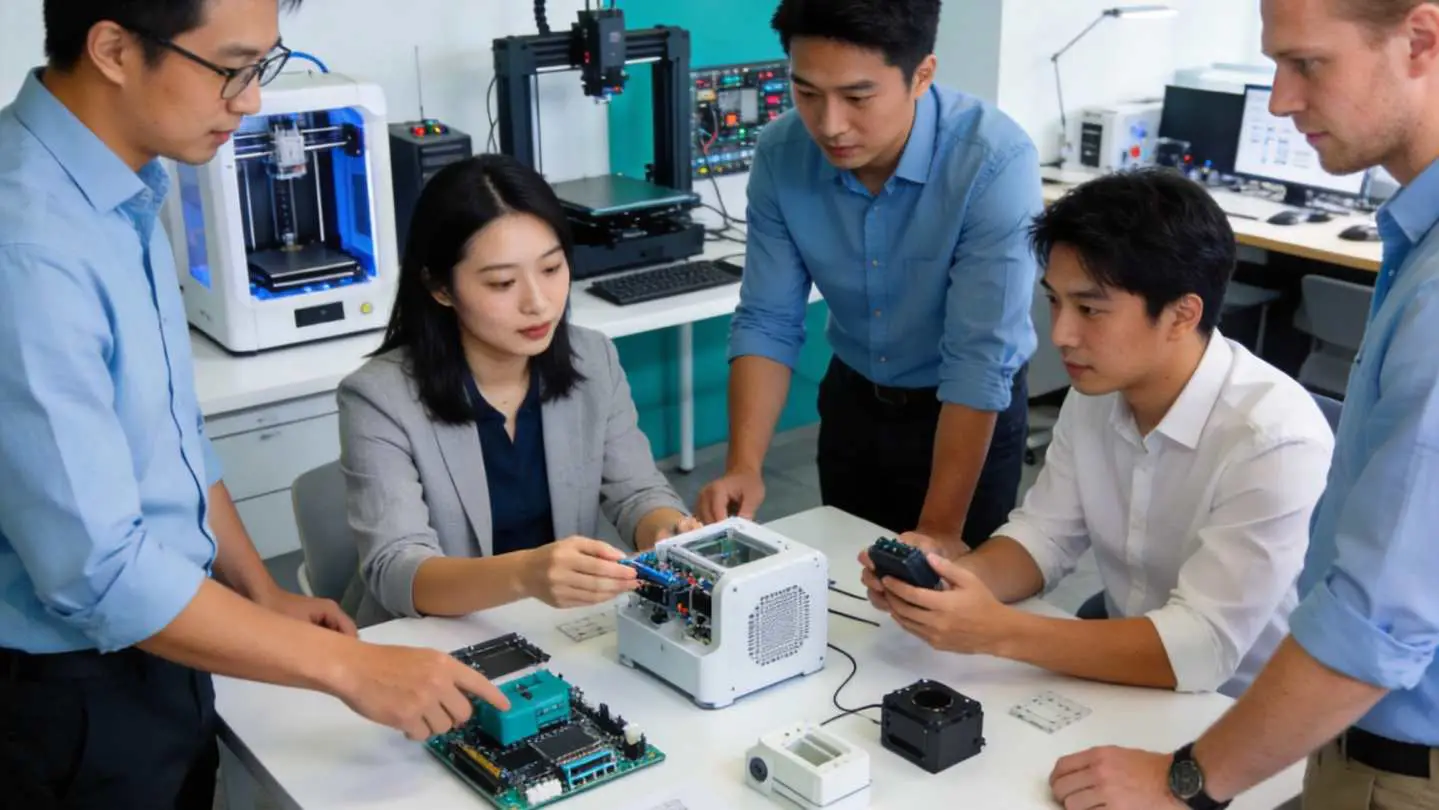
Introduction: Why Choosing the Right Partner Matters
You’ve seen the headlines: hardware startups achieving in months what used to take years. You’ve heard the success stories of founders who found the perfect manufacturing partner in Shenzhen and scaled from prototype to million-unit production. But you’ve also heard the horror stories—fried prototypes, vanishing suppliers, quality nightmares that bankrupted promising products.
The difference between those outcomes often comes down to one decision: choosing the right product design company in China.
For first-time hardware founders, the selection process can feel overwhelming. Do you work with a design firm or go directly to a factory? How do you verify capabilities you can’t evaluate in person? What questions reveal competence versus polished sales pitches?
This checklist exists because we at OPD Design have worked with hundreds of hardware startups over the years. We’ve seen what works, what fails, and what questions separate serious partners from expensive mistakes.
Whether you’re building your first IoT device or scaling your tenth consumer electronics product, this guide will help you evaluate product design companies in China with confidence.
Understanding Your Options: Types of Product Design Partners in China
Before evaluating specific companies, you need to understand what you’re actually choosing between. The Chinese product development landscape offers several distinct models:
Design Firms vs. Factories: The Fundamental Trade-off
| Type | Strengths | Weaknesses |
|---|---|---|
| Design Firms | Strong design methodology, better communication, western-friendly processes | May lack manufacturing expertise or direct factory relationships |
| Trading Companies | Wide supplier network, quick sourcing | Quality oversight varies, may mark up costs significantly |
| OEM/ODM Factories | Lowest unit costs, direct production control | Design capabilities limited, communication barriers common |
| Full-Service Partners | End-to-end capability, one accountability point | Pricing may be higher, vetting critical |
Our recommendation for most hardware startups: A full-service partner that combines industrial design, engineering, prototyping, and manufacturing oversight. This model reduces handoff risks where your perfect design gets lost in translation between disconnected vendors.
The “Factory First” Trap
Many first-time founders gravitate toward factories because they promise the lowest prices. This often backfires. A factory’s core competency is production, not design innovation. When you hand them a concept and ask them to “make it producible,” you’re asking them to perform outside their expertise—while you’re paying for their learning curve on your timeline.
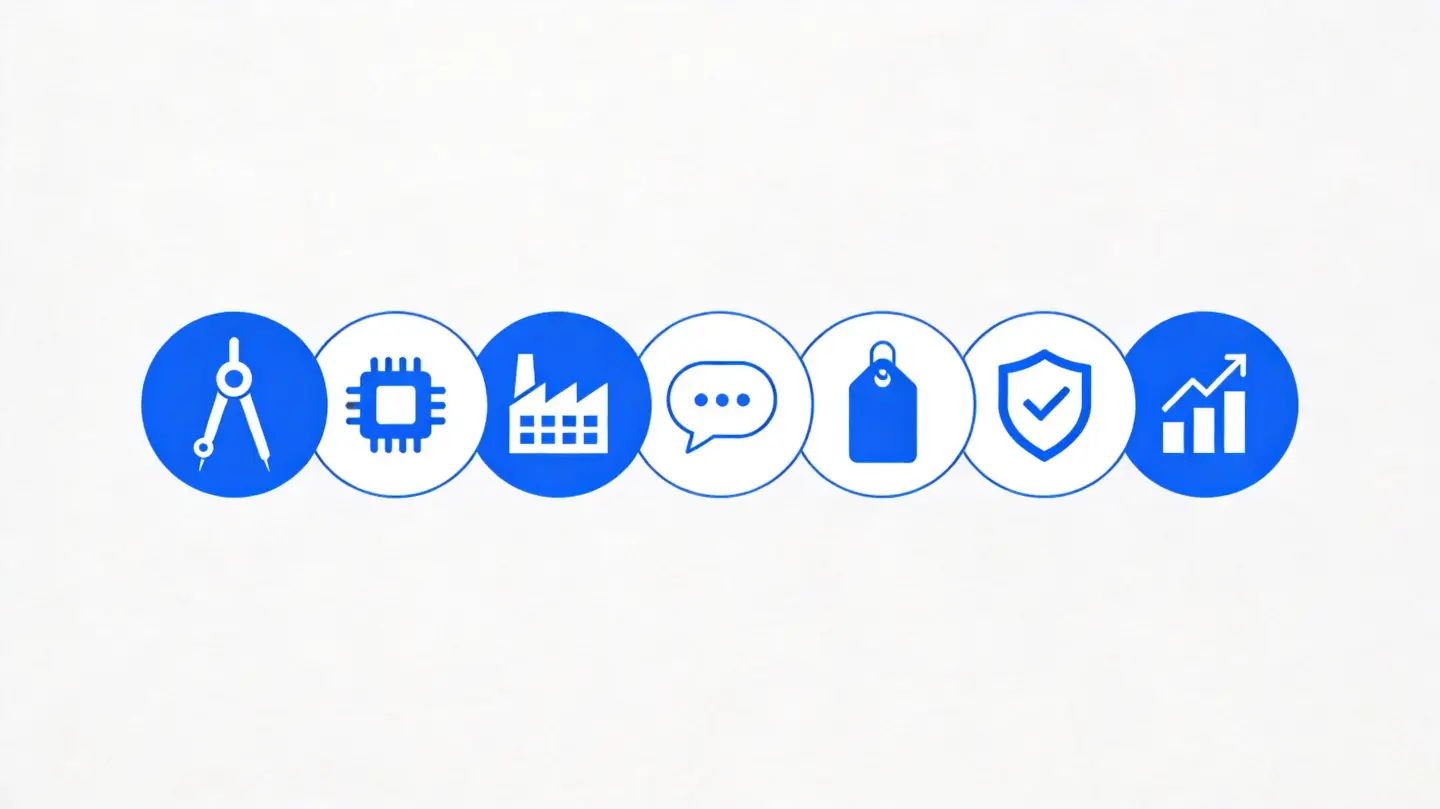
The 7-Category Evaluation Framework
Category 1: Design Capability Verification
What to Evaluate
Design capability is the hardest competency to verify remotely, yet it’s often what differentiates a product that sells from one that doesn’t.
Questions to ask:
- “Show me your design portfolio, specifically for products in my category.”A capable firm should have relevant experience. A portfolio filled with unrelated products suggests either limited experience or borrowed work.
- “What design methodology do you use?”Look for structured processes: user research, concept validation, iterative prototyping, design for manufacturing (DFM) reviews. Vague answers like “we just start designing” signal amateur operations.
- “Can you walk me through your industrial design process for a recent project?”Ask for a case study with timeline, challenges encountered, and how they were resolved. Detailed responses indicate real experience.
- “Do you have in-house industrial designers, or do you outsource?”In-house teams typically provide better design continuity and accountability. Outsourced work may be inconsistent.
Red flags:
- Portfolio images that look suspiciously like renders from Behance or Dribbble
- Designers who can’t explain the reasoning behind design decisions
- No mention of user research or validation methodology
- “We can do anything” responses to specific category questions
What OPD Design Does
At OPD Design, our industrial design team follows a structured discovery process before any sketching begins. We start with user research and competitive analysis, move through concept exploration with validated user testing, and only proceed to detailed design when we’ve validated the core concept. This prevents the common mistake of beautiful renders that don’t survive contact with manufacturing reality.
Category 2: Engineering and Technical Competence
What to Evaluate
Beautiful designs mean nothing if they can’t be engineered into producible products. Hardware engineering encompasses mechanical design, electronics/firmware, and the crucial bridge between them.
Questions to ask:
- “What’s your approach to Design for Manufacturing (DFM)?”DFM isn’t a checklist—it’s a mindset. Look for partners who discuss DFM from the earliest design stages, not as an afterthought.
- “Walk me through your EVT/DVT/PVT process.”If they don’t recognize these stages, they likely lack structured product development methodology. The NPI (New Product Introduction) framework separates professional engineering from hobbyist prototyping.
- “How do you handle thermal management, EMC/EMI, and regulatory compliance?”These are the technical challenges that kill hardware products. Partners should have systematic approaches to each.
- “What’s your failure rate at first production run?”Zero failures is a lie. Realistic answers (5-15%) with explanation of root causes and corrections show engineering maturity.
Red flags:
- No mention of DFM analysis
- “We’ve never had that problem” responses to common technical challenges
- Inability to explain regulatory pathways (CE, FCC, UL)
- Prototype delays without clear explanation
What OPD Design Does
Our engineering team includes mechanical engineers, electronics specialists, and firmware developers who work in parallel rather than sequentially. We run DFM analysis at every design stage, not just before tooling. Our prototype testing protocol catches 90% of issues before they become production problems.
Category 3: Manufacturing Network and Oversight
What to Evaluate
Even the best design fails without competent manufacturing. Your partner’s factory relationships matter enormously.
Questions to ask:
- “Do you own your own factory, or do you work with partner facilities?”Factory ownership can provide cost advantages but may limit flexibility. Partner networks offer options but require coordination.
- “Can I visit the production facility, either virtually or in person?”Professional partners welcome facility verification. Refusal to provide any factory access is a serious warning sign.
- “How do you handle quality control during production?”Look for systematic approaches: incoming inspection, in-process sampling, pre-shipment inspection, and documentation.
- “What’s your typical first-pass yield rate, and how do you handle defects?”First-pass yields below 80% suggest process issues. Ask about their defect handling protocol.
- “How do you manage language and communication barriers with factory workers?”This often determines whether your specs translate correctly to production.
Red flags:
- No factory information available for verification
- “We guarantee 100% quality” (impossible and unprofessional)
- No clear inspection protocol
- Communication exclusively through intermediaries
What OPD Design Does
We maintain relationships with vetted manufacturing partners across the Shenzhen region, from small-batch rapid tooling shops to large-scale injection molding facilities. Our project managers are bilingual (English/Mandarin) with factory floor experience, bridging the communication gap that derails many China manufacturing projects. We conduct in-person quality oversight at critical production milestones.
Category 4: Communication and Project Management
What to Evaluate
Hardware development is a communication-intensive process. Misunderstandings compound into expensive problems.
Questions to ask:
- “Who will be my main point of contact, and what’s their availability?”You want direct access to decision-makers, not layers of account managers.
- “How do you handle time zone differences?”If you’re in US/EU and they’re in China, expect some creative scheduling or dedicated overlap hours.
- “What’s your update cadence, and how are issues escalated?”Weekly updates with clear escalation paths prevent surprises.
- “How do you document decisions and design changes?”Change management documentation prevents scope creep and finger-pointing later.
- “Can I see examples of your project communication tools and reports?”Professional partners use project management platforms, not just email chains.
Red flags:
- Only one communication channel (e.g., WeChat only)
- No regular update schedule
- Unclear escalation process
- “Everything is fine” responses when problems exist
What OPD Design Does
Every client receives a dedicated project manager with direct communication access via multiple channels. We operate an overlap window (7-9 AM China time) to accommodate Western schedules. Our project dashboard provides real-time visibility into milestone progress, open issues, and upcoming decisions.
Category 5: Pricing Transparency and Value
What to Evaluate
Price matters, but it’s never the full picture. Hidden costs and scope creep often dwarf the initial quote.
Questions to ask:
- “Can you break down your pricing by phase?”Phase-based pricing (concept, prototype, production prep, production) allows you to exit at natural decision points.
- “What’s included in this quote, and what are common extras?”Professional quotes should detail: man-hours, materials, prototyping costs, travel (if applicable), and revision limits.
- “How do you handle scope changes?”Change request processes with time/cost estimates prevent runaway projects.
- “What’s your payment structure?”Typical structure: 30% at project start, 40% at prototype approval, 30% at production approval. Be suspicious of 100% upfront requests.
- “Are unit costs transparent, and how do they scale with volume?”Understanding the full cost curve from prototype to mass production prevents unpleasant surprises.
Red flags:
- Vague quotes without line-item detail
- “Lowest price” positioning without quality discussion
- Significant price gaps between quotes without explanation
- Unusual payment terms (100% upfront, or cash-only)
What OPD Design Does
We provide detailed phase-by-phase proposals with explicit scope boundaries. Our quotes include revision limits and change request procedures. We transparently share our manufacturing cost structure so clients understand where their money goes.
Category 6: Intellectual Property Protection
What to Evaluate
Your product concept is valuable. You need confidence it won’t be copied.
Questions to ask:
- “What’s your IP protection policy?”Professional partners should have documented confidentiality agreements, non-disclosure agreements (NDAs), and clear IP ownership terms.
- “How do you protect my designs from being shared with other clients?”Look for physical and digital security protocols.
- “In which countries do you register patents, and what’s your experience with patent cooperation?”If patent protection matters to you, your partner should have experience with patent cooperation.
- “Do you have legal partnerships for IP enforcement if needed?”Prevention is ideal, but knowing enforcement options matters.
Red flags:
- Reluctance to sign NDAs
- Vague answers about how they protect client information
- Claims that China has “no IP concerns” (false—enforcement has improved but risks remain)
- Ownership disputes over joint developments
What OPD Design Does
Every engagement begins with mutual NDAs that clearly establish client ownership of all project deliverables. We maintain separate project databases with restricted access. Our contracts specify IP ownership transfer upon payment completion.
Category 7: Scalability and Long-Term Partnership Potential
What to Evaluate
Your first product is just the beginning. Choose a partner who can grow with you.
Questions to ask:
- “What’s your typical client relationship length?”Long-term relationships suggest client satisfaction and institutional knowledge retention.
- “How do you handle production scaling from 100 units to 100,000 units?”Partners who can only do one scale usually can’t do both well.
- “What’s your capacity for multiple concurrent projects?”If you’re scaling, you’ll eventually need parallel development streams.
- “Do you offer ongoing engineering support after production launch?”Products need maintenance engineering, design updates, and variant development.
Red flags:
- Only interested in large-volume production (can’t support prototype/small batch)
- No capacity for concurrent projects
- “Design is done, production is someone else’s problem” mentality
What OPD Design Does
We structure relationships for the full product lifecycle, not just the design phase. Our clients typically work with us for years, returning for new products, design iterations, and manufacturing updates. We maintain engineering teams dedicated to production support and continuous improvement.
The Decision Framework: Putting It All Together
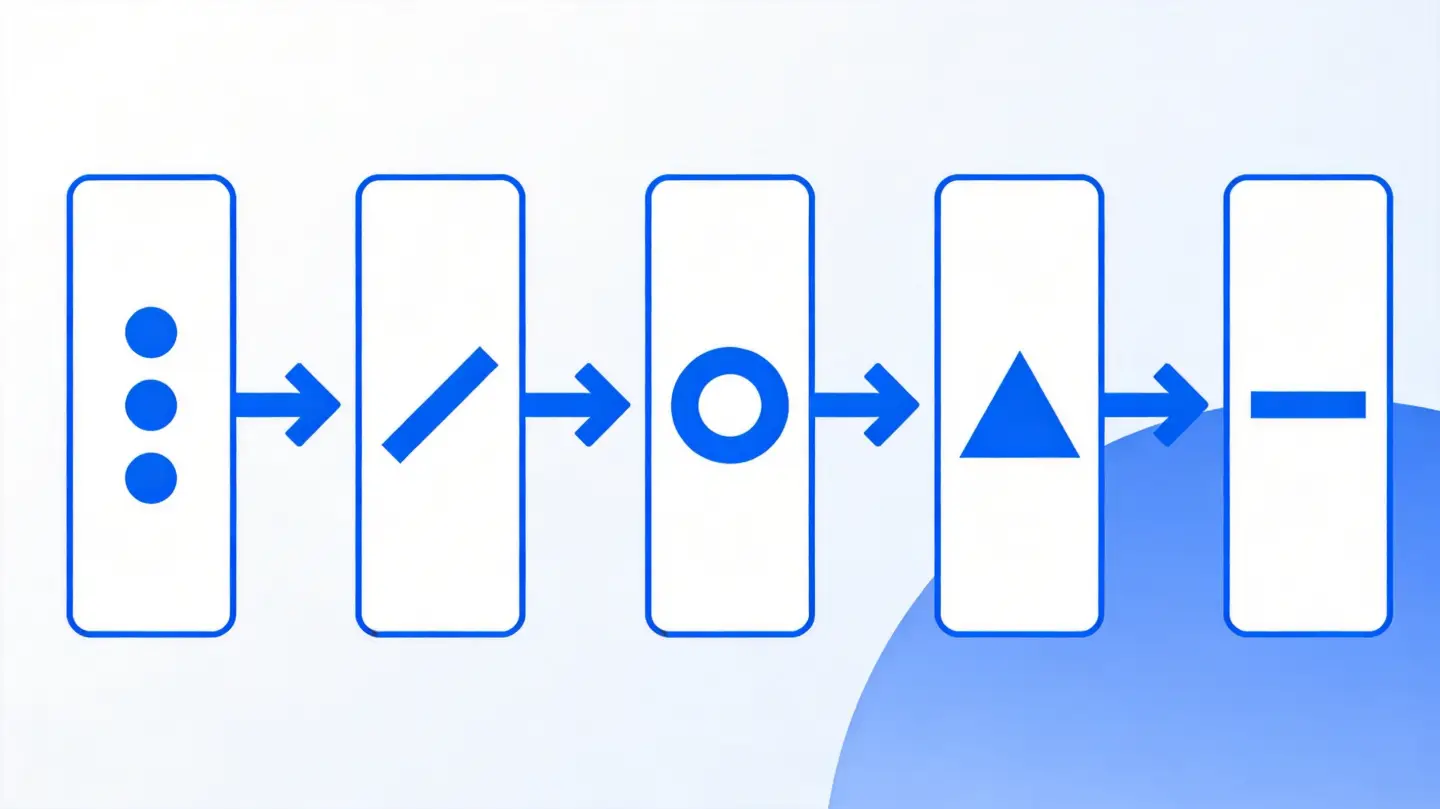
Create Your Scoring Matrix
For each evaluation category, assign a weight based on your priorities:
| Category | Weight (Your Priorities) | Score (1-5) | Weighted Score |
|---|---|---|---|
| Design Capability | 25% | ___ | ___ |
| Engineering Competence | 25% | ___ | ___ |
| Manufacturing Network | 20% | ___ | ___ |
| Communication | 15% | ___ | ___ |
| Pricing Transparency | 10% | ___ | ___ |
| IP Protection | 5% | ___ | ___ |
| Total | 100% | ___ |
The Interview Shortlist Process
- Initial screening (5-10 companies): Portfolio review + preliminary call
- Technical evaluation (3-5 companies): Deep-dive on engineering capabilities
- Reference verification (2-3 companies): Contact past clients
- Final decision (1-2 companies): Small pilot project before full engagement
The Pilot Project Test
Before committing to full development, run a limited engagement:
- Recommended pilot scope: Concept validation + basic prototype (budget: $5,000-$15,000)
- What it reveals: Communication quality, responsiveness, technical depth, realistic timeline estimates
- Red flags during pilot: Constant scope creep, missed milestones, unexplained delays, communication breakdowns
Frequently Asked Questions (FAQ)
How much does it cost to hire a product design company in China?
Costs vary widely based on complexity, but expect to budget $15,000-$50,000 for complete product development from concept through production-ready files. This typically covers industrial design, mechanical engineering, electronics/firmware, prototyping, and DFM optimization. Manufacturing tooling costs ( molds, fixtures) run additional: $10,000-$200,000+ depending on product complexity.
What’s the typical timeline from concept to production-ready files?
A well-managed hardware project takes 4-9 months from concept to production-ready engineering files, depending on complexity. Simple products with existing reference designs may take 3-4 months; complex products requiring custom electronics, tooling, and regulatory certification can take 12-18 months.
Should I visit China before deciding on a partner?
In-person visits are valuable but not always necessary. Many professional Chinese design firms offer excellent remote collaboration. If your product requires tight manufacturing integration or you’re committing to a long-term partnership, visiting becomes more valuable. Budget for at least one visit during critical phases (prototype review, production line setup).
How do I verify a Chinese company’s legitimacy?
Verify business registration through China’s National Enterprise Credit Information System ( requires the 18-digit unified social credit code). Request factory audit reports from third-party inspection services (SGS, Bureau Veritas, QIMA). Contact references directly—and ask specifically for clients whose projects succeeded and failed.
Can I protect my intellectual property in China?
China has strengthened IP protection significantly, though enforcement remains imperfect. Key steps: register your patents and trademarks in China (priority filing within 6 months of first filing elsewhere), use formal NDAs and contracts with clear ownership terms, work with reputable partners with documented IP policies, and consider using escrow arrangements for sensitive technology. IP risk is manageable with proper precautions but is never zero.
What’s the difference between OEM and ODM?
OEM (Original Equipment Manufacturer) builds products to your exact designs. ODM (Original Design Manufacturer) provides products from their existing design catalog that you customize with your branding. ODMs offer faster time-to-market but less differentiation; OEMs provide full design ownership but require more development investment. Full-service partners typically offer both models.
How do I handle quality control when manufacturing is in China?
Implement a tiered QC approach: incoming material inspection, in-process quality checks at critical operations, pre-shipment inspection on random samples, and possibly third-party inspection (SGS, Bureau Veritas) for critical products. For high-value or safety-critical products, consider having an inspector on-site during production. Your partner should offer these options with transparent pricing.
Conclusion: Your Next Steps
Choosing a product design partner in China isn’t just a vendor selection—it’s a strategic decision that shapes your product’s success, your company’s trajectory, and your team’s stress levels for years to come.
The key principles to remember:
- Design capability matters more than factory pricing. A perfect design that can’t be manufactured is worthless. An excellent manufacturing process can’t save a flawed design.
- Communication is a leading indicator. How a partner communicates before you sign often predicts how they’ll communicate during the project. Red flags in communication multiply under pressure.
- Verify everything. Portfolios can be borrowed. Claims can be empty. References can be curated. Insist on verification through pilot projects, facility access, and direct reference conversations.
- Think in phases. Structure relationships with natural exit points. You’re not marrying your partner on day one—you’re evaluating them for a long-term commitment.
- The cheapest quote is rarely the best value. Hidden costs, quality issues, and communication failures often dwarf initial savings.
At OPD Design, we’ve built our practice on helping hardware founders navigate this exact decision. We believe in transparency, structured methodology, and relationships that last well beyond first production.
If you’re evaluating product design partners in China, we’d welcome the opportunity to show you how we work. The best first step is a discovery call—tell us about your product, your challenges, and your goals. No pressure, no hard sell. Just a straightforward conversation about whether we’re the right fit for what you’re building.
Ready to start the conversation? Visit opd-design.com/contact to schedule a consultation.