
Introduction: Why Hardware Founders Need to Understand NPI
If you’ve spent time in software, you’ve probably heard of Agile sprints, CI/CD pipelines, and rapid iteration. Those concepts work beautifully when you’re shipping code. But hardware? That’s a different universe.
In 2026, with AI moving into physical products—from smart wearables to industrial sensors—more product managers and founders are crossing over from software into hardware for the first time. And almost all of them encounter the same culture shock: hardware can’t be Agile.
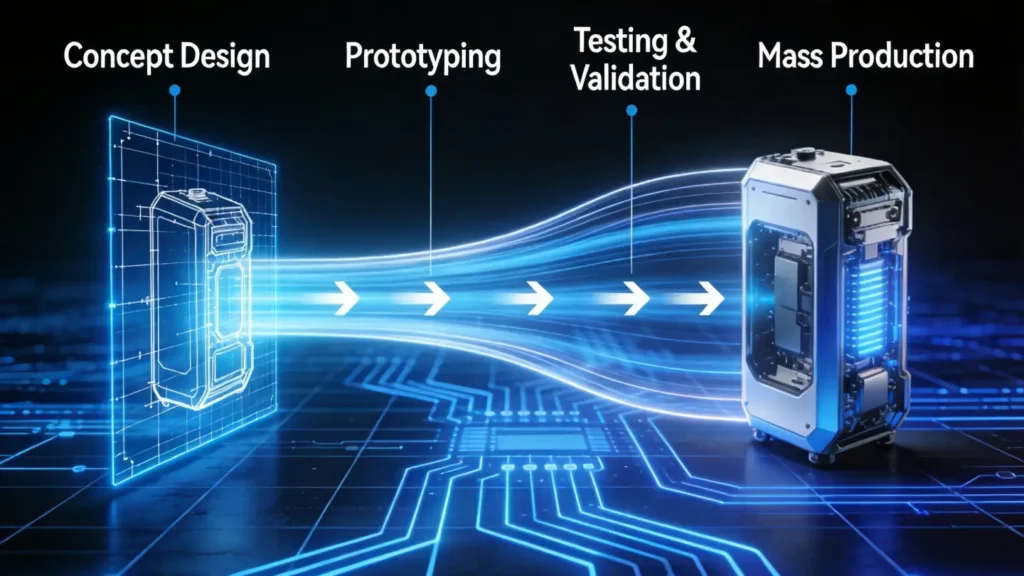
Building a physical product means manipulating atoms, not bits. Once you’ve cut steel molds or committed to a PCB layout, changes become expensive—sometimes devastatingly so. That’s why hardware development follows a structured framework called NPI (New Product Introduction) , a phased process that guides products from initial concept through mass production.
This guide explains the NPI process in plain language, breaking down each stage and what hardware founders need to know to navigate it successfully.
What Is NPI? The Stage-Gate Framework
NPI is a stage-gate process used to manage the complexity, cost, and risk of bringing a physical product to market. Unlike software’s iterative cycles, NPI uses distinct phases separated by formal “gates”—decision points where teams evaluate progress and decide whether to proceed, iterate, or pivot.
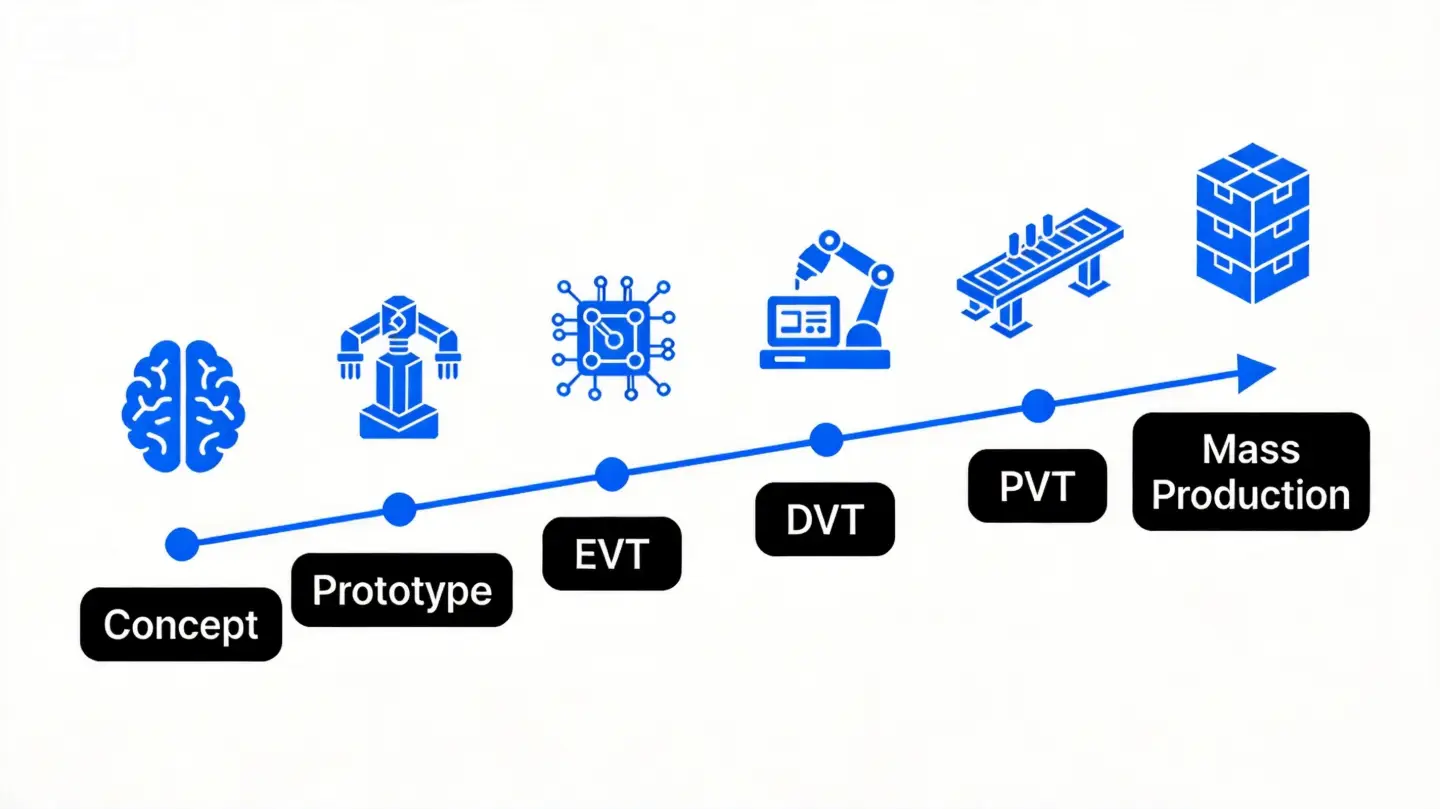
The core stages typically include:
| Stage | Full Name | Key Question |
|---|---|---|
| POC | Proof of Concept | Can this even work? |
| Proto | Prototype | Does the physics work? |
| EVT | Engineering Validation Test | Does it meet requirements? |
| DVT | Design Validation Test | Can we manufacture it? |
| PVT | Production Validation Test | Can we ship it at scale? |
| MP | Mass Production | Ready for the market |
Each stage has specific deliverables, exit criteria, and cost implications. Understanding this framework isn’t just for engineers—it’s essential for founders, product managers, and anyone steering a hardware project.
Stage 0: Proof of Concept (POC)
Goal: Validate the core idea
Key Question: Can this even work?
The POC phase is about answering fundamental questions with minimal investment. You’re not building a product yet—you’re testing whether the underlying technology, approach, or concept is viable.
Common POC activities:
- Breadboard circuits using development kits (e.g., Arduino, ESP32, Raspberry Pi)
- 3D-printed concept models for form-factor testing
- Software simulations for algorithms or user flows
- Market validation through surveys, interviews, or landing pages
What to watch for:
POC is where most costly assumptions hide. A sensor that works in a lab might fail in humid conditions. An algorithm that runs on a powerful processor might be too slow for a low-power MCU. Catch these issues early.
Typical timeline: 2-8 weeks
Typical cost: $2,000 – $15,000
OPD Design’s approach: We often help clients run rapid POC experiments using off-the-shelf modules before committing to custom development. This “fail fast, learn cheap” methodology helps validate product-market fit before significant investment.
Stage 1: Prototype Development
Goal: Prove the physics
Key Question: Does this actually work in the real world?
Once you’ve validated the concept, it’s time to build something tangible. Prototypes can range from rough proof-of-principle models to pre-production samples that look almost like the final product.
Types of Prototypes
| Type | Purpose | Fidelity | Cost |
|---|---|---|---|
| Visual Prototype | Communicate design intent | Low | $ |
| Functional Prototype | Test core features | Medium | $$ |
| Pre-Production Prototype | Validate manufacturing process | High | $$$ |
For IoT and smart hardware, functional prototypes typically include:
- Custom PCB designs (not development boards)
- 3D-printed or CNC-machined enclosures
- Integrated firmware running on target hardware
- Initial sensor and connectivity testing
Critical consideration: Prototype early, prototype often. The goal is to identify design flaws before they become expensive problems. Each prototype iteration should address specific unknowns.
Typical timeline: 4-12 weeks
Typical cost: $5,000 – $30,000
Stage 2: EVT (Engineering Validation Test)
Goal: Prove the function meets requirements
Key Question: Does the design meet all product requirements?
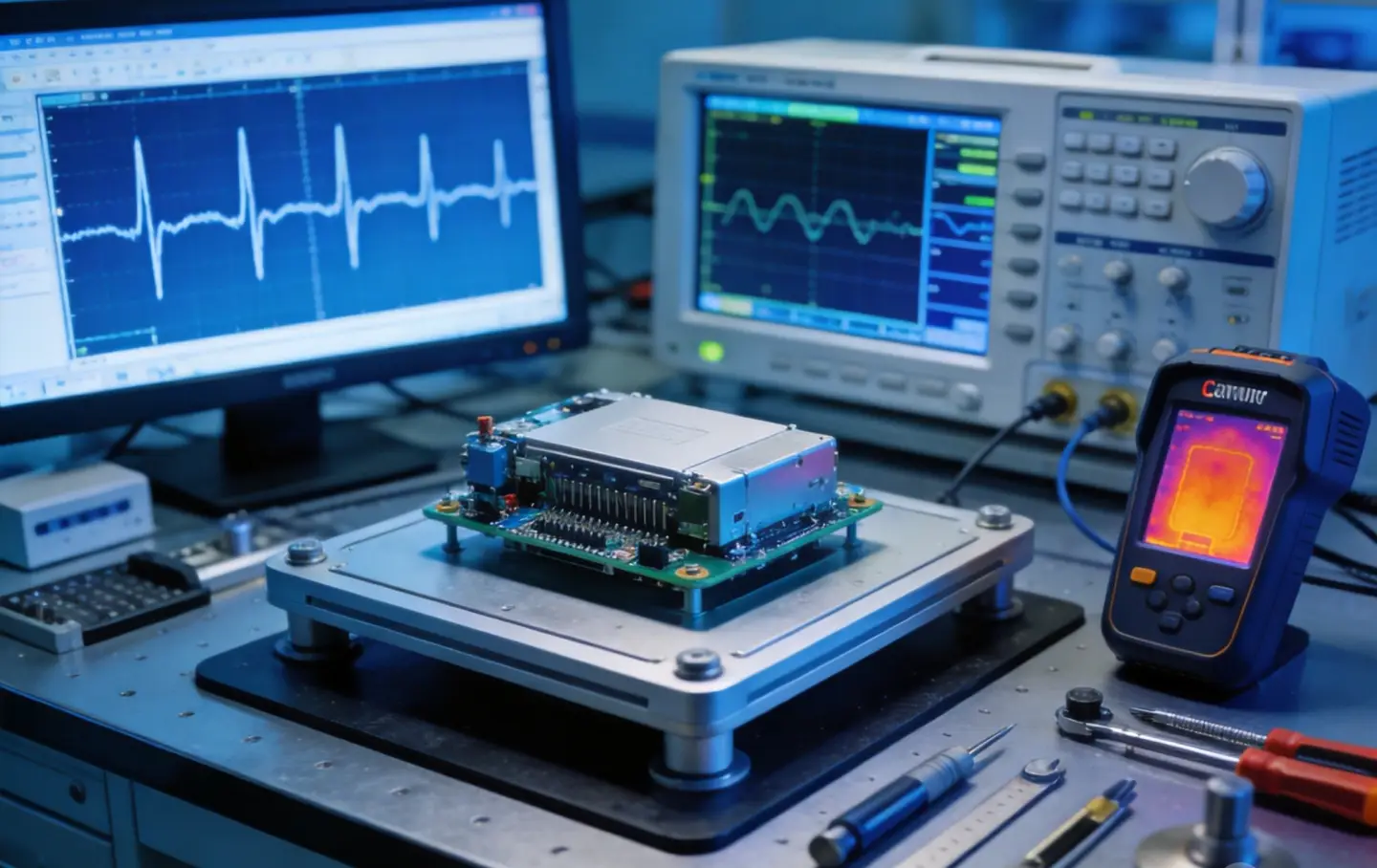
EVT is where things start getting serious. You’re building units that look like the real product, using production-intent components and processes. The goal is to validate that the design meets all functional, performance, and regulatory requirements.
EVT Checklist
Design validation:
- All features function as specified
- Performance targets met (speed, accuracy, battery life, etc.)
- Environmental testing completed (temperature, humidity, vibration)
- EMC/EMI pre-compliance testing
Component validation:
- All components sourced from production-ready suppliers
- Long-lead-time components ordered
- Alternate components identified for single-source parts
Manufacturing validation:
- Assembly process defined and documented
- First articles assembled successfully
- Basic yield rates acceptable
A critical warning: Design changes become exponentially expensive after EVT. Steel molds for injection molding can cost $30,000-$200,000 and take 8-16 weeks to produce. Once these are cut, changes to the enclosure become financially painful.
Typical timeline: 6-12 weeks
Typical cost: $20,000 – $80,000
Stage 3: DVT (Design Validation Test)
Goal: Prove the manufacturing process
Key Question: Can we build this consistently at scale?
DVT is where software-native PMs often get confused. The product looks finished—what’s taking so long?
Here’s the reality: looking done and being manufacturable are different things. DVT focuses on validating the manufacturing process, not just the product design.
DVT Focus Areas
Manufacturing process validation:
- Assembly line setup and validated
- Automated test equipment (ATE) operational
- Process capability indices (Cpk) acceptable
- First-pass yield rates meet targets
Quality validation:
- ICT (In-Circuit Test) passing rates
- Functional testing under various conditions
- Burn-in testing for reliability
- Packaging and labeling validated
Firmware stability:
- Device firmware must be stable enough to support factory diagnostics. A firmware update that breaks factory test tooling can derail production for weeks.
Design refinement:
- Minor design tweaks to improve manufacturability
- Tolerance optimization based on first production runs
- Cost reduction initiatives (component substitution, assembly simplification)
Typical timeline: 8-16 weeks
Typical cost: $50,000 – $150,000
Stage 4: PVT (Production Validation Test)
Goal: Prove the speed
Key Question: Can we mass produce and ship?
PVT is the final dress rehearsal. The design is locked. The tooling is locked. Line operators are trained. Everything is ready—your only remaining variable is volume.
PVT Milestones
| Milestone | Description | Success Criteria |
|---|---|---|
| Pilot Run | Initial small-batch production (50-200 units) | Yield ≥ 90%, quality acceptable |
| Process Validation | Full production run simulation | Cpk ≥ 1.33 for critical processes |
| Reliability Sampling | Extended life testing | MTBF targets met |
| Shipping Prep | Packaging, labeling, fulfillment validated | Ready for commercial launch |
What PVT reveals:
- Real production yields and cycle times
- Component supply chain bottlenecks
- Quality issues that only appear at volume
- Packaging and fulfillment logistics
Typical timeline: 4-8 weeks
Typical cost: $30,000 – $100,000
Stage 5: Mass Production
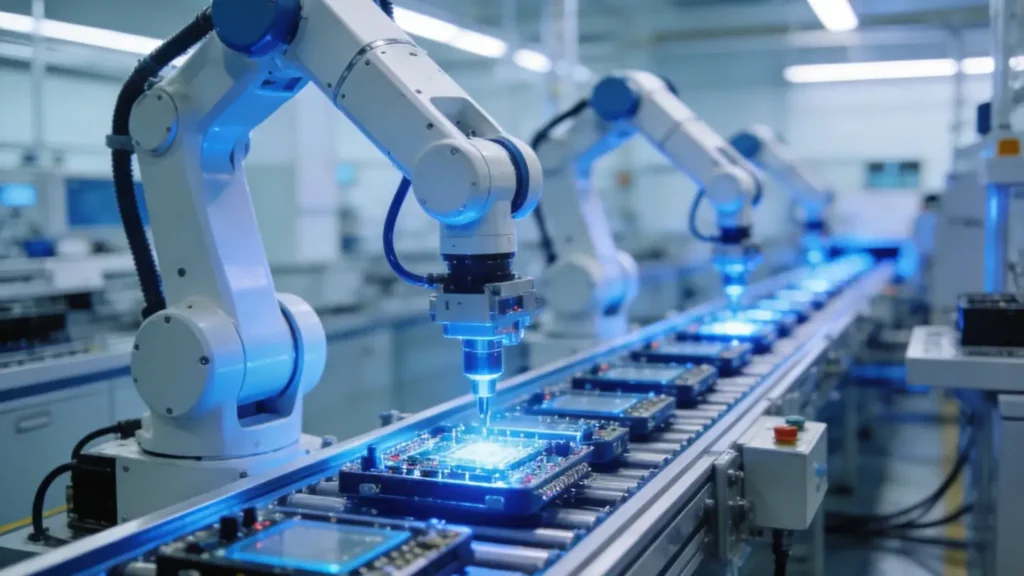
Congratulations—you’ve made it. Mass production means your product is ready for the market. But this doesn’t mean the work is over.
Mass Production Essentials
Supply chain management:
- Buffer stock for critical components
- Vendor-managed inventory (VMI) for high-volume parts
- Continuous cost optimization
- Quality monitoring and improvement
Process control:
- Statistical process control (SPC)
- Regular quality audits
- Yield monitoring and improvement
- Engineering change management
Scaling challenges:
- Production capacity ramp-up
- Shipping and logistics optimization
- After-sales support preparation
- Warranty and returns processing
Common NPI Mistakes (And How to Avoid Them)
Based on our experience guiding hardware startups through NPI, here are the most frequent pitfalls:
1. Skipping POC or Rushing Through Prototype Phase
Mistake: Jumping straight to EVT to save time.
Reality: Problems discovered in EVT cost 10-50x more to fix than problems found in POC.
2. Locking Design Too Early
Mistake: Committed to production tooling before design was validated.
Reality: Mold changes can cost $50,000+ and add 8-16 weeks to timeline.
3. Ignoring Component Lifecycle
Mistake: Using components without checking their end-of-life (EOL) status.
Reality: EOL parts can force expensive redesigns. Use tools like SiliconExpert to monitor component lifecycles.
4. Underestimating NPI Duration
Mistake: Expecting software-like timelines.
Reality: Hardware NPI typically takes 6-18 months from concept to mass production. Plan accordingly.
5. Neglecting Firmware Stability
Mistake: Treating firmware as “software” with rapid iteration capability.
Reality: Firmware changes late in NPI can require PCB respins, EMC re-testing, and schedule delays.
6. No Backup Supply Chain
Mistake: Single-source critical components.
Reality: Geopolitical disruptions, natural disasters, and demand spikes can halt production. Dual-source critical parts. Working with a Shenzhen-based partner gives you access to multiple qualified suppliers within a short drive, making dual-sourcing far more practical.
How OPD Design Supports Your NPI Journey
Navigating NPI requires expertise across industrial design, mechanical engineering, hardware development, firmware, and manufacturing. Most startups don’t have all these capabilities in-house—and that’s where a full-service partner like OPD Design becomes valuable.
Our NPI Services
| Service | How We Help |
|---|---|
| Industrial Design | Concept development, CMF specification, UX optimization |
| Mechanical Design | CAD modeling, DFM analysis, tooling oversight |
| Hardware Development | PCB design, component selection, prototype builds |
| Firmware Development | Embedded software, driver development, OTA updates |
| NPI Support | Pilot run management, yield optimization, process validation |
| Manufacturing Setup | Factory selection, quality systems, production ramp |
Our end-to-end approach means you’re not juggling multiple vendors. One team guides your product from initial concept through mass production, with clear accountability at every stage. Based in Shenzhen, China’s electronics manufacturing hub, OPD Design offers direct access to the supply chain, mold shops, and factories needed at every NPI stage.
Frequently Asked Questions (FAQ)
How long does the NPI process take?
For a typical consumer electronics product, NPI takes 8-14 months from concept to mass production. Complex products (medical devices, industrial equipment) may take 18-24 months. Simple products with minimal customization might complete in 4-6 months.
What is the most expensive stage of NPI?
DVT and PVT are typically the most expensive stages because they involve production-intent tooling, pilot runs, and extensive testing. However, EVT is where undiscovered problems cause the most schedule and budget damage.
Can you skip stages in NPI?
Technically, you can—but it’s risky. Each stage exists to catch specific types of problems. Skipping stages doesn’t eliminate problems; it just defers them to later, more expensive stages.
What’s the difference between EVT, DVT, and PVT?
- EVT: “Does it work?” (Engineering validation)
- DVT: “Can we make it?” (Manufacturing validation)
- PVT: “Can we ship it?” (Production validation)
How do you reduce NPI timeline?
- Start with rapid prototyping (3D printing, development boards)
- Run parallel workstreams (hardware + firmware + industrial design)
- Select components early with confirmed availability
- Work with an experienced NPI partner who knows manufacturing processes
What’s the biggest risk in NPI?
Component obsolescence and supply chain disruptions are increasingly the biggest risks. Always have alternate component options and maintain strategic buffer stock for long-lead-time parts.
Conclusion
The NPI process may seem rigid compared to software’s Agile flexibility, but that rigidity exists for good reason. Physical products carry real constraints—physics, manufacturing capabilities, supply chains, and economics—that software simply doesn’t face.
Understanding NPI isn’t just for engineers. Founders, product managers, and business leaders who grasp this framework make better decisions, ask smarter questions, and avoid costly mistakes.
Whether you’re developing your first IoT device or scaling up an AI-powered product line, the principles remain the same: validate early, iterate often, and respect the process.
Need guidance navigating your hardware NPI journey? Contact OPD Design to discuss how we can help bring your product from concept to commercial success.