
Why CE and FCC Certification Cannot Be an Afterthought
You have spent eight months and $80,000 developing your smart home device. The design is elegant, the firmware is stable, and your pilot run looks perfect. Then you try to ship to European distributors — and learn your product needs CE marking. You contact a test lab. They tell you it will take 12 weeks and cost $15,000. And that is if you are lucky.
This is the scenario that derails more hardware launches than engineering failures. CE FCC certification is treated as a final checkbox — until it is not.
The reality is that hardware certification — CE marking for Europe, FCC certification for the United States — must be planned from the beginning of product development, not discovered after your industrial design is finalized. The position of your antenna, the shielding on your PCB, the materials in your enclosure — all of these decisions have CE FCC certification implications that are expensive to fix after the fact.
This guide covers what every hardware founder needs to know about CE and FCC certification in 2026: which certifications apply, what they actually test, how long and how much they cost, and how to structure your development process to pass them the first time.
Understanding CE Marking for FCC Certification Readiness
What CE Marking Actually Means
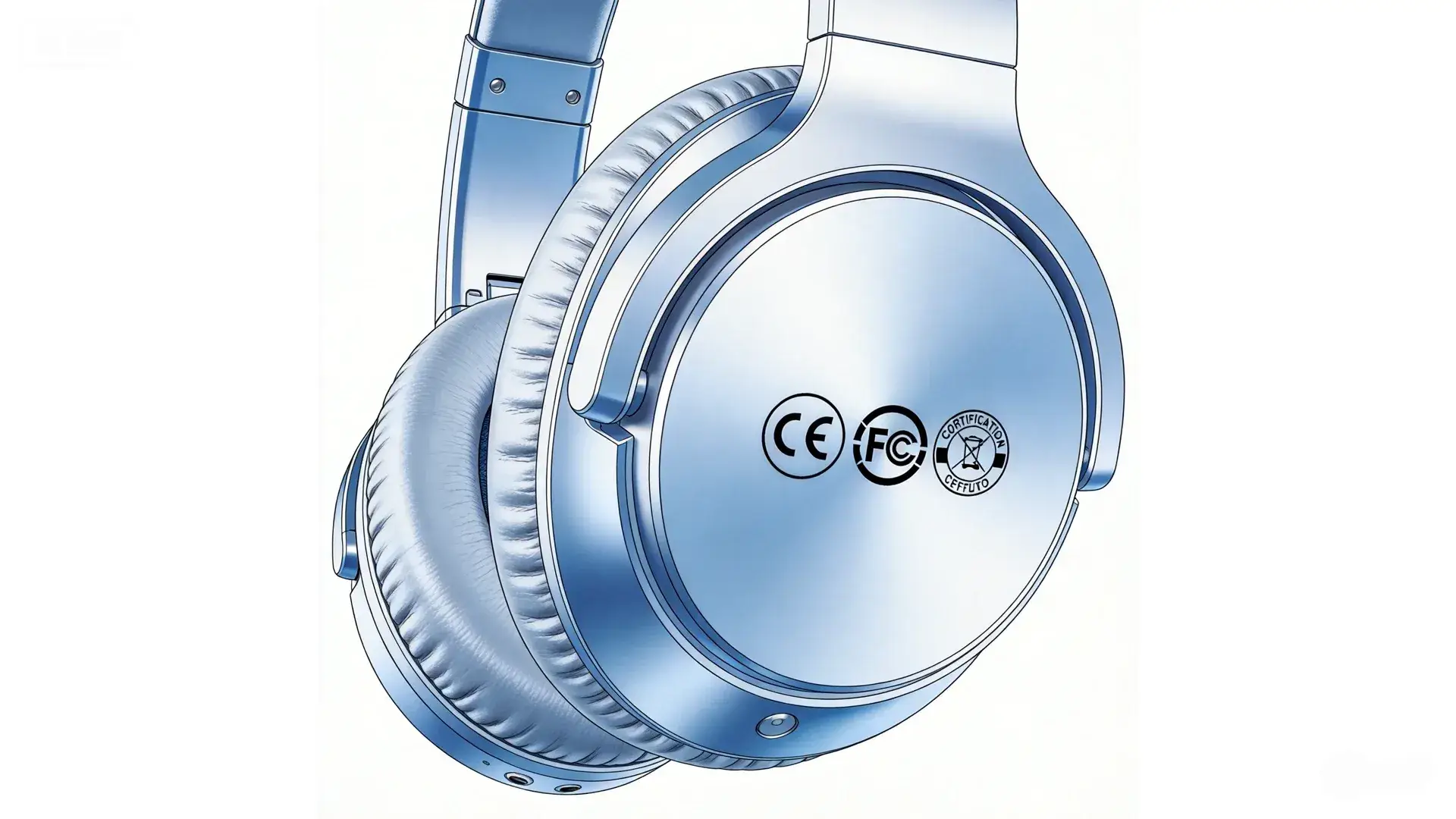
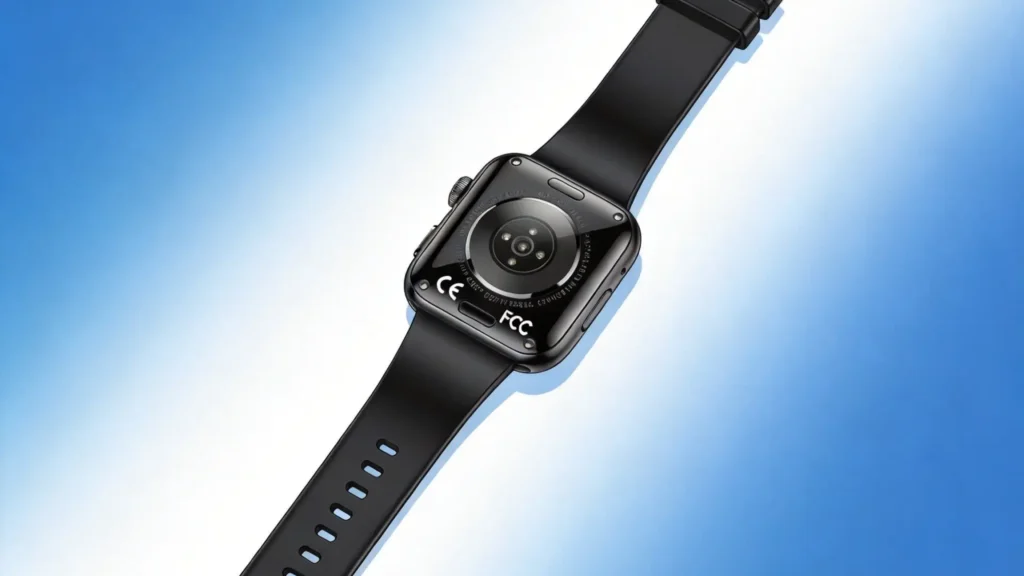
CE marking (Conformite Europeenne) indicates that a product complies with all applicable European Union directives. Unlike FCC certification — which is primarily about radio frequency interference — CE marking covers a broader range of safety and environmental requirements. You can verify CE marking obligations through the EU’s official CE marking portal.
For most consumer electronics sold in the EU, the relevant directives include:
| Directive / Regulation | Subject | Applies To |
|---|---|---|
| Radio Equipment Directive (RED) 2014/53/EU | Radio frequency emissions | Any wireless device (Wi-Fi, Bluetooth, Zigbee, cellular) |
| Low Voltage Directive (LVD) 2014/35/EU | Electrical safety | Products operating at 50-1000V AC or 75-1500V DC |
| Electromagnetic Compatibility (EMC) 2014/30/EU | EMI/EMS | All electronic products |
| RoHS Directive 2011/65/EU | Hazardous substances | All electrical/electronic equipment |
| REACH Regulation | Chemical substances | Products containing materials that contact skin |
| Ecodesign Directive | Energy efficiency | Products with energy consumption |
| WEEE Directive | Waste electronics | All EEE placed on EU market |
When CE Marking Is Required
If your product meets ALL of these conditions, CE marking is mandatory:
- You are selling within the European Economic Area (EU + Norway, Iceland, Liechtenstein)
- Your product falls under one or more of the directives listed above
- Your product is new (not second-hand) and not a custom-made product for a single customer
The obligation falls on the manufacturer — which, for a hardware startup, is typically you (even if you are using a contract manufacturer in China). You must sign a Declaration of Conformity (DoC) and maintain technical documentation proving compliance.
Critical insight: If your Chinese manufacturer produces your product under your brand and you sell it in the EU, you are the “manufacturer” under EU law — not them. You are responsible for CE marking, even though you never touched the factory floor.
FCC Certification Requirements for Hardware Products
FCC’s Regulatory Framework
The Federal Communications Commission (FCC) regulates radio frequency emissions from electronic devices in the United States. Any device that emits RF energy — including unintentional radiators like digital circuits — must comply with FCC rules before it can be legally sold or marketed in the U.S.
Unlike CE marking, which covers multiple directives, FCC certification focuses on one thing: radio frequency interference.
FCC Device Categories
The FCC categorizes devices into two main classes:
Intentional Radiators: Devices that intentionally generate and emit radio frequency energy (Wi-Fi routers, Bluetooth speakers, cell phones, walkie-talkies). These require the most rigorous testing.
Unintentional Radiators: Digital devices that can generate RF energy as a byproduct of their operation (computers, appliances, consumer electronics). Even if they do not intentionally transmit, they must not interfere with other communications.
FCC Certification vs. FCC Declaration of Conformity
| Process | Applicable To | Complexity | Timeline | Cost |
|---|---|---|---|---|
| Certification (by FCC-recognized lab, TCB) | Intentional radiators; some unintentional radiators | Highest | 8-12 weeks | $15,000-30,000 |
| Declaration of Conformity (DoC) | Most unintentional radiators | Moderate | 4-8 weeks | $5,000-15,000 |
| Verification | Very simple unintentional radiators | Lowest | 2-4 weeks | $2,000-5,000 |
Most consumer hardware products — especially those with wireless connectivity — require FCC Certification through a Telecommunications Certification Body (TCB).
The FCC’s 2023-2026 Enforcement Trend
FCC enforcement has tightened significantly since 2023. In 2025, the FCC issued fines totaling over $12 million for non-compliant RF devices — a 340% increase from 2022. The most common violations:
- Products marketed before FCC certification was complete
- Unauthorized changes to certified equipment
- Missing or inadequate RF exposure assessments
If you plan to sell on Amazon, Best Buy, or any major U.S. retailer, expect them to verify your FCC ID before listing your product.
The CE FCC Certification Testing Process
Pre-Compliance Testing vs. Full Certification Testing
Before spending $20,000 on full certification testing, most hardware teams run pre-compliance testing. This identifies major issues early — when they are cheap to fix.
Pre-compliance testing can be done in several ways:
- Internal testing: Using your own spectrum analyzer and near-field probes (entry cost: $2,000-5,000)
- Third-party pre-compliance lab: A formal lab running your product through partial testing to identify failures (cost: $2,000-8,000)
- Test-on-loan programs: Some labs lend equipment or provide discounted scanning sessions
Full certification testing must be conducted at an FCC-recognized accredited testing laboratory (or a TCB for FCC; a Notified Body for CE). You can search for accredited labs through the A2LA directory or the NVLAP directory.
What EMC Testing Actually Measures
Electromagnetic Compatibility testing has two components:
Emissions Testing (EMI) : Measures the RF energy your product emits. Tests include:
- Radiated emissions (signals escaping the product’s enclosure)
- Conducted emissions (signals traveling through power cables)
- Harmonic current emissions
- Voltage fluctuations and flicker
Immunity Testing (EMS) : Measures your product’s ability to function when exposed to RF energy. Tests include:
- Radio frequency electromagnetic field immunity
- Electrical fast transient/burst immunity
- Surge immunity
- Conducted immunity
What RED Testing Covers (For Wireless Products)
If your product has a radio transmitter, RED testing is more demanding:
- Transmitter RF output power: Must not exceed rated specifications
- Frequency stability: Must stay within allocated frequency bands
- Occupied bandwidth: Signal must not occupy more than its allocated bandwidth
- Spurious emissions: No unwanted signals outside the operating band
- Receiver immunity: Must not be disrupted by other signals
CE FCC Certification Cost Breakdown in 2026
Regional Cost Comparison
| Certification | Product Type | Testing Cost | Lab Fees | Documentation | Total Estimate |
|---|---|---|---|---|---|
| CE (EMC + LVD) | Simple electronics | $3,000-6,000 | $2,000-4,000 | $1,000-2,000 | $6,000-12,000 |
| CE (RED) | Wireless device | $8,000-15,000 | $3,000-6,000 | $1,500-3,000 | $12,500-24,000 |
| FCC (DoC) | Digital device | $4,000-8,000 | $2,000-4,000 | $1,000-2,000 | $7,000-14,000 |
| FCC (Certification) | Wireless device | $12,000-20,000 | $4,000-8,000 | $2,000-4,000 | $18,000-32,000 |
| Combined CE + FCC | Single product | $15,000-25,000 | $5,000-10,000 | $2,000-5,000 | $22,000-40,000 |
Hidden Costs That Catch Founders Off Guard
- RF exposure assessment: Since FCC OET Bulletin 65, products with embedded transmitters require SAR (Specific Absorption Rate) or MPE (Maximum Permitted Exposure) testing. Cost: $3,000-8,000 additional.
- Test failures and retesting: If your product fails the first time (common for first-time designs), each retest session costs $1,500-5,000. Building in two buffer retests is prudent.
- Engineering changes post-failure: Fixing an EMC failure often requires PCB redesign, enclosure changes, or additional shielding. A single EMI fix can cost $2,000-10,000 in engineering time.
- Dual-logo products: If you sell the same product in both the EU and US, you need both CE and FCC certification. Some test labs offer combined testing that reduces total cost by 15-25%.
How to Design for CE and FCC Certification Compliance
Designing Your PCB for EMC Compliance
Most EMC failures originate on the PCB. Early design decisions have outsized impact on CE FCC certification outcomes:
Layer stack-up matters: Use a solid ground plane adjacent to your signal layers. 4-layer boards with proper stack-up (signal-ground-power-signal) are significantly easier to certify than 2-layer boards.
Decoupling capacitors are your first line of defense: Place 100nF ceramic capacitors within 3mm of every IC power pin. Use bulk capacitors (10uF) at power entry points.
Clock traces are the biggest EMI culprits: Route high-speed signals (clocks, USB, DDR) with 45-degree corners, ground guard traces, and controlled impedance. Keep them away from board edges and cables.
Connector placement affects cable radiation: Position I/O connectors away from high-speed digital circuitry. Use filtering at connector entry points.
Antenna Design and Placement for Certification Success
For wireless products, antenna design is often the make-or-break factor for FCC certification:
- Keep antennas away from metal: Metal enclosures, batteries, and PCB ground planes detune antennas and reduce efficiency.
- Test with production-representative enclosures: Antenna performance changes dramatically with different materials and thicknesses. Test early with representative samples.
- Plan for SAR/MPE testing: The FCC requires RF exposure testing for devices used within 20cm of the human body. Head-mounted devices, wearables, and handheld products are subject to strict limits.
Enclosure Design Considerations
- Conductive vs. non-conductive materials: Conductive plastics can provide shielding without added weight. Non-conductive enclosures may require internal shielding (conductive foam, aluminum tape).
- Ventilation holes: Slots and holes should be designed to not compromise shielding effectiveness. Honeycomb patterns with conductive gaskets are common.
- Cable penetrations: Cables are antenna. Filter signals at the point they exit the enclosure.
CE FCC Certification Timeline: How Long Does It Take?
Realistic Timeline Breakdown
表格
| Phase | Duration | Activities |
|---|---|---|
| Pre-compliance testing | 2-4 weeks | Internal or third-party scanning; identify failures |
| Engineering fixes | 2-6 weeks | PCB respins, enclosure modifications, shielding |
| Full certification testing | 4-8 weeks | Lab testing sessions (FCC/TCB or Notified Body) |
| Report review and certification | 1-2 weeks | Lab submits report; ID number issued |
| Total | 9-20 weeks | Depends heavily on first-pass success |
Factors That Extend the CE FCC Certification Timeline
- Test failures: Each failure + fix cycle adds 2-4 weeks.
- Lab scheduling: Popular labs are booked 4-6 weeks out. Plan ahead.
- Sample availability: Labs need 3-5 production-representative samples. Delays in prototyping extend timeline.
- Complex RF exposure testing: SAR testing requires specialized equipment and adds 2-3 weeks.
- CB Scheme complications: For products tested under the IECEE CB Scheme (accepted by multiple countries), add 2-4 weeks for additional national deviations.
Rule of thumb: Budget 50% more time than your lab estimates. CE FCC certification projects routinely slip.
Multi-Market Strategy: Certify Once, Sell Everywhere
The IECEE CB Scheme: One Test, Many Markets
The IECEE CB Scheme allows you to use a single test report to obtain national certifications in 50+ countries. While not universally accepted (China’s CCC and Japan’s PSE have separate requirements), it covers most major markets.
Regional Certification Map
| Market | Certification Required | Accepts CB? | Notes |
|---|---|---|---|
| European Union | CE marking | Related | CE is self-declaration for most products |
| United States | FCC Certification / DoC | Limited | FCC testing required separately |
| United Kingdom | UKCA marking | Related | Post-Brexit equivalent to CE |
| Canada | ISED (formerly IC) | Yes | Similar to FCC requirements |
| Australia | RCM | Related | Based on ACMA standards |
| Japan | PSE / TELEC | Limited | Different test standards |
| China | CCC / SRRC | No | Separate mandatory certification |
| South Korea | KC mark | Yes | CB report accepted with KC deviations |
| Brazil | ANATEL | No | Specific local testing required |
| India | WPC / BIS | Limited | BIS registration for IT equipment |
Strategic Approach for Hardware Startups
Recommended CE FCC certification sequence:
- Start with your primary market: Certify for your primary sales territory first. Most startups prioritize CE (EU) or FCC (US) depending on go-to-market strategy.
- Plan for secondary markets during initial design: Design to international standards (IEC 62368-1 for audio/video; IEC 60950-1 for IT equipment) so you are not starting from scratch.
- Use the CB Scheme for expansion: Once you have your primary certification, leverage the CB Scheme test report for faster, cheaper entry into additional markets.
- China CCC — only when needed: China certification (CCC) is mandatory for specific product categories but expensive and time-consuming. Delay unless you have confirmed China distribution.
Common CE FCC Certification Mistakes to Avoid
Mistake #1: Treating Certification as a Final Step
The error: Waiting until product design is “complete” before engaging with CE FCC certification requirements.
The consequence: Discovering that your antenna placement, PCB layout, or enclosure material cannot pass certification — after tooling is complete.
The fix: Engage a certification consultant during the concept phase. Run pre-compliance testing on prototypes as soon as you have functional boards. Read our NPI process guide to understand where certification fits in the development timeline.
Mistake #2: Assuming Your CM Handles It
The error: Believing that your Chinese contract manufacturer will manage CE FCC certification because they “have done it before.”
The consequence: Receiving a shipment of certified-but-non-compliant products; discovering the CM used generic test reports that do not match your product.
The fix: You own the certification. You sign the Declaration of Conformity. Use a reputable test lab with your own relationship, not your CM’s. Our supply chain quality control article covers this in more detail.
Mistake #3: Underestimating Sample Requirements
The error: Expecting one test sample; discovering the lab needs 4-6 samples and EMI shielding modifications.
The consequence: Production delays while you wait for additional samples.
The fix: Confirm sample requirements with your lab before scheduling testing. Budget for 5-10 samples including some with modifications.
Mistake #4: Ignoring Software’s Role in Certification
The error: Treating firmware as separate from hardware CE FCC certification.
The consequence: Firmware bugs causing your product to exceed RF limits during certain operations.
The fix: Lock firmware before certification testing. Any software change after certification may require re-testing.
Mistake #5: Skipping Country-Specific Requirements
The error: Obtaining CE marking and assuming it covers all EU-adjacent markets.
The consequence: Shipments held at customs in Switzerland, Turkey, or other non-EU countries.
The fix: Check each target market individually. Switzerland (though geographically in Europe) requires separate Swiss conformity marking. Turkey requires CE + additional Turkish standards.
Choosing a CE FCC Certification Partner
Option 1: Direct Lab Testing
Best for: Experienced hardware teams with in-house regulatory expertise.
Pros: Lower cost; direct relationship with testing engineers; faster troubleshooting.
Cons: You manage all compliance strategy; no hand-holding.
What to look for: ISO 17025 accreditation; experience with your product category; TCB accreditation (for FCC); Notified Body status (for CE).
Option 2: Certification Consultant
Best for: Teams without regulatory experience; complex multi-market CE FCC certification strategies.
Pros: Expert guidance through entire process; fewer surprises; faster timeline.
Cons: Adds $3,000-10,000 to project cost.
What to look for: Direct experience with your target markets; relationships with multiple labs; transparent fee structure.
Option 3: Full-Service Product Design Company
Best for: Hardware startups that want one partner from concept through CE FCC certification.
Pros: Certification built into development process; DFM analysis includes regulatory requirements; single point of accountability.
Cons: Higher upfront cost; requires trusting the firm’s expertise.
What to look for: In-house certification capability; documented track record of certifications; transparency about which tests their designs typically pass on first attempt.
How OPD Design Handles CE FCC Certification
At OPD Design, we integrate certification planning into every hardware development project. Our approach:
- Certification review during concept phase: We identify applicable directives and standards before design begins, ensuring the project plan accounts for testing costs and timeline.
- Design for compliance: Our industrial design and hardware engineers work with regulatory constraints as design inputs — not afterthoughts. Antenna placement, PCB stack-up, and material selection are optimized for certification.
- Pre-compliance testing partnerships: We work with accredited labs to run pre-compliance scans throughout development, identifying issues early when they are cheap to fix.
- End-to-end certification management: We manage the full CE FCC certification process — sample preparation, lab coordination, report review, and ID application — so you can focus on your business.
- Documentation and ongoing compliance: We maintain your technical files, Declaration of Conformity, and compliance documentation for market surveillance requirements.
If you are planning a hardware product for global markets, contact us early. The decisions made in the first weeks of development have more impact on certification success than anything done at the end.
CE FCC Certification FAQ
Can I sell my product without CE marking if I add a disclaimer?
No. CE marking is a legal requirement, not a marketing choice. Selling non-compliant products in the EU can result in fines up to 30,000 EUR per product, product recalls, and import bans. A disclaimer does not replace legal compliance.
How long is CE marking valid?
CE marking is valid as long as your product design does not change. If you modify the product (hardware, firmware, materials), you must reassess compliance and update your Declaration of Conformity. If applicable directives change, you may need to re-test.
Can I use FCC certification for products sold in Canada?
Partially. Canada (ISED) accepts test data from FCC-recognized labs. However, you still need to obtain ISED certification separately. The test data can be reused, but the certification ID is distinct.
What happens if my product fails CE or FCC certification testing?
The lab issues a failure report detailing what failed and why. You fix the issue, then schedule a retest session. Budget for at least one retest. Common fixes include adding shielding, repositioning components, modifying PCB layout, or changing enclosure materials.
Do I need a lawyer for CE or FCC certification?
Generally no. Certification is a technical process, not a legal one. However, if you are navigating complex compliance situations (market-specific regulations, legal disputes, product liability), a regulatory attorney can provide valuable guidance.
Can I certify a product that uses a module with existing FCC certification?
Yes, this is common. If your product uses a certified RF module (e.g., a pre-certified Bluetooth module), your integration must still be tested — but the module’s certification covers its standalone RF performance. This typically reduces testing scope and cost.
How do I verify that a lab is accredited for CE FCC certification?
For FCC, check the FCC’s list of TCBs and accredited labs. For CE, verify Notified Body status with the EU’s NANDO database. Labs should display their accreditation numbers on test reports.
Conclusion: Build CE FCC Certification Into Your Plan, Not Onto It
CE FCC certification is not the final step in hardware development — it is a constraint that should shape the entire process. The founders who launch smoothly understand this early. They engage with the requirements during concept, design with compliance in mind, run pre-compliance testing throughout development, and approach full certification with validated, production-representative samples.
The founders who struggle discovered it too late. By the time they learn their product needs 12 weeks and $20,000 of testing, they have already invested in tooling. The choice becomes: spend more money and delay launch, or ship non-compliant products and risk enforcement.
Neither option is acceptable. The good news is that CE FCC certification is entirely manageable when planned properly.
Start early. Engage experts. Test often.
And if you need a development partner who understands CE FCC certification from the inside out, OPD Design has delivered certified hardware to EU, US, and global markets for over a decade. Our engineering team has guided dozens of hardware founders through the process — from first concept sketch to products sitting on retail shelves.
Ready to develop a certified hardware product? Contact OPD Design to discuss your project.