

TL;DR — What You Need to Know in 30 Seconds
Contract manufacturing for hardware development lets startups outsource production without losing design control. The global market reaches $556 billion in 2026 and grows at 6.7% annually. However, choosing the wrong partner costs time, capital, and intellectual property. Therefore, hardware founders must understand the CM model, vet partners rigorously, and embed quality from the first design review. This guide breaks down the process, pitfalls, and selection criteria you need to succeed.
What Is Contract Manufacturing for Hardware Development?
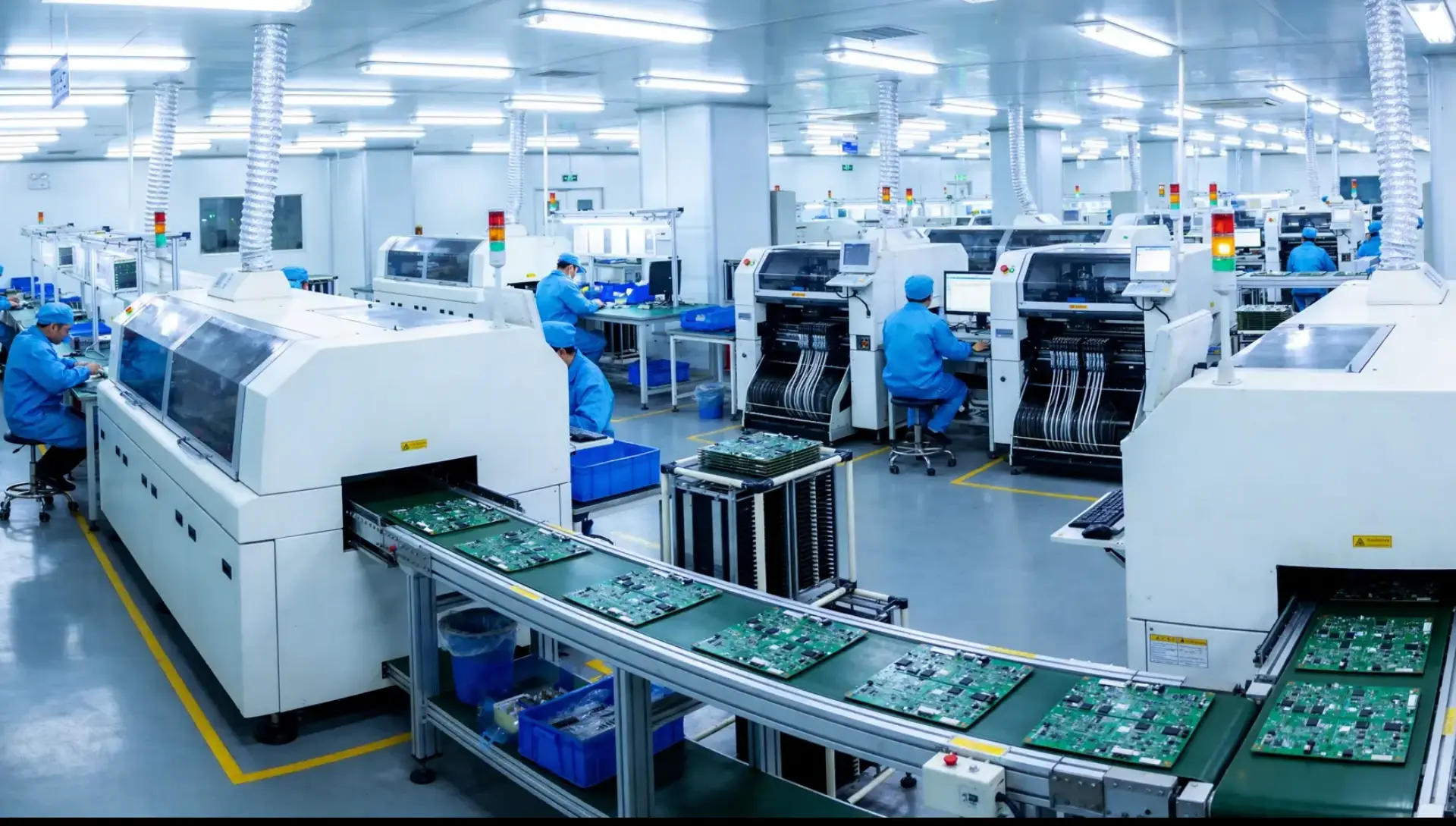
Contract manufacturing for hardware development means a third-party factory builds your product to your specifications. You provide the design files, bill of materials (BOM), and assembly instructions. The contract manufacturer (CM) then handles sourcing, assembly, testing, and logistics.
Specifically, this model differs from building your own factory. Instead of investing in equipment and hiring operators, you leverage an existing production ecosystem. Therefore, you avoid massive capital expenditure while accessing specialized equipment and skilled labor.
Moreover, the global electronic contract manufacturing market reaches $556.52 billion in 2026, according to Business Research Insights. Over 72% of OEMs now prefer third-party manufacturing partnerships. Consequently, contract manufacturing has become the default approach for hardware startups worldwide.
For hardware founders, contract manufacturing covers several critical stages. These include PCB assembly, enclosure fabrication, functional testing, and final packaging. Additionally, many CMs offer design-for-manufacturing (DFM) feedback before production begins. This early input prevents costly redesigns later.
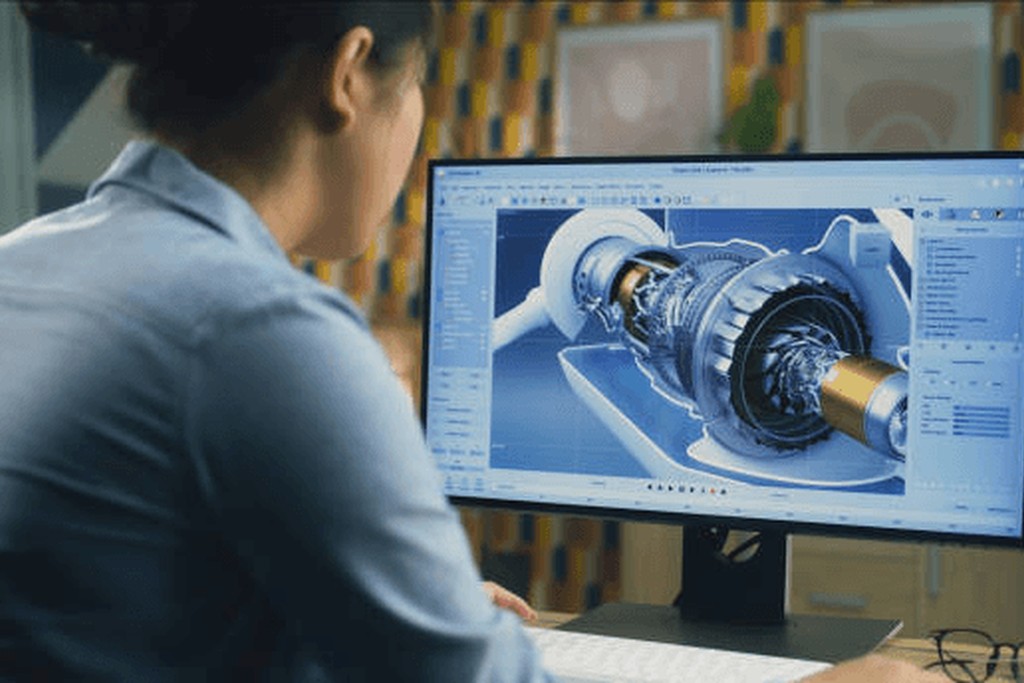
If you need product development services that bridge design and manufacturing, a contract manufacturing partner fills that gap effectively.
OEM vs ODM vs Contract Manufacturing: What’s the Difference?
Hardware founders often confuse three manufacturing models. Understanding these differences prevents costly strategic mistakes.
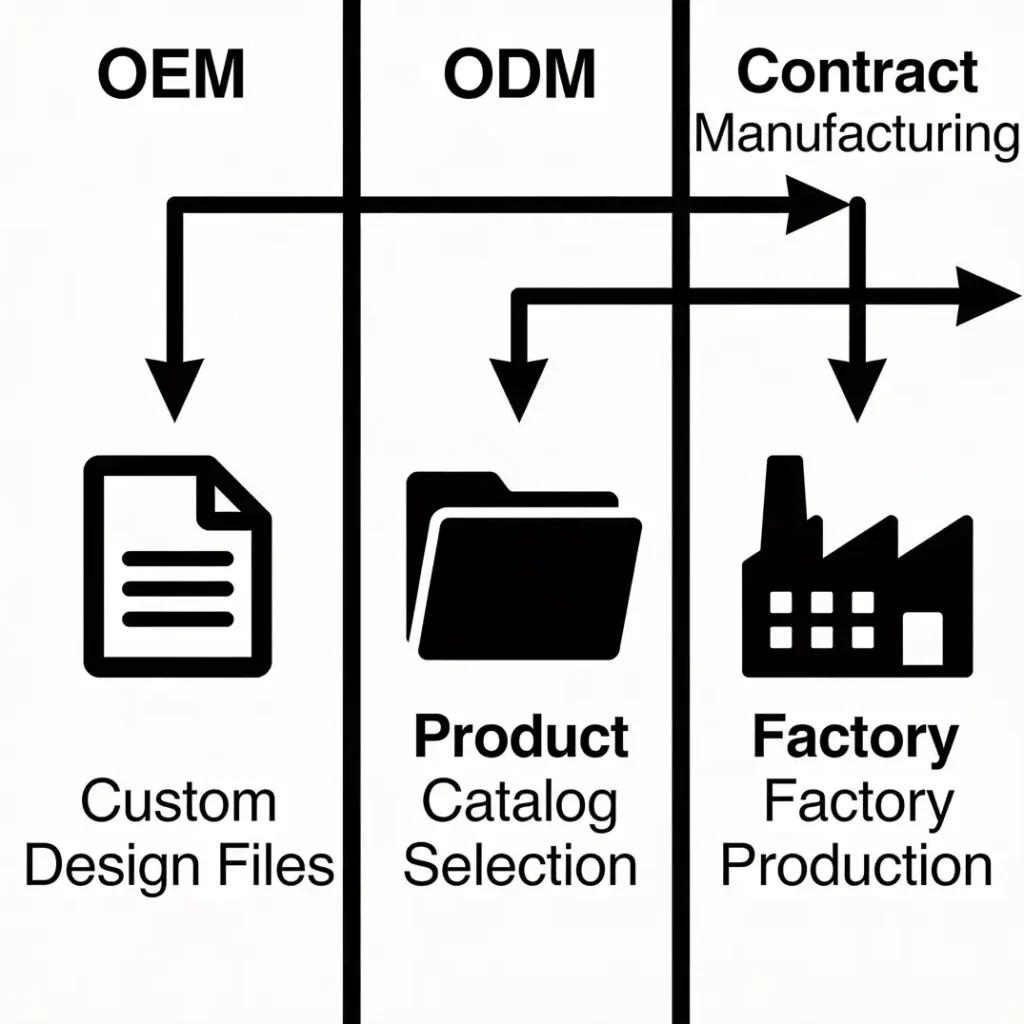
OEM (Original Equipment Manufacturer): You design the product completely. The factory builds it to your exact specifications. You own all intellectual property.
ODM (Original Design Manufacturer): The factory designs the product. You select a base model, add branding, and make minor modifications. The factory retains core design ownership.
Contract Manufacturer (CM): You provide finished design files. The CM handles production, assembly, testing, and supply chain management. You keep full IP control.
| Aspect | OEM | ODM | Contract Manufacturing |
| Design Ownership | You own it | Factory owns base | You own it |
| Time to Market | 6–12 months | 2–4 months | 3–6 months |
| Upfront Cost | Higher | Lower | Medium |
| Customization | Full | Limited | Full |
| IP Risk | Low | High | Low |
Notably, contract manufacturing offers the best balance for startups with proprietary designs. You keep your IP while avoiding factory investment. Therefore, if your product strategy depends on unique differentiation, the CM model protects your competitive advantage.
For a deeper comparison, OmnIoT’s practitioner guide explains how these models play out in IoT product development. Similarly, Auckam’s manufacturing comparison breaks down the decision factors step by step.
The Contract Manufacturing Process: From Design to Mass Production
Contract manufacturing for hardware development follows a structured sequence. Each stage builds on the previous one and reduces risk progressively.
Stage 1: Design Transfer and DFM Review
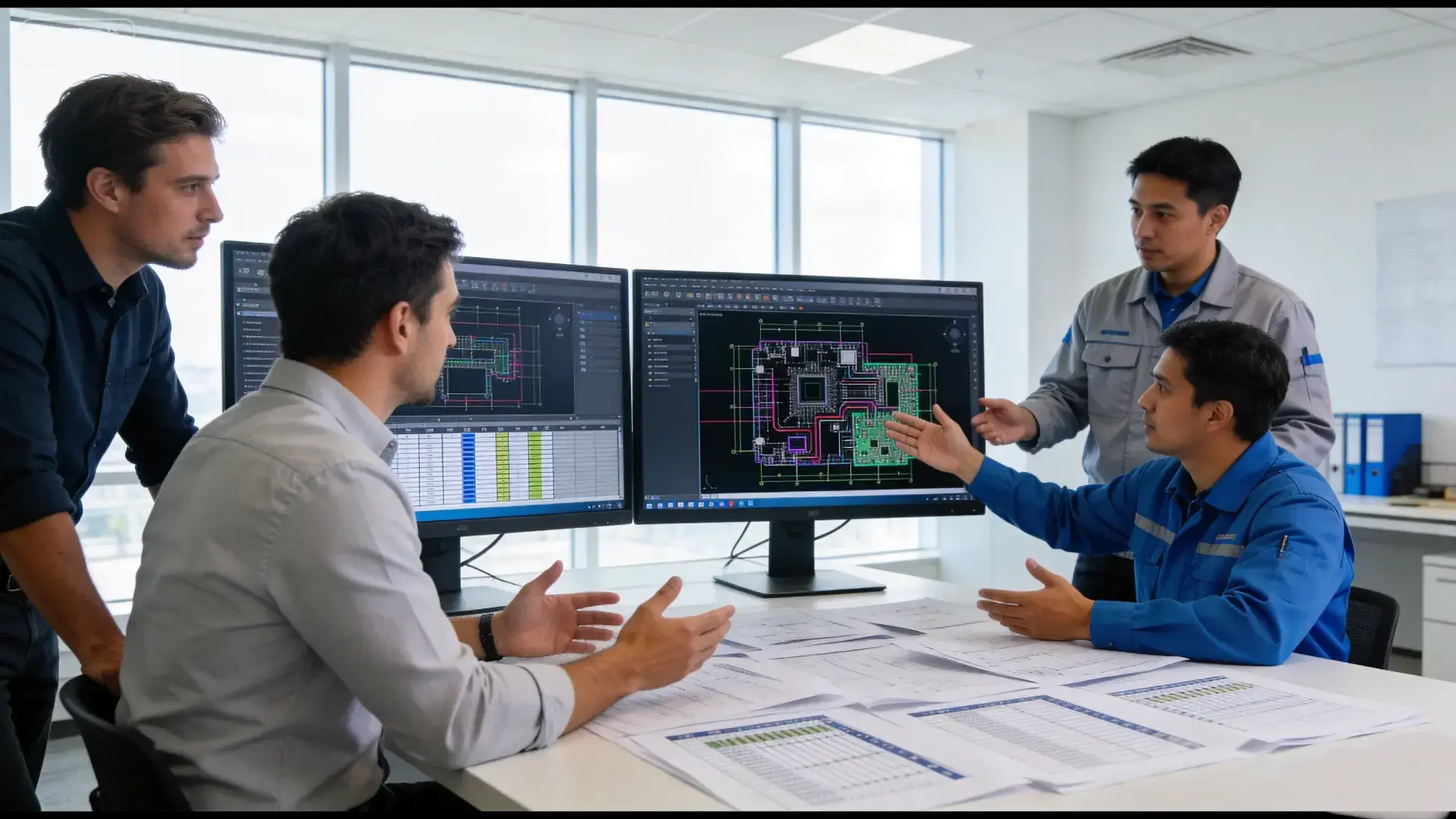
First, you transfer your complete design package to the CM. This includes schematics, PCB layouts, mechanical drawings, and BOM. The CM’s engineering team reviews everything for manufacturability.
Specifically, they check component availability, assembly complexity, and test access points. Moreover, they verify that your design matches their equipment capabilities. This mechanical design review often surfaces issues that would cause production delays later.
Stage 2: Prototype and NPI
Next, the CM produces a small batch of prototypes. This stage validates that the design works in a real production environment. Engineers test functionality, fit, and assembly sequence.
Furthermore, this is where New Product Introduction (NPI) processes begin. The CM establishes work instructions, test fixtures, and quality checkpoints. If you need help with this phase, professional product prototyping services ensure a smooth transition from prototype to production.
Stage 3: Pilot Run
The pilot run produces a slightly larger batch, typically 50 to 200 units. This stage validates the production process itself. Additionally, it tests yield rates, cycle times, and operator training.
Consequently, the pilot run reveals whether your design is truly ready for scale. Issues found here cost far less to fix than problems discovered at full volume.
Stage 4: Mass Production
Finally, the CM scales to full production volume. They manage component sourcing, schedule production runs, and maintain quality control. Regular reporting keeps you informed about yield, output, and any issues.
Importantly, manufacturing support does not end at shipping. Ongoing quality monitoring, engineering change management, and lifecycle support ensure long-term product success.
Why Hardware Founders Choose Contract Manufacturing
Contract manufacturing for hardware development delivers three core benefits that matter to startups.
First, cost efficiency. Building a factory requires millions in capital expenditure. Contract manufacturing eliminates this barrier entirely. You pay per unit produced, which converts fixed costs into variable costs. Therefore, your capital goes toward product development and market growth instead of factory infrastructure.
Second, faster time to market. CMs already have production lines, trained operators, and supplier relationships. Consequently, they can start production within weeks of design approval. According to market research, over 80% of large-scale OEMs use integrated design-to-manufacturing services to cut production timelines by up to 30%.
Third, access to expertise. Professional CMs bring decades of manufacturing experience. They understand hardware design nuances, material selection, and process optimization. Moreover, they maintain certifications like ISO 9001 and IPC-A-610 that take years to achieve independently.
Ready to move from prototype to production? A contract manufacturing partner with integrated design capabilities can cut your time-to-market by 30% or more. Talk to our team about your production goals.
Common Pitfalls and How to Avoid Them
Contract manufacturing for hardware development carries real risks. However, most pitfalls are preventable with proper planning.
Pitfall 1: Incomplete Design Documentation
Many founders hand over rough schematics and expect the CM to fill gaps. Consequently, the factory makes assumptions that diverge from your intent. This leads to defective units and costly rework.
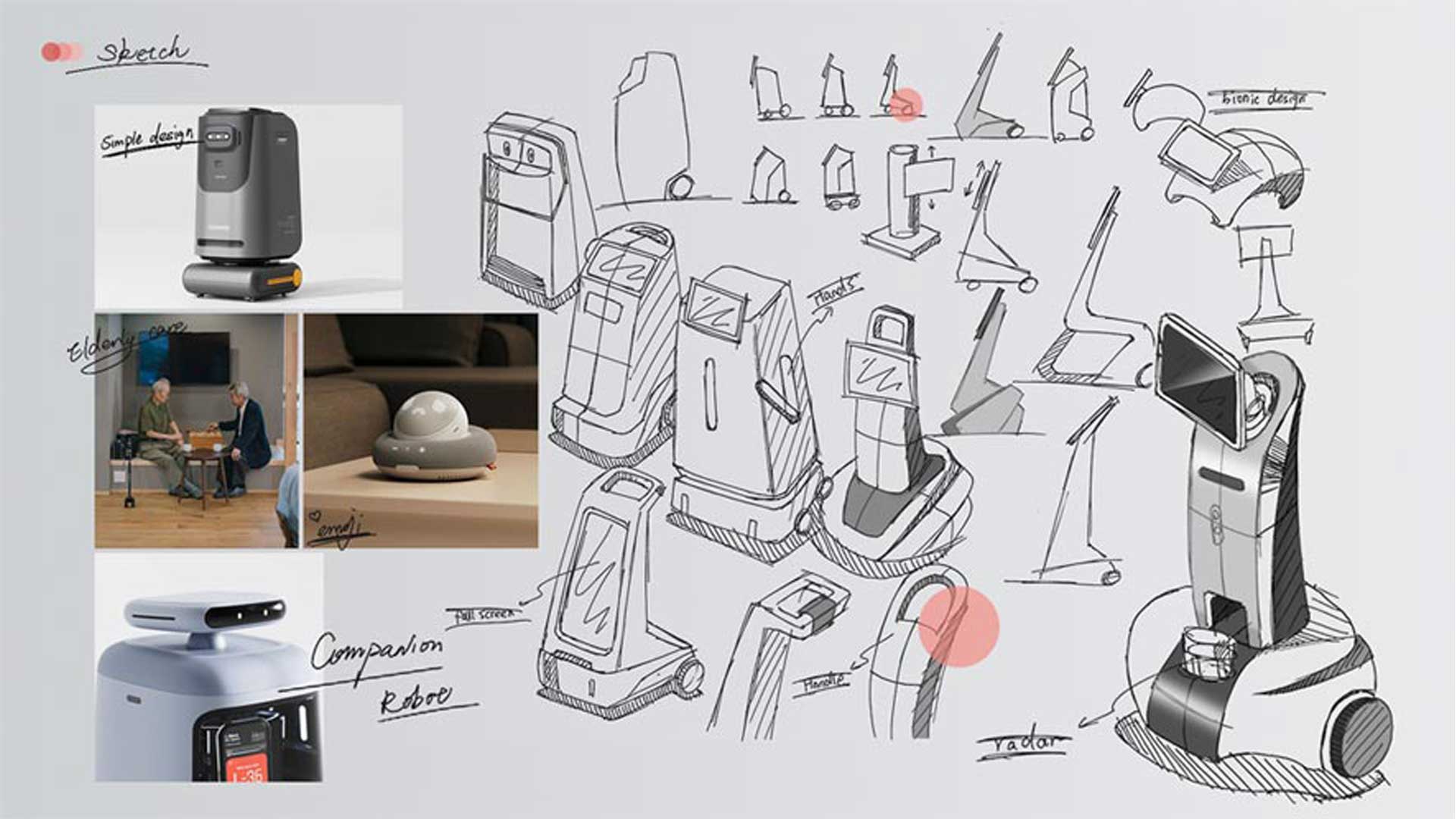
Solution: Provide complete, production-ready documentation. Include detailed assembly drawings, test procedures, and packaging specifications. Your industrial design files should leave no room for interpretation.
Pitfall 2: Ignoring Component Lifecycle
Components go end-of-life without warning. If your BOM relies on a single source, a discontinued part halts production entirely. Furthermore, 52% of manufacturers report component shortages as a major challenge.
Solution: Identify approved alternate components during design. Maintain a multi-source BOM from day one. Additionally, your CM should monitor component lifecycle status proactively.

Pitfall 3: Underestimating Quality Requirements
Startups often assume the CM will handle quality control automatically. However, without clear specifications, the factory applies its own standards, which may not match yours.
Solution: Define acceptance criteria explicitly. Specify test coverage, sampling plans, and failure thresholds. Furthermore, require first-article inspection (FAI) reports before approving mass production.
Pitfall 4: Weak IP Protection
Intellectual property theft remains a concern in overseas manufacturing. Notably, 43% of firms report IP concerns affecting their outsourcing decisions.
Solution: Use NDAs, manufacturing agreements, and design registration. Work with partners who demonstrate transparent IP policies. Moreover, choose a CM that respects design ownership as a core business principle.
How to Choose the Right Contract Manufacturing Partner
Selecting the right CM determines whether your product launches on time or stalls indefinitely. Here are the key criteria to evaluate.
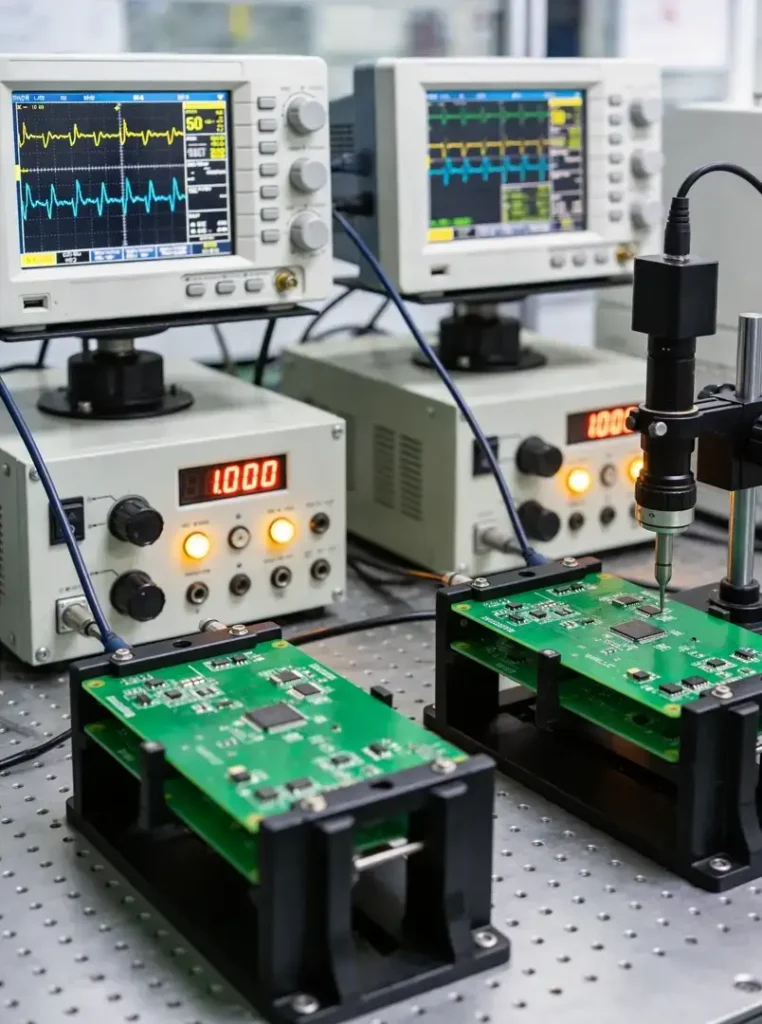
Technical Capability: Verify the CM’s equipment matches your product requirements. Check SMT line capabilities, testing infrastructure, and cleanroom certifications if needed.
Quality Systems: Look for ISO 9001 certification at minimum. For medical or automotive products, require ISO 13485 or IATF 16949. Furthermore, request documented quality control procedures.
Communication: A CM that responds within four hours signals operational discipline. Additionally, clear English communication prevents costly misunderstandings. According to ShieldWorks Manufacturing, poor communication ranks among the top reasons manufacturing partnerships fail.
Location: Shenzhen remains the global hub for hardware manufacturing. The city offers unmatched component availability, tooling expertise, and production flexibility. Therefore, a mold development partner in Shenzhen can significantly accelerate your timeline.
Scalability: Confirm the CM can handle your projected volumes. A factory optimized for 1,000 units monthly may struggle with 50,000. Moreover, ask about their capacity expansion plans.
2026 Trends Reshaping Contract Manufacturing
Contract manufacturing for hardware development evolves rapidly. Several trends in 2026 directly impact how founders build products.
AI-Driven Manufacturing: Over 63% of contract manufacturers now integrate AI-driven systems. These tools optimize production scheduling, predict maintenance needs, and improve defect detection. Consequently, product quality rises while production costs fall.
Sustainable Manufacturing: More than 51% of CMs have adopted eco-friendly processes. Energy consumption drops by up to 30%. Furthermore, EU regulations now require sustainability documentation for products sold in Europe. Your compliance certification partner should track these requirements closely.
Nearshoring and Regionalization: While Asia-Pacific holds 55% of global manufacturing, companies increasingly diversify production bases. However, Shenzhen remains unmatched for hardware startups due to its integrated supply chain ecosystem. According to Giltronics Associates, the North American EMS market still depends heavily on Asian component supply.
Digital Twin Technology: Around 50% of manufacturers now use digital twins to simulate production before physical runs begin. This technology reduces trial costs and accelerates process optimization significantly.
For founders planning a new product, brand design and packaging design must align with these manufacturing trends. Sustainable materials and regional compliance requirements shape both product and packaging decisions.
FAQ: Contract Manufacturing for Hardware Development
What is contract manufacturing in hardware development?
Contract manufacturing in hardware development means a third-party factory produces your product based on your design files and specifications. You retain full intellectual property ownership while the CM handles production, testing, and logistics.
How much does contract manufacturing cost?
Costs vary widely based on product complexity, volume, and component selection. Generally, PCB assembly starts at 10 per unit. Tooling for injection molding ranges from
50,000. Therefore, request detailed quotes from multiple CMs before committing.
How long does the contract manufacturing process take?
From design transfer to first mass production run, the process typically takes 8 to 16 weeks. However, this timeline depends on design complexity, component availability, and pilot run results.
What certifications should a contract manufacturer have?
At minimum, look for ISO 9001 certification. For electronics, IPC-A-610 and RoHS compliance are essential. Medical products require ISO 13485, while automotive products need IATF 16949.
How do I protect my IP when using a contract manufacturer?
Use comprehensive NDAs, manufacturing agreements, and design registration. Additionally, choose a CM with transparent IP policies and a proven track record of respecting client ownership.
Ready to Start Manufacturing?
Contract manufacturing for hardware development gives startups a clear path from design to mass production. The right partner reduces costs, accelerates timelines, and maintains quality standards.
At OPD Design, we integrate design and manufacturing under one roof. Our team in Shenzhen handles everything from product strategy to compliance certification. Therefore, you get a seamless transition from concept to production without managing multiple vendors.
Start your production journey today — tell us about your product, and we will show you how to manufacture it right.


![product packaging design services — structural and brand packaging by OPD Design]](https://www.opd-design.com/wp-content/uploads/2025/12/packaging.jpg "OPD DESIGN | Contract Manufacturing for Hardware Development: A Founder's Guide to Design-to-Production")