
Bringing a physical product to market usually requires both design and manufacturing. The difficult question is not whether you need these capabilities, but when you need each one—and who should coordinate the transition between them.
An industrial design company helps define what the product should be, how people will use it, how it should look and feel, and how the concept can become a feasible design. A contract manufacturer builds an already defined product repeatedly, at the required cost, quality, and volume.

The simplest answer is this:
- If you have an idea, early concept, or unvalidated prototype, start with an industrial design or product development company.
- If you already have complete, production-ready documentation, validated prototypes, and clear quality requirements, a contract manufacturer may be the right next partner.
- If your product still needs design, engineering, testing, and production setup, an end-to-end product development partner can reduce the gaps between the two stages.
Choosing too early can lead to a factory optimizing the wrong product. Choosing too late can result in an attractive design that is expensive or difficult to manufacture. This guide explains the differences, deliverables, risks, and decision criteria so you can select the right partner for your current product stage.
Industrial Design Company vs Contract Manufacturer: The Key Differenc
The main difference is the problem each partner is hired to solve.
An industrial design company reduces product uncertainty. It explores user needs, product positioning, form, usability, materials, interaction, ergonomics, and early manufacturability. The goal is to turn an opportunity or rough idea into a clearly defined, testable product.
A contract manufacturer reduces production uncertainty. It plans sourcing, tooling, assembly, testing, quality control, packaging, and production capacity. The goal is to build the specified product consistently and economically.
| Question | Industrial design company | Contract manufacturer |
|---|---|---|
| Primary focus | Defining and developing the right product | Producing a defined product reliably |
| Best starting point | Idea, brief, concept, or early prototype | Design freeze or production-ready package |
| Core expertise | User research, product strategy, form, usability, CMF, design development | Sourcing, tooling, process engineering, assembly, testing, quality, logistics |
| Typical output | Concepts, specifications, CAD direction, appearance models, usability findings | DFM feedback, tooling, work instructions, test fixtures, pilot builds, production units |
| Main risk reduced | Building a product users do not want or cannot use well | Producing inconsistent, costly, or defective units |
| Commercial incentive | Create differentiation and improve product value | Improve yield, throughput, repeatability, and unit economics |
The two are complementary, not interchangeable. A successful physical product needs both strong product definition and disciplined production execution.
What Does an Industrial Design Company Do?
The Industrial Designers Society of America describes industrial design as the professional practice of designing products, devices, objects, and services, with attention to appearance, functionality, manufacturability, and the end-user experience. In practice, a capable industrial design company works well beyond styling.
Its role may include:
- Market, competitor, and user research
- Product positioning and feature prioritization
- User journeys, use scenarios, and ergonomic analysis
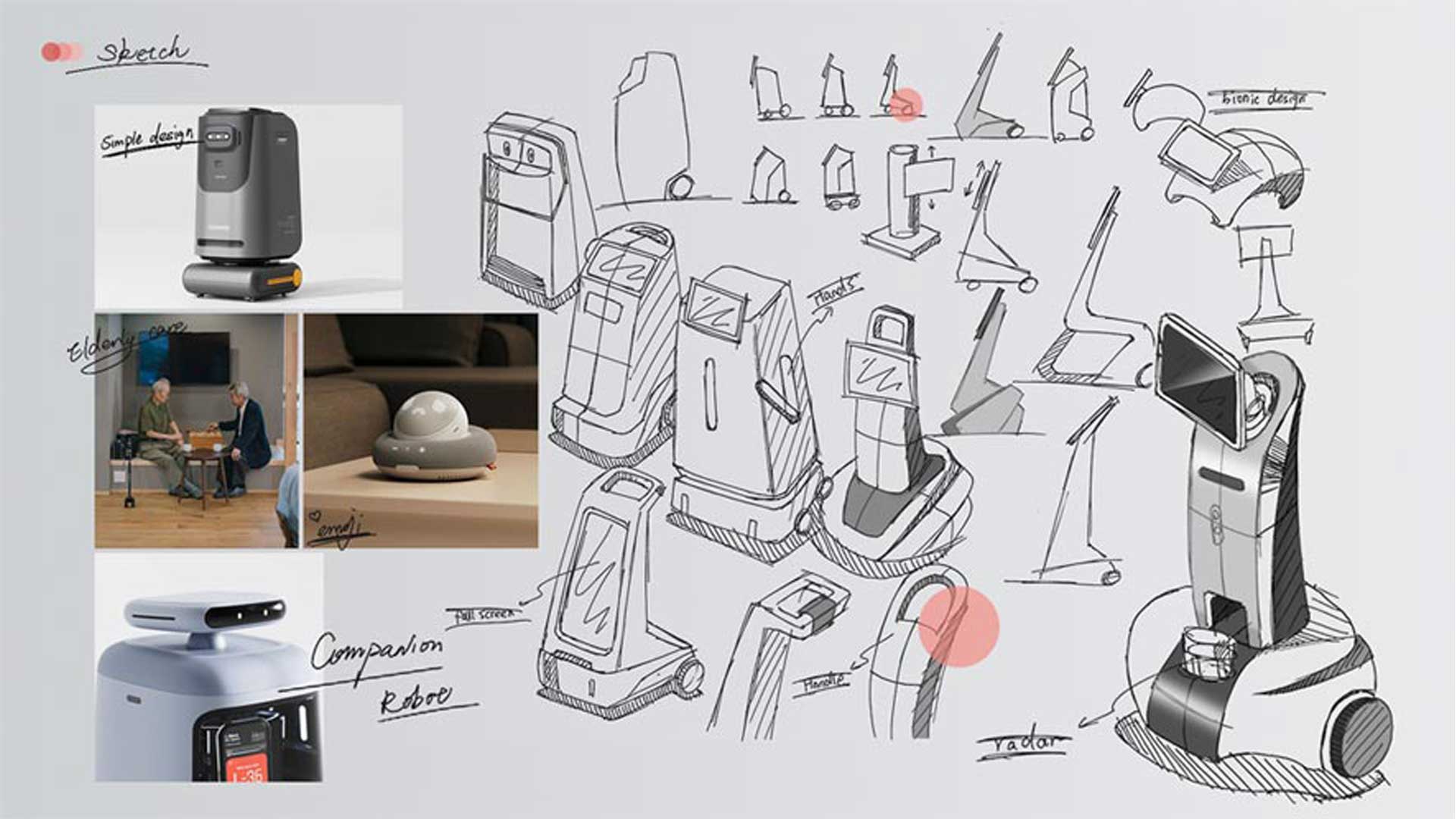
- Concept sketching and form exploration
- Product architecture and component layout studies
- Color, material, and finish (CMF) definition
- 3D modeling and visual prototypes
- Appearance models and functional prototypes
- Early material and manufacturing-process selection
- Collaboration with mechanical, electronic, and software engineers
- Design refinement based on usability, engineering, cost, and compliance constraints
The most valuable outcome is not a set of attractive renderings. It is a product definition that aligns user value, brand differentiation, technical feasibility, target cost, and manufacturing reality.
When should you hire an industrial design company?
An industrial design company is usually the right first partner when:
- Your idea is still described in sketches, slides, or a rough product brief.
- You know the problem you want to solve but have not defined the best physical solution.
- Your prototype proves a technology but does not yet deliver a strong user experience.
- The enclosure, controls, ergonomics, or appearance still require development.
- You need to differentiate a new product from generic OEM or ODM alternatives.
- You need design and engineering teams to resolve competing requirements.
- You do not yet have a complete production package.
For example, a working electronics breadboard may prove that a sensor system is technically possible. It does not define enclosure architecture, heat management, antenna performance, assembly, product interaction, CMF, ingress protection, or the experience of charging and maintenance. Those decisions belong in product development before production is quoted seriously.
What Does a Contract Manufacturer Do?
A contract manufacturer, or CM, produces a product for another company according to agreed specifications. Depending on its capabilities, the CM may source components, fabricate parts, assemble units, program electronics, test products, package finished goods, and arrange logistics.
Typical contract manufacturing responsibilities include:
- Reviewing released CAD, drawings, specifications, and the bill of materials
- Providing design for manufacturing and assembly feedback
- Sourcing components and managing suppliers
- Developing molds, fixtures, jigs, and production test equipment
- Planning assembly operations and work instructions
- Running pilot builds and validating the manufacturing process
- Establishing incoming, in-process, and outgoing quality controls
- Tracking yield, cycle time, defects, and corrective actions
- Scaling production and managing delivery schedules
A good CM can provide valuable manufacturing feedback. However, DFM feedback is not the same as full product development. Most factories review whether a design can be produced using their processes, equipment, suppliers, and cost structure. They may not revisit whether the product solves the right user problem, delivers the right experience, or creates meaningful brand differentiation.
For a deeper explanation of the manufacturing model, read our contract manufacturing guide for hardware development.
When should you hire a contract manufacturer?
A CM becomes the logical primary partner when you can provide a controlled, production-ready package that may include:
- Released 3D CAD and 2D engineering drawings
- Approved materials, finishes, tolerances, and cosmetic standards
- A controlled bill of materials with acceptable alternatives
- Schematics, PCB data, firmware, and programming instructions where applicable
- Validated functional prototypes
- Assembly instructions and product test requirements
- Regulatory and compliance requirements for the target market
- Packaging specifications and labeling files
- Quality standards, inspection methods, and acceptance criteria
- Forecast volumes, target costs, and delivery requirements
If these inputs are incomplete, the manufacturer will either stop and request clarification, make assumptions, or charge for engineering changes. All three can affect cost and schedule. The greater danger is that undocumented assumptions become embedded in tooling or production.
Why Hiring a Manufacturer Too Early Can Be Expensive
Factories are often attractive to startups because they may offer low-cost or apparently free design support in anticipation of a production order. This can work for simple products based on an existing platform. It becomes risky when the product is differentiated, technically complex, highly regulated, or central to the brand.
1. The solution may be constrained by the factory’s existing capabilities
A manufacturer naturally favors processes, components, suppliers, and architectures it already knows. That can improve production efficiency, but it may narrow exploration before the product requirements are properly defined.
2. Product experience may receive less attention
Assembly efficiency does not automatically produce intuitive controls, comfortable ergonomics, clear feedback, or strong visual identity. A factory can build exactly what was requested while the product still performs poorly in the market.
3. Cost decisions may be made without understanding customer value
Removing a material, feature, finish, or component may reduce the unit cost but also weaken the product’s differentiation. Design teams evaluate these trade-offs against user needs and product positioning, not cost alone.
4. Ownership and deliverables may be unclear
Before work begins, confirm who owns the CAD, drawings, firmware, tooling, test fixtures, and modifications. Also confirm whether you will receive editable source files and the documentation required to transfer production if necessary.
5. A prototype can be mistaken for a production-ready design
A one-off prototype may function even when it depends on manual adjustment, premium components, temporary fasteners, hand finishing, or uncontrolled tolerances. Production readiness requires repeatability, documented acceptance criteria, stable sourcing, and a validated process—not simply one working unit.
Why Hiring a Design Company Without Manufacturing Expertise Can Also Fail
The opposite mistake is treating industrial design as a standalone aesthetic exercise. Beautiful renderings can hide unresolved engineering and production problems.
Common issues include:
- Parts that cannot be molded or assembled as designed
- Unrealistic wall thicknesses, draft angles, undercuts, or surface transitions
- Tight tolerances that increase cost without improving performance
- CMF specifications that are difficult to reproduce consistently
- Poor access for assembly, repair, or product testing
- Enclosures that conflict with antennas, batteries, sensors, heat, or waterproofing
- Designs that meet the brief visually but exceed the target manufacturing cost
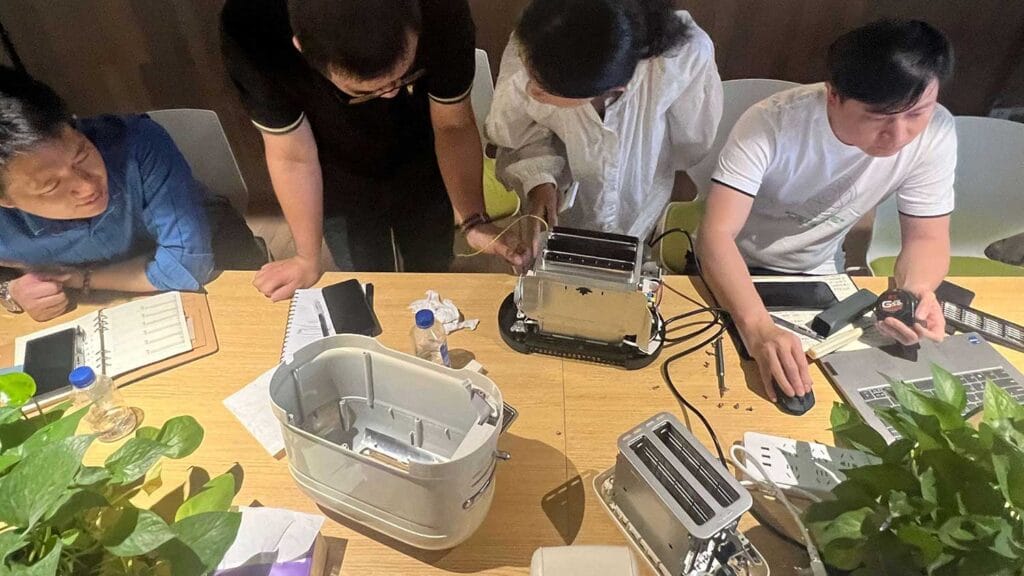
This is why industrial design should connect early with mechanical engineering, electronics, prototyping, and DFM. Research from NIST has long emphasized identifying and eliminating manufacturing problems during the design stage to reduce redesign, product cost, and lead time.
When evaluating a design company, ask to see how it moves beyond concept renderings into mechanical design, product prototyping, tooling, pilot builds, and manufacturing support.
Do You Need Both Partners?
In most original hardware projects, yes. The real decision is whether to manage them separately or work with an integrated product development partner.
Option 1: Hire a design company and a contract manufacturer separately
This model can work well when your company has an experienced internal product leader who can manage requirements, design reviews, engineering changes, documentation, supplier selection, and production transfer.
It can also provide flexibility: you can select the strongest specialist for each stage and obtain competitive manufacturing quotes after the design is mature.
The trade-off is coordination. If responsibilities, file versions, and acceptance criteria are unclear, problems can fall into the gap between design and manufacturing. The brand owner must manage the handoff and decide who pays when a production issue requires redesign.
Option 2: Use an end-to-end product development partner
An integrated partner coordinates product strategy, industrial design, engineering, prototyping, DFM, tooling, and production introduction under one development process. This is especially useful for overseas startups and small product teams without in-house industrialization expertise.
The potential advantages include:
- Manufacturing constraints are considered during concept and engineering decisions.
- Designers and engineers receive faster feedback from prototype and factory partners.
- One project team controls requirements, milestones, risks, and design changes.
- Fewer translation errors occur between creative, engineering, and production teams.
- Supplier selection can be matched to the product instead of forcing the product into one factory’s capabilities.
- The transition from prototype to pilot run is easier to trace and manage.
Integration does not remove the need for stage gates or independent verification. You should still define ownership, deliverables, approval rights, cost transparency, and quality responsibilities in the contract.
Which Partner Do You Need at Each Product Stage?
| Your current situation | Best-fit partner | Why |
| You have an idea or product brief | Industrial design / product strategy company | The opportunity, users, features, and product direction still need definition |
| You have a technical proof of concept | Product development company | Industrial design, architecture, engineering, and user experience must be integrated |
| You have attractive renderings only | Industrial design + engineering partner | The concept still needs feasibility, CAD development, prototyping, and validation |
| You have a functional prototype but no released documentation | Product development / NPI partner | The design must be converted into a controlled, manufacturable package |
| You have released files and a validated prototype | Contract manufacturer | The product is ready for DFM review, tooling, pilot production, and scale-up |
| Your pilot run has quality or yield problems | Manufacturing engineering support, with design engineering as needed | The team must identify whether the root cause is the product design, tooling, process, supplier, or test method |
| You lack an internal hardware development team | End-to-end product development partner | One team can coordinate the path from concept to mass production |
| You are customizing an existing white-label product | ODM or manufacturer | Limited changes may not justify a full original product development program |
Another practical way to decide is to ask: Can a new supplier build the intended product correctly using only the documentation we can provide today?
If the answer is no, you are not ready to treat manufacturing as the main problem. Product definition and engineering work remain.
Questions to Ask Before Choosing a Partner
Whether you are evaluating an industrial design company, contract manufacturer, or integrated partner, ask questions that reveal how the team handles the full development risk—not just its most visible service.
Questions for an industrial design company
- How do you translate user and business needs into measurable product requirements?
- When do mechanical, electronic, software, and manufacturing specialists join the project?
- How do you validate ergonomics, usability, and technical feasibility?
- Which source files and specifications are included in the final deliverables?
- How do you design toward target manufacturing cost?
- Can you support DFM, tooling, pilot builds, and production transfer?
- Who owns the design files and intellectual property after payment?
Questions for a contract manufacturer
- What products, processes, materials, and production volumes are your strongest fit?
- Which operations are performed in-house and which are subcontracted?
- How are engineering changes documented and approved?
- How do you manage component substitutions and supply continuity?
- What quality system, inspection equipment, and traceability can you provide?
- How will pilot-run yield and failure data be reported?
- Who owns the tooling, fixtures, firmware, and production documentation?
- Can the tooling and production package be transferred to another supplier?
Questions for an integrated partner
- Which capabilities are in-house, and how are external suppliers selected and supervised?
- Who makes the final decision when design, cost, engineering, and manufacturing goals conflict?
- What are the approval gates from proof of concept through EVT, DVT, PVT, and mass production?
- How are project risks, costs, timelines, and design changes made visible to the client?
- How is production quality verified independently from the factory making the units?
Strong partners answer with processes, example deliverables, and relevant project evidence—not only a portfolio of finished images.
How to Create a Better Design-to-Manufacturing Handoff
Even experienced teams lose time when knowledge remains in conversations instead of controlled documents. Before transferring a product to manufacturing, establish:
- A design-freeze baseline with revision-controlled CAD, drawings, BOM, firmware, and specifications
- Clear ownership for every open issue and engineering change
- Critical-to-quality dimensions and cosmetic acceptance standards
- Approved golden samples or reference units
- Test procedures, pass/fail criteria, and required test coverage
- Approved materials, finishes, components, and substitution rules
- Packaging, labeling, regulatory, and market requirements
- Pilot-build objectives, sample size, and success criteria
- A process for nonconformance, root-cause analysis, and corrective action
- Tooling ownership, maintenance, storage, and transfer terms
The handoff should not be a single file transfer. It is a controlled phase in which the development team explains design intent, the manufacturer challenges production assumptions, and both parties close risks before capital is committed to tooling and inventory.
The Best Choice Is Based on Product Maturity, Not Company Size
A startup does not automatically need a low-cost factory first, and an established company does not automatically need a large contract manufacturer. The correct choice depends on how mature the product definition is and which uncertainties are still unresolved.
Choose an industrial design company when you still need to decide what the product should be. Choose a contract manufacturer when the product is defined and the central challenge is building it repeatedly. Choose an integrated development partner when important design and production decisions overlap—or when your internal team cannot manage the interfaces alone.
OPD Design follows a structured New Product Introduction process from proof of concept through engineering validation, design validation, production validation, and mass production. Our Shenzhen-based team connects product strategy, industrial design, mechanical and electronic development, prototyping, mold development, and manufacturing support so that decisions made early remain aligned with production reality.
If you are unsure whether your project is ready for design, engineering, or manufacturing, contact OPD Design. Share your current brief, CAD, prototype, or production challenge, and our team can help identify the next practical stage.
Frequently Asked Questions
What is the difference between an industrial design company and a contract manufacturer?
An industrial design company defines and develops the product, including its user experience, appearance, ergonomics, materials, and design direction. A contract manufacturer builds a defined product using approved specifications, tooling, assembly processes, testing, and quality controls.
Can a contract manufacturer design my product?
Some contract manufacturers offer engineering and design support, particularly for modifications to existing products or to make a mature design compatible with their production processes. For an original product that requires user research, concept exploration, brand differentiation, complex engineering, or usability validation, a dedicated product development capability is usually required.
Should I find a manufacturer before designing my product?
Manufacturing input should begin early, but selecting a production factory as the primary partner may be premature if the product is still undefined. Early supplier consultation can inform processes, materials, components, and cost. The product should then be developed and validated before final production commitments are made.
What files does a contract manufacturer need?
Requirements vary by product, but a manufacturer commonly needs controlled CAD and drawings, a bill of materials, material and finish specifications, electronics production files, firmware, assembly instructions, test requirements, quality standards, packaging files, forecast volumes, and regulatory requirements.
What is an end-to-end product development company?
An end-to-end product development company coordinates multiple stages—from product strategy and industrial design through engineering, prototyping, DFM, tooling, pilot production, and manufacturing support. It is useful when a client wants one team to manage the interfaces between design and production.
When is a product ready for contract manufacturing?
A product is ready when its design is stable, prototypes have been validated, requirements are documented, the BOM and supply chain are feasible, quality and test criteria are defined, and remaining risks can be addressed through DFM, tooling, pilot production, and process validation rather than fundamental product redesign.


![product packaging design services — structural and brand packaging by OPD Design]](https://www.opd-design.com/wp-content/uploads/2025/12/packaging.jpg "OPD DESIGN | Industrial Design Company vs Contract Manufacturer: Which Partner Do You Need?")