
Design for Manufacturing (DFM) is the discipline that bridges the gap between your product concept and mass production reality. For hardware founders working with Chinese manufacturers, understanding DFM best practices can mean the difference between a smooth path to market and costly design revisions that drain your runway.
When you partner with a product development team in Shenzhen, DFM analysis should be integrated from day one—not added as an afterthought when your design is “finished.” This guide walks you through the key DFM principles every hardware startup founder needs to know before sending your first design files to a factory.
What Is Design for Manufacturing?
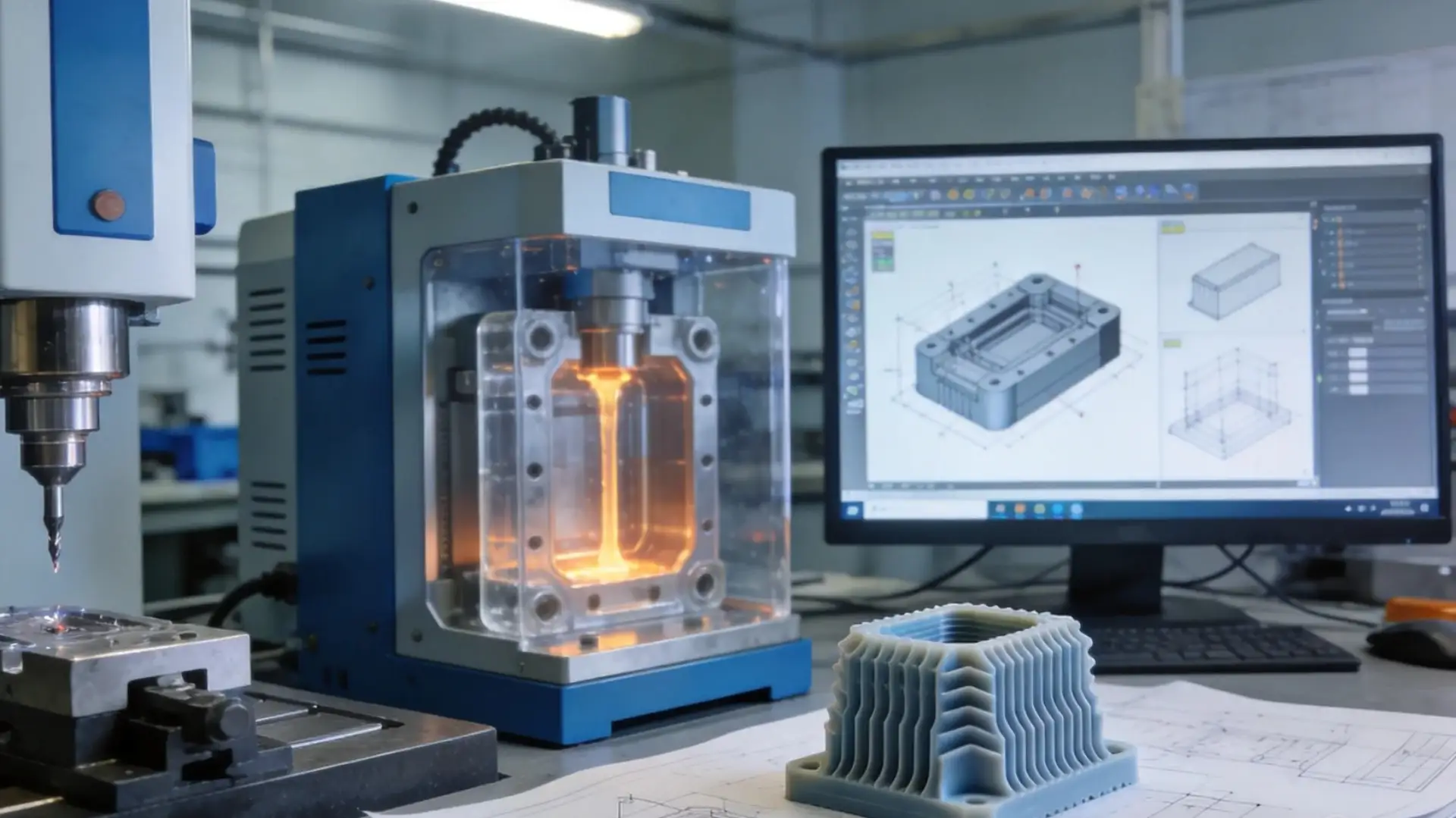
Design for Manufacturing (DFM) is the practice of optimizing your product design for efficient, cost-effective production. It considers the capabilities and constraints of your manufacturing process—whether that’s injection molding, CNC machining, sheet metal fabrication, or PCB assembly—from the earliest stages of development.
The core philosophy is simple: fix design issues on paper, not in production. A design change during the concept phase costs pennies. The same change during tooling fabrication costs dollars. And if that change reaches mass production, it can cost your entire project.
For hardware founders working with manufacturers in Shenzhen or throughout China, DFM is especially critical. Chinese manufacturing partners bring deep process expertise, but they need clear design inputs to deliver optimal results. The better your DFM implementation, the smoother your collaboration.
Why DFM Matters for Hardware Startups
Hardware development carries inherent risks that software doesn’t. You cannot simply push an update and fix a manufacturing defect post-launch. Every issue discovered in production has already consumed tooling costs, material costs, and months of lead time.
Consider these statistics from hardware development projects:
- 40-60% of product development costs are driven by changes made after initial design
- Most hardware failures trace back to design decisions that didn’t account for manufacturing constraints
- Successful mass production typically requires 2-4 design iterations after initial prototypes
DFM addresses these risks by identifying potential manufacturing issues before they become expensive problems. When you work with an experienced product development services provider, DFM analysis should begin during the proof-of-concept phase and continue through to mass production — it’s not a one-time checkpoint but a continuous engineering discipline.
Core DFM Principles for Hardware Products
1. Design for the Manufacturing Process
Each manufacturing process has specific design requirements. Understanding these constraints early prevents costly revisions.
Injection Molding DFM
For plastic components, injection molding offers high volume production at low unit cost—but it demands specific design considerations:
- Draft angles: Include 1-2° draft on vertical walls for proper part release
- Wall thickness consistency: Maintain uniform wall thickness (typically 1.5-3mm) to prevent sink marks and warpage
- Radii on corners: Use generous radii (minimum 0.5mm) to reduce stress concentrations and improve mold flow
- Rib design: Add ribs for strength without increasing wall thickness; rib thickness should be 60-80% of adjacent wall thickness
CNC Machining DFM
For metal or precision plastic components, CNC machining provides excellent tolerances but requires attention to:
- Accessible features: Design parts that can be machined from accessible directions without complex setups
- Standard tooling: Prefer hole sizes, radii, and slots that match standard tool dimensions
- Tolerances where needed: Apply tight tolerances only to functional features; over-specifying adds cost without benefit
- Surface finish requirements: Specify surface finishes only where functionally necessary
PCB Assembly DFM
For electronic hardware, design for manufacturing extends to your PCB layout:
- Component spacing: Maintain adequate clearance for SMT assembly and inspection
- Pad design: Follow manufacturer guidelines for pad dimensions and shapes
- Test points: Include test points for ICT (in-circuit testing) and debugging
- DFM review: Request a free DFM check from your assembly partner before finalizing Gerber files — tools like JLCPCB’s online DFM checker can flag issues automatically before you submit
2. Minimize Part Count
Every additional component adds cost, complexity, and failure points. Design for manufacturing excellence means evaluating whether multiple parts can be consolidated into a single molded, machined, or fabricated piece.
Example: A consumer electronics enclosure requiring 8 separate fasteners can be redesigned with snap-fit features, reducing component count to zero and assembly time by 60%.
When evaluating part consolidation, consider:
- Does the added tooling complexity for a single complex part outweigh the assembly savings?
- Will material or process requirements force compromises on individual features?
- Does the consolidated design affect serviceability or repair?
3. Design for Assembly
Products that are easy to assemble cost less to manufacture and have higher reliability. Apply these assembly DFM principles:
- Minimize orientations: Design parts that can be assembled from one or two directions
- Self-locating features: Incorporate snaps, pins, and tabs that guide alignment
- Accessibility: Ensure all fastening points are accessible with standard tools
- Reduce handling: Design parts that cannot be installed incorrectly (mistake-proofing)
4. Material Selection for Manufacturing
Material choice affects both product performance and manufacturing cost. When working with Chinese manufacturers, consider:
- Local material availability: Common materials (ABS, PC, PA, 6061 aluminum, SS304) are readily available and cost-effective in China
- Process compatibility: Ensure your material choice matches your manufacturing process capabilities
- Environmental requirements: Specify UV resistance, flame retardancy, or food-grade properties where needed
- Cost tiers: Work with your manufacturer to identify cost-effective alternatives that meet functional requirements
Common DFM Mistakes Hardware Founders Make
Understanding common pitfalls helps you avoid them in your own development process.
Mistake 1: Treating DFM as an Afterthought
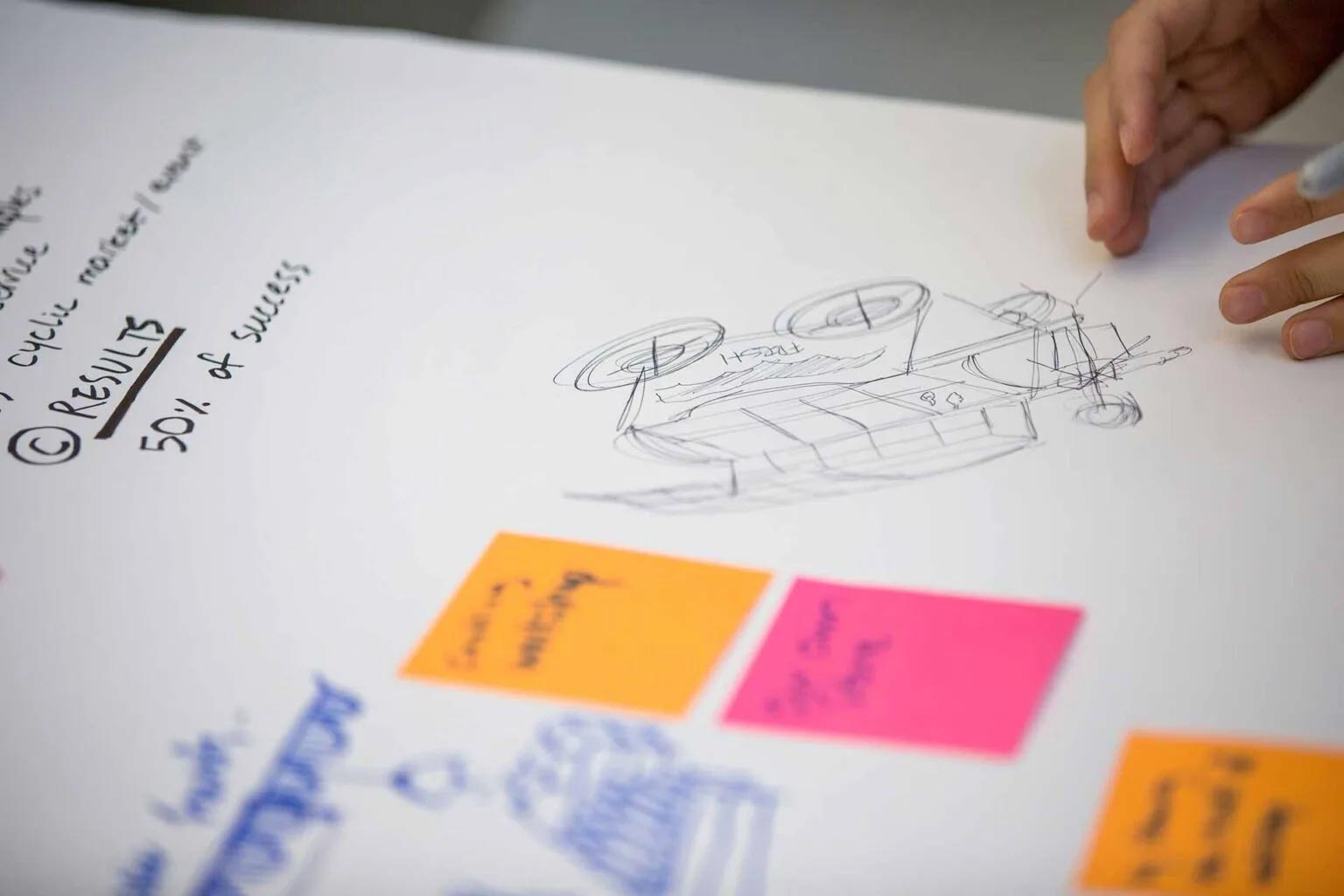
Many first-time hardware founders treat DFM as a “pre-production” step. In reality, DFM should influence decisions from your first CAD sketch.
Solution: Engage your manufacturing partner early. Share your concept drawings and request preliminary DFM feedback before investing in detailed design.
Mistake 2: Over-Specifying Tolerances
Tight tolerances look impressive on drawings but add significant manufacturing cost. If a dimension doesn’t affect function, give it a generous tolerance.
Solution: Apply ±0.025mm tolerances only to mating surfaces, bearing fits, and critical interfaces. Use ±0.1mm or looser for non-functional features. If you’re working with a mechanical design team, they should flag tolerance issues during the initial DFM review and recommend cost-effective alternatives.
Mistake 3: Ignoring Draft Angles
For injection molded parts, insufficient draft angles cause ejection problems, surface scratches, and dimensional instability.
Solution: Always include at least 1° draft per side. Increase draft for textured surfaces (additional 1° per 0.025mm texture depth).
Mistake 4: Designing Undercuts Without Justification
Undercuts require side-action cores in injection molds or secondary operations in machining—adding significant tooling and production cost.
Solution: Redesign features to eliminate undercuts where possible. If undercuts are necessary for function, validate that the added cost is justified.
Mistake 5: Not Validating Design for Your Specific Process
Generic “design guidelines” don’t account for your manufacturer’s specific capabilities, equipment, or experience.
Solution: Work with your specific manufacturing partner to understand their process constraints. Request a DFM report that addresses your actual production setup in China.
DFM in China: Working Effectively with Shenzhen Manufacturers
Chinese manufacturers, particularly those in the Shenzhen ecosystem, have accumulated decades of experience across virtually every manufacturing process. Here’s how to leverage that expertise:
Communicate Design Intent Clearly
Provide your manufacturer with:
- Complete 3D CAD files (STEP or IGES formats work universally)
- 2D drawings with critical dimensions and tolerances
- Material specifications with acceptable alternatives
- Reference samples or images for cosmetic requirements
- Functional requirements that inform manufacturing decisions
Not sure where your design stands? At OPD Design, we offer a complimentary initial DFM assessment for hardware startups exploring manufacturing in Shenzhen. Send us your CAD files, and our engineering team will identify potential production issues before you commit to tooling. Start your free DFM review →
Request DFM Analysis Early
Reputable product design services in China will provide DFM analysis as part of their engineering review. Request this analysis before committing to tooling fabrication — this is standard practice at OPD Design for every product development engagement.
Look for partners who provide:
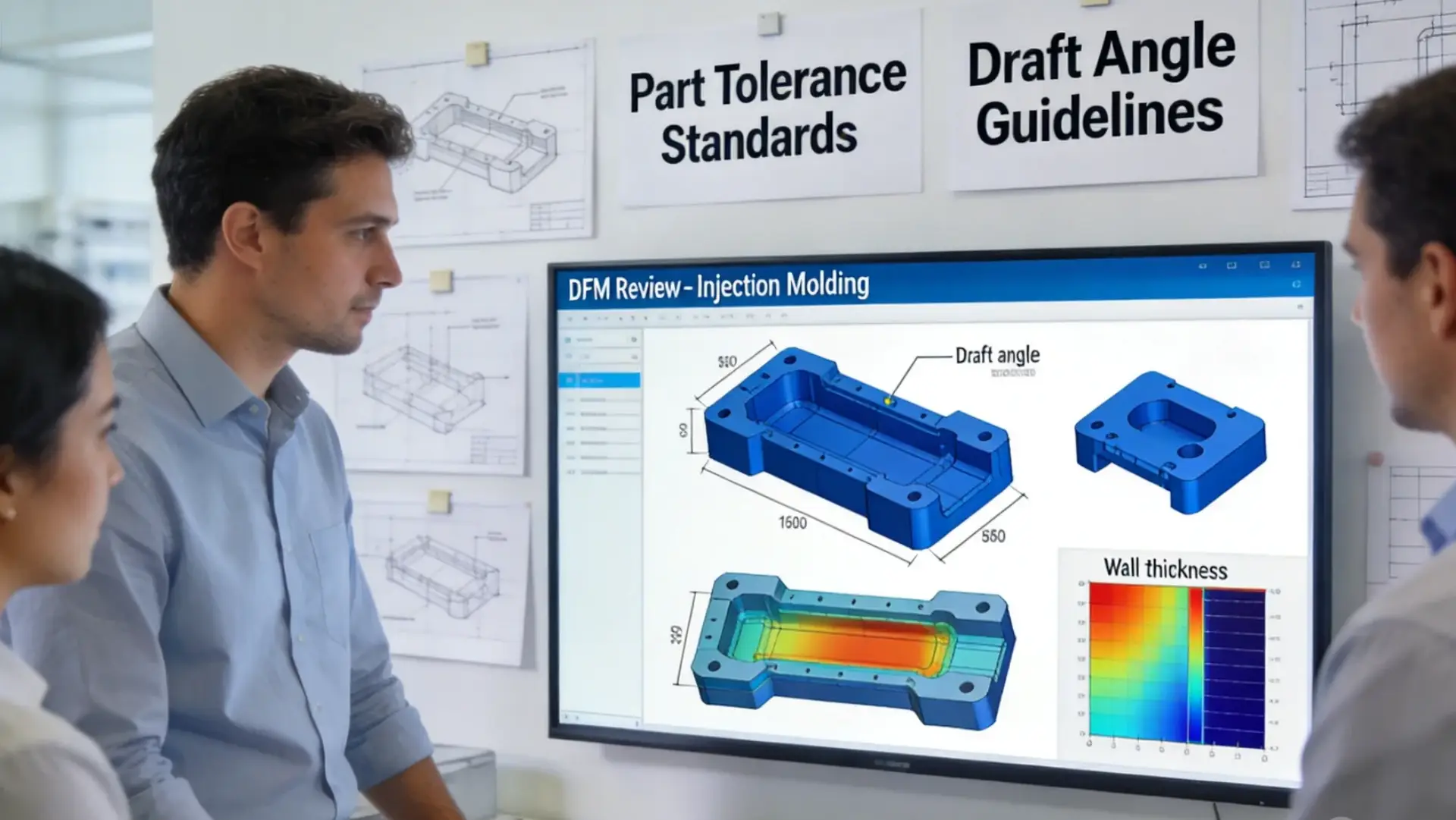
- Wall thickness analysis for injection molded parts
- Mold flow simulation for complex geometries
- Tolerance stack-up analysis for assemblies
- Material and process recommendations
Budget for Iterative Refinement
Even with excellent DFM practices, most hardware products benefit from prototype iterations. Budget time and capital for at least two prototype rounds before committing to production tooling. A good prototyping partner should help you identify which design parameters need refinement at each iteration — not just produce parts and hope for the best.
2026 DFM Trends: AI-Powered Design Optimization
The manufacturing landscape in 2026 sees increasing integration of AI tools into DFM workflows. Leading hardware design teams and design partners now offer:
- Real-time DFM feedback within CAD environments, flagging manufacturing issues as designers create geometry
- Generative design that suggests optimized geometries based on manufacturing process constraints
- Automated tolerance analysis that identifies critical dimensions requiring tighter control
- Predictive quality modeling that estimates defect rates based on design parameters
These tools don’t replace engineering judgment—they augment it. The best outcomes still come from experienced engineers who understand both design intent and manufacturing reality.
When evaluating product development services, ask whether your partner incorporates AI-assisted DFM tools into their workflow. The combination of human expertise and AI analysis delivers the most robust designs.
FAQ: Design for Manufacturing in China
What is DFM in product development?
DFM (Design for Manufacturing) is the practice of optimizing product designs to suit manufacturing processes, reducing costs, improving quality, and accelerating time-to-market. It involves analyzing designs for manufacturability before tooling fabrication begins.
When should DFM analysis begin?
DFM analysis should begin during the concept phase, before any detailed design work. Early DFM feedback prevents costly revisions later in development. The ideal sequence is: concept review → preliminary DFM → detailed design → formal DFM analysis → prototype DFM validation.
How much does DFM add to development costs?
Quality DFM analysis adds minimal direct cost—typically a few engineering hours for a comprehensive review. However, it prevents costly design changes that can add thousands to your project budget. The ROI of DFM is typically 10:1 or higher in avoided rework costs.
Can I skip DFM if my manufacturer offers it for free?
Free DFM from your manufacturer is valuable, but it’s not a substitute for proactive DFM in your design process. Manufacturer DFM catches issues in their process—but thoughtful design for manufacturing from the start reduces total iteration cycles.
What is the difference between DFM and DFA?
DFM (Design for Manufacturing) focuses on making parts producible. DFA (Design for Assembly) focuses on making products easy to assemble. Both principles are complementary and should be considered together in product development.
How do I find a DFM-capable manufacturer in China?
Look for manufacturers with documented DFM processes, engineering teams with DFM expertise, and positive references from similar projects. Request sample DFM reports from potential partners to assess their analysis depth. Reputable product design companies in China integrate DFM as standard practice, not an add-on service.
Take the Next Step: Get Expert DFM Analysis for Your Hardware Project
DFM isn’t optional — it’s the difference between a product that ships on time and under budget, and one that drains your capital in endless revision cycles. If you’re a hardware founder planning to manufacture in China, the best time to engage a DFM-capable design partner is before you finalize your CAD files.
At OPD Design, our Shenzhen-based engineering team provides comprehensive DFM analysis across injection molding, CNC machining, sheet metal, and PCB assembly. We’ve helped hardware startups reduce tooling costs by up to 30% and cut development timelines by identifying manufacturing issues early.
What you get with OPD Design:
- ✅ Free initial DFM assessment with actionable recommendations
- ✅ Wall thickness analysis, mold flow simulation, and tolerance review
- ✅ Material and process optimization for your specific application
- ✅ End-to-end support from prototype to mass production
Get your free DFM assessment →
Or explore our end-to-end product development services to see how we take products from concept to mass production.


![product packaging design services — structural and brand packaging by OPD Design]](https://www.opd-design.com/wp-content/uploads/2025/12/packaging.jpg "OPD DESIGN | DFM Best Practices: A Hardware Founder's Guide to Design for Manufacturing in China")