

What You Need to Know in 30 Seconds
Packaging design is not an afterthought bolted on after your product ships — it’s a parallel workstream that protects your product, carries your brand, and directly affects conversion on the shelf and online. Getting it right means balancing structural engineering (drop testing, cushioning, DFM), materials and sustainability, and graphic/brand storytelling — while keeping unit economics and logistics costs under control. Start packaging design during your industrial design phase, not after tooling is locked.
Why Packaging Design Deserves the Same Rigor as Product Design
For hardware founders, it’s tempting to treat packaging as a late-stage marketing task: pick a box, add a logo, ship it. But packaging is the first physical touchpoint a customer has with your brand — before they ever power on the device inside. A misjudged box can undercut months of industrial design work; a well-engineered one can lift perceived value, reduce damage-related returns, and lower your landed cost per unit all at once.
For consumer electronics, IoT devices, beauty tech, and other physical products, packaging design sits at the intersection of three disciplines that rarely report to the same person: brand design, structural/mechanical engineering, and manufacturing. Founders who treat these as separate tracks usually end up re-engineering packaging after the fact — an expensive fix once molds, dielines, or supplier contracts are locked.
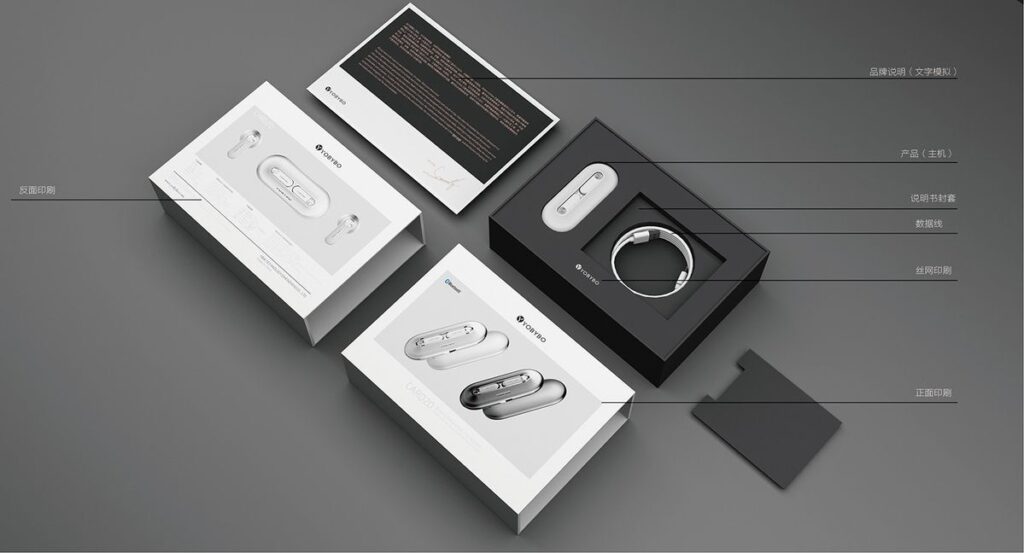
The Three Pillars of Effective Packaging Design
1. Brand Visual Identity
Packaging is a physical extension of your brand system — logo, color palette, typography, and messaging all need to translate from your product’s industrial design language onto a printed or molded surface. This is where unboxing becomes marketing: the packaging should reinforce the same positioning your product photography and website promise, so the physical experience doesn’t feel disconnected from the digital one.
2. Structural Design & Design for Manufacturability (DFM)
This is the engineering half of packaging that’s easy to underestimate. Structural design determines whether your product survives a drop from a delivery truck, whether the box assembles efficiently on a production line, and whether the dieline actually nests well on a print sheet to reduce material waste. Applying DFM principles here — the same discipline used in mechanical design for hardware products — reduces both unit cost and the risk of costly last-minute redesigns.
3. Materials, Sustainability, and Logistics
Material choice affects protection, perceived premium-ness, recyclability, and shipping weight simultaneously. A heavier, more rigid material might reduce damage claims but increase freight cost per unit; a lighter, minimalist structure might cut shipping costs but require smarter internal cushioning to protect electronics. There’s rarely a single “right” material — only the right tradeoff for your product, price point, and distribution channel.
Packaging Design for Different Product Categories
Packaging requirements shift significantly depending on what’s inside the box:
- Consumer electronics & IoT devices — Packaging needs rigid structural protection for PCBs, batteries, and connectors, plus compliance-friendly space for required labeling and certification marks.
- Beauty and cosmetic products — Here, shelf impact and unboxing experience often outweigh structural concerns; finishes, textures, and premium print effects do the heavy lifting.
- Medical devices — Packaging must meet sterility, tamper-evidence, and regulatory labeling requirements alongside brand goals — form always follows compliance.
- Household and industrial products — Durability and cost-efficiency at scale typically matter more than decorative finishes, since these products often ship in higher volumes with tighter margins.
A Practical Packaging Design Process
- Concept & brand alignment — Define how the packaging should feel and function relative to your brand and product positioning.
- Structural design & DFM review — Engineer the dieline, internal cushioning, and assembly method with manufacturability and cost in mind from day one.
- Graphic and cosmetic design — Apply the visual system: color, typography, imagery, and finishes (matte, spot UV, embossing, foil).
- Prototyping — Build physical or digital prototypes to test durability, drop performance, and unboxing flow before committing to tooling or print runs.
- Mass production — Transition to scaled manufacturing with quality control checkpoints to ensure the prototype’s performance holds at volume.
Skipping the prototyping step is one of the most common — and expensive — mistakes hardware founders make. A packaging concept that looks great as a render can fail in a real drop test or turn out to be impossible to assemble efficiently on a production line.
Common Packaging Design Mistakes to Avoid
- Designing packaging after the product is finalized. Structural constraints (weight, fragile components, connector placement) should inform packaging early, not be retrofitted around it.
- Ignoring shipping dimensions and dimensional weight. A beautiful box that doesn’t nest efficiently in a shipping carton quietly inflates your logistics cost on every single unit sold.
- Over-engineering for a single sales channel. Packaging built purely for a retail shelf may underperform in e-commerce fulfillment, and vice versa — clarify your primary channel early.
- Treating sustainability as an afterthought. Recyclable materials and reduced material use are increasingly expected by retailers and consumers alike, and they’re far easier to build in at the concept stage than to add later.
FAQ: Packaging Design for Hardware Products
How early should packaging design start in the product development process? Ideally alongside industrial design — not after. Early alignment prevents costly rework once tooling and dielines are finalized.
Does packaging design affect manufacturing cost? Yes, significantly. Material choice, structural complexity, and print finishes all influence per-unit cost, and DFM-driven structural design can reduce material waste and assembly time.
Can one packaging system work across multiple product lines? Often, yes — with a consistent structural platform and varied graphics, colors, or finishes to differentiate product lines while maintaining brand recognition.
How do you balance premium look with sustainability goals? Through material selection and finish choices that reduce plastic use or add recyclability without sacrificing the tactile, premium cues customers associate with quality.
What’s the biggest risk of skipping a packaging prototype? Discovering assembly, drop-protection, or fit issues only after mass production has started — at which point fixes are far more expensive.
Our related business:


![product packaging design services — structural and brand packaging by OPD Design]](https://www.opd-design.com/wp-content/uploads/2025/12/packaging.jpg "OPD DESIGN | Packaging Design for Hardware Products: A Founder's Guide to Protection, Brand, and Shelf Impact")