
Introduction: The End of “Design by Spreadsheet”
For decades, hardware development operated on a simple premise: humans design, machines manufacture. Engineers spent months manually routing PCBs, running finite element analysis (FEA) by hand, and iterating prototypes based on gut feel and accumulated experience. The process was slow, expensive, and heavily dependent on individual expertise.
That era is over.
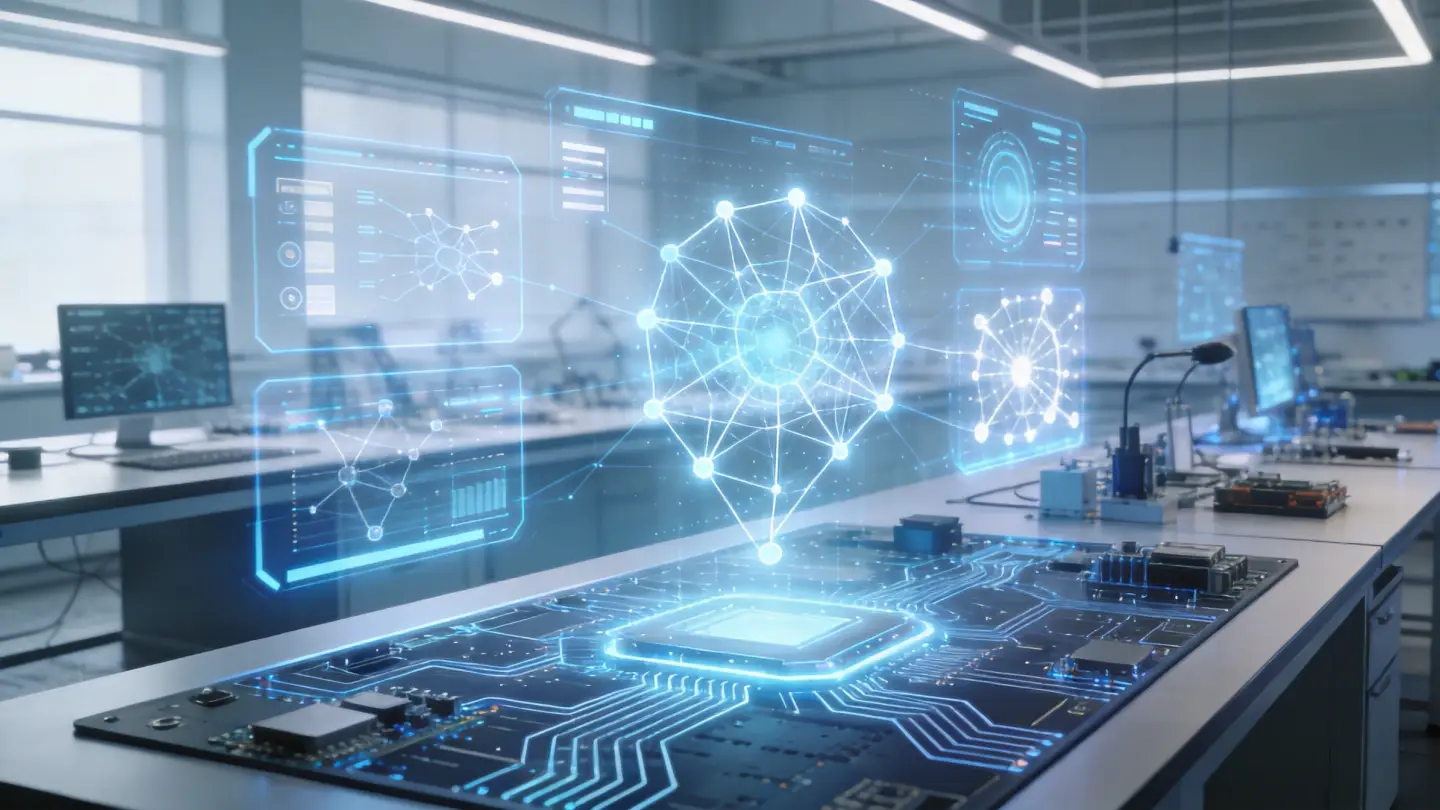
In 2026, AI hardware development tools has fundamentally reshaped how physical products are conceived, designed, validated, and manufactured. According to Deloitte’s 2026 Global Hardware Outlook, worldwide IT spending surpassed $6 trillion, with AI infrastructure driving unprecedented growth in intelligent hardware development tools. The question is no longer whether to adopt AI in your hardware workflow—it’s how fast you can integrate it before competitors do.
For hardware founders, this shift represents both opportunity and pressure. Teams that master AI-augmented development can compress timelines from years to months, reduce costly iterations, and ship products that would have been impossible to design manually. Those that don’t risk being left behind.
This guide explores how AI is transforming each stage of hardware product development—from initial concept to mass production—and provides practical insights for founders looking to leverage these tools effectively.
Why AI Hardware Development Is Different This Time
Beyond Hype: Tangible Development Gains
Unlike previous technology waves that promised more than they delivered, AI in hardware development is delivering measurable results today:
| Development Stage | Traditional Timeline | AI-Augmented Timeline | Key AI Tools |
|---|---|---|---|
| Concept to Proof of Concept | 8-12 weeks | 2-4 weeks | Generative design, AI sketching |
| PCB Design | 4-8 weeks | 1-2 weeks | AI auto-routing, signal integrity AI |
| Mechanical Design | 6-10 weeks | 2-4 weeks | Topology optimization, generative CAD |
| Simulation & Validation | 4-6 weeks | 1-2 weeks | Physics-informed neural networks |
| DFM Analysis | 2-4 weeks | 2-5 days | AI-powered manufacturability checks |
| Total Development | 18-36 months | 8-14 months | Integrated AI workflow |
The numbers are real. Hardware teams using AI-augmented workflows report 40-60% reductions in design time and 30-50% fewer prototype iterations.
The Democratization Effect
Perhaps more significant than speed gains is accessibility. Previously, world-class hardware design required teams of specialists with decades of combined experience. AI tools are distributing that expertise more broadly.
A startup with two engineers can now access design intelligence that previously required a team of twenty. This doesn’t eliminate the need for experienced engineers—it amplifies their impact. The leverage factor is unprecedented.
AI in PCB Design: From Art to Algorithm
The PCB Design Revolution
Printed circuit board design has long been considered an art form, requiring deep knowledge of signal integrity, thermal management, and manufacturing constraints. Senior PCB designers spent years developing intuition that junior engineers lacked.
AI is changing this calculus fundamentally.
AI-Powered Auto-Routing
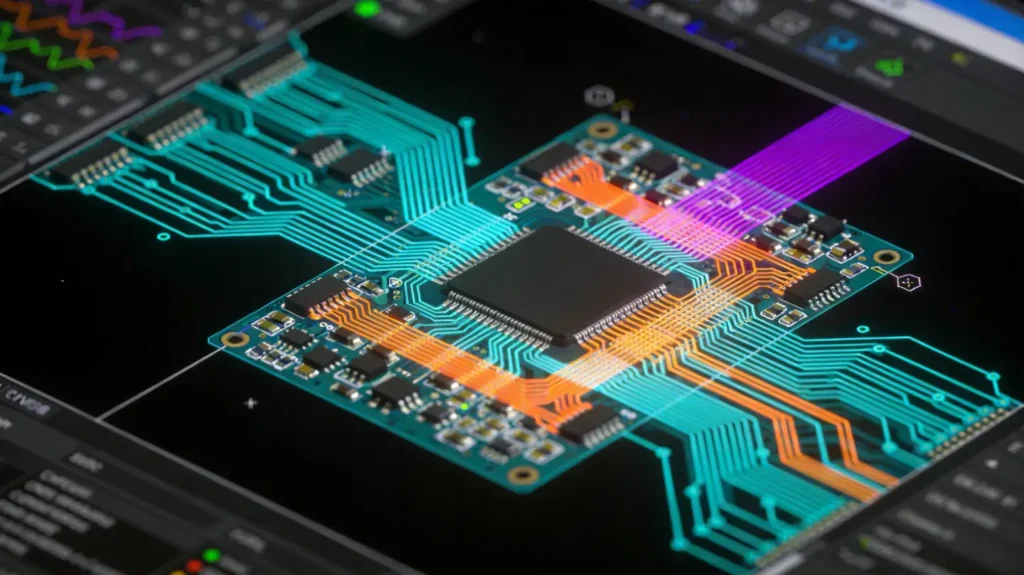
Modern PCB design tools now feature AI routing engines that consider thousands of constraints simultaneously:
- Signal integrity requirements
- Impedance control for high-speed traces
- Thermal dissipation paths
- Manufacturing DFM rules
- EMC/EMI considerations
Tools like Cadence’s AI algorithms and Siemens’ PCB routing systems can generate routing solutions that rival or exceed human expert layouts in a fraction of the time—often completing in hours what would take days manually.
Signal Integrity AI
For high-speed designs (DDR5 memory, PCIe 5.0, USB4), signal integrity has become paramount. AI-powered signal integrity tools analyze entire networks, predict crosstalk and reflection issues, and suggest optimizations before prototypes are built.
The result: fewer respins, lower development costs, better-performing products.
Component Selection Intelligence
AI systems now recommend optimal components based on:
- Design requirements (speed, power, size)
- Supply chain availability and lead times
- Cost constraints
- Lifecycle and obsolescence risk
This capability proves invaluable in 2026’s dynamic component market, where shortages and discontinuations remain common.
How OPD Applies AI in PCB Design
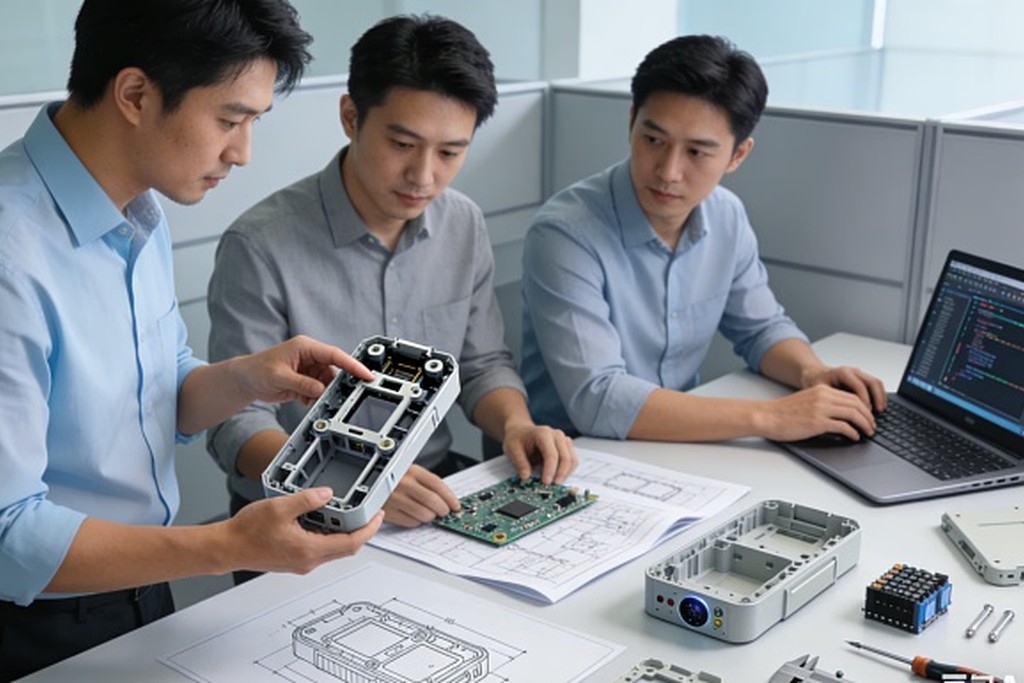
At OPD Design, we integrate AI-powered PCB design tools into our standard development workflow. For projects like our award-winning wearable EEG device, AI-assisted routing enabled us to achieve the miniaturization required for a comfortable, wearable form factor while maintaining the signal quality needed for medical-grade measurements.
Our hardware design team uses AI routing as a starting point, then applies human expertise to optimize for specific application requirements. This hybrid approach captures the best of both worlds: AI speed and consistency, human judgment and creativity.
Generative Design: AI as Design Partner
Beyond Traditional CAD
Generative design represents one of the most profound shifts in mechanical engineering. Instead of an engineer manually creating a part design, they define the design space, constraints, and objectives—and AI generates hundreds or thousands of design alternatives.
Topology Optimization
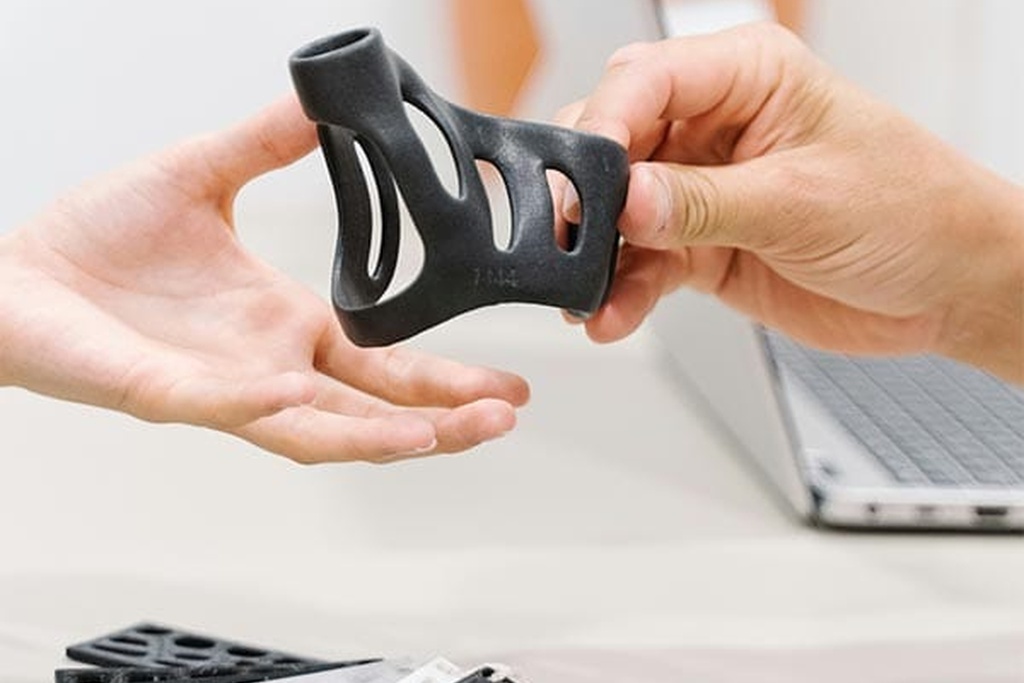
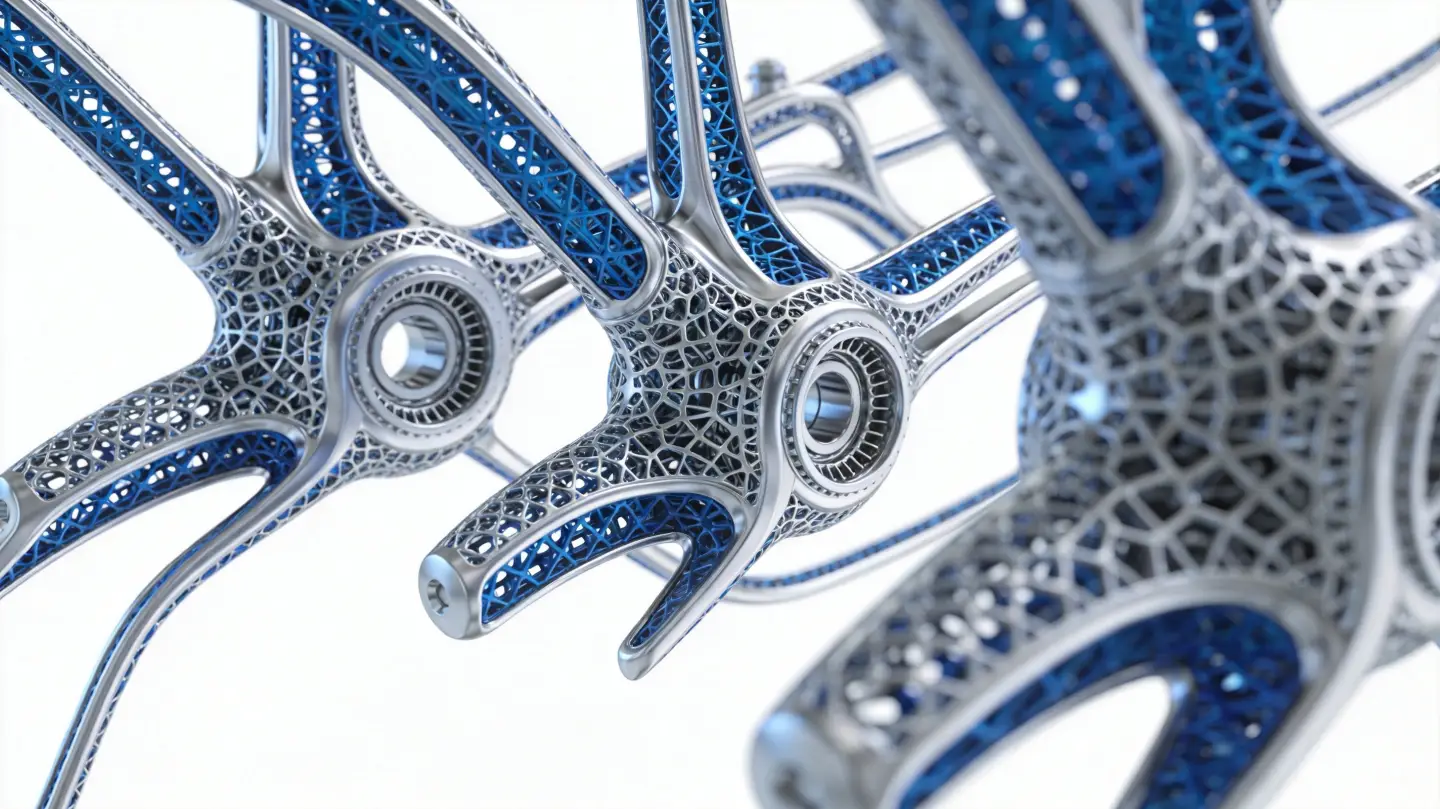
For structural components, AI-driven topology optimization creates designs that would be impossible to conceive manually. Starting with design intent (load paths, fixed points, weight targets), the AI iteratively removes material from low-stress regions, producing organic-looking structures that are lighter and stronger than traditional designs.
These optimized geometries often look strange to engineers trained on traditional manufacturing. They’re not wrong—they’re just better, when manufactured with the right process (often additive manufacturing or CNC).
Multi-Objective Optimization
Modern generative design tools simultaneously optimize for:
- Weight reduction
- Structural integrity
- Thermal performance
- Manufacturing cost
- Material usage
Engineers define the relative importance of each objective, and AI produces Pareto-optimal solutions across the trade-off spectrum.
When Generative Design Makes Sense
Generative design isn’t appropriate for every project. It’s most valuable when:
- Weight is critical: Aerospace, automotive, portable devices
- Material costs are high: Precious metals, specialized alloys
- Performance requirements push limits: High-stress industrial applications
- Design cycles are constrained: Competitive markets requiring rapid iteration
For consumer products with less extreme requirements, traditional design may remain more cost-effective. The key is matching the tool to the application.
AI-Powered Simulation: Predicting Reality
From Physics to Predictions
Traditional simulation required engineers to be expert users of FEA, CFD, and thermal analysis tools. Setting up simulations correctly took as much skill as interpreting results. AI is changing this in several ways.
Automated Mesh Generation and Refinement
Meshing—the process of dividing geometry into small elements for analysis—has traditionally been a major bottleneck. AI now automatically generates optimized meshes, identifying regions requiring finer discretization and adapting mesh density based on expected stress gradients.
Physics-Informed Neural Networks (PINNs)
Emerging AI techniques combine physics principles with machine learning, enabling faster-than-real-time simulation with high accuracy. These systems learn the underlying physical laws from simulation data, then make predictions that are both data-driven and physics-compliant.
Inverse Design Capabilities
Instead of simulating “will this design work?”, AI now enables inverse design: specifying desired performance and having AI generate the geometry to achieve it. This capability is transformative for antenna design, thermal management, and optical systems.
Rapid Virtual Prototyping
AI-accelerated simulation enables teams to evaluate hundreds of design variations virtually before building any physical prototypes. For a typical consumer electronics product, this might mean:
- 200+ enclosure design variations evaluated virtually
- 50+ thermal management solutions simulated
- 30+ structural configurations analyzed
The physical prototype count drops from double digits to single digits, compressing timelines and reducing costs dramatically.
AI in Design for Manufacturing (DFM)
The Industrialization Gap
As noted in industry analyses, the “industrialization gap”—the transition from prototype to manufacturable design—is where most hardware projects fail. According to PEZY Group’s 2026 Hardware Outlook, “The real challenge lies in the industrialisation gap, the stage where a promising prototype must become a stable, manufacturable and scalable product.”
AI is proving transformative for closing this gap.
AI-Powered DFM Analysis
Modern DFM AI systems analyze designs against:
- Injection molding constraints (draft angles, wall thickness, gating)
- CNC machining capabilities (tool access, setup requirements)
- Sheet metal fabrication rules (bending, hemming, joining)
- Assembly sequence constraints
- Test and inspection requirements
- Cost drivers and optimization opportunities
These systems catch issues during design phase—where fixes cost pennies—rather than during production—where they cost dollars.
Real-Time manufacturability Feedback
The most advanced implementations provide manufacturability feedback as engineers design, not after. Within CAD environments, designers see immediate indicators when a feature violates manufacturing constraints. The design process becomes a continuous optimization, with AI providing guidance in real-time.
This approach is particularly powerful for:
- Complex geometries: Parts with undercuts, internal channels, or organic surfaces
- High-volume production: Where manufacturing costs compound across millions of units
- Tight timelines: Projects where schedule doesn’t allow for multiple design iterations
Our Approach at OPD
At OPD Design, we integrate AI-powered DFM analysis throughout our development process. Our engineers use these tools during initial concept phase, again during detailed design, and finally during pre-production validation. This multi-stage approach catches issues early, when they’re easiest and cheapest to fix.
For clients targeting Chinese manufacturing partners, our DFM AI includes knowledge of local supplier capabilities, common tooling limitations, and cost optimization opportunities specific to the Shenzhen manufacturing ecosystem.
Supply Chain Intelligence: AI Beyond Design
Predictive Component Management
Hardware development doesn’t end when the design is complete. Component availability and pricing remain critical concerns through production. AI is transforming supply chain management for hardware companies.
Demand Forecasting
AI systems analyze market trends, end-user demand signals, and distributor inventory to predict component shortages before they impact production. Founders who adopt AI-driven forecasting can pre-order critical components, qualify alternate sources, or redesign around problematic parts—before shortages become crises.
Obsolescence Prediction
AI models trained on semiconductor lifecycle data predict end-of-life dates for components, enabling proactive redesign or lifetime buys before discontinuations occur.
Cost Optimization
AI analyzes pricing patterns, volume discounts, and substitute component options to optimize BOM costs without sacrificing quality or reliability.
Quality Control AI
At the manufacturing stage, AI-powered visual inspection systems catch defects that human inspectors miss—consistently, at line speed, without fatigue. These systems are particularly valuable for:
- Cosmetic defect detection
- Solder joint inspection
- Assembly verification
- Labeling and packaging checks
The combination of AI design tools upstream and AI quality control downstream creates a development ecosystem where intelligence pervades every stage.
Implementing AI in Your Development Workflow
A Practical Roadmap
For hardware founders looking to integrate AI into their development process, here’s a practical approach:
Phase 1: Assessment (Weeks 1-2)
- Audit your current development workflow
- Identify bottlenecks and pain points
- Research AI tools relevant to your product category
- Evaluate team skill gaps and training needs
Phase 2: Pilot Integration (Weeks 3-8)
- Select 2-3 high-impact AI tools for initial adoption
- Implement in non-critical projects or project phases
- Document learnings and measure impact
- Adjust processes based on results
Phase 3: Scaled Deployment (Months 3-6)
- Roll out successful pilot tools across projects
- Integrate tools into standard operating procedures
- Train team on best practices and advanced features
- Establish metrics for ongoing optimization
Phase 4: Continuous Improvement (Ongoing)
- Monitor AI tool development and new capabilities
- Stay current with industry developments
- Refine workflows as tools evolve
- Share learnings across project teams
Common Pitfalls to Avoid
Over-Automation: AI assists human judgment—it doesn’t replace it. Resist the temptation to blindly trust AI outputs without review.
Tool Proliferation: The AI tool landscape is fragmented. Resist the urge to adopt every new tool. Standardize on a core set that integrate well together.
Ignoring Manufacturing Reality: AI designs must be producible. Ensure your AI tools incorporate real manufacturing constraints, not idealized assumptions.
Skipping Validation: AI can be confidently wrong. Always validate AI-generated designs with physical testing before production commitment.
The Human Element: Why Engineers Matter More Than Ever
The Paradox of AI-Augmented Design
Counterintuitively, AI makes experienced engineers more valuable, not less. Here’s why:
Judgment Amplification: AI generates options; humans choose between them. The quality of choices depends on the quality of human judgment.
Context Understanding: AI excels at well-defined optimization problems. Real products exist in complex contexts that require human interpretation.
System Integration: Individual component optimization doesn’t guarantee system success. Engineers integrate across domains to ensure overall product coherence.
Relationship Management: AI doesn’t negotiate with manufacturers, understand client preferences, or navigate organizational dynamics. These human skills remain essential.
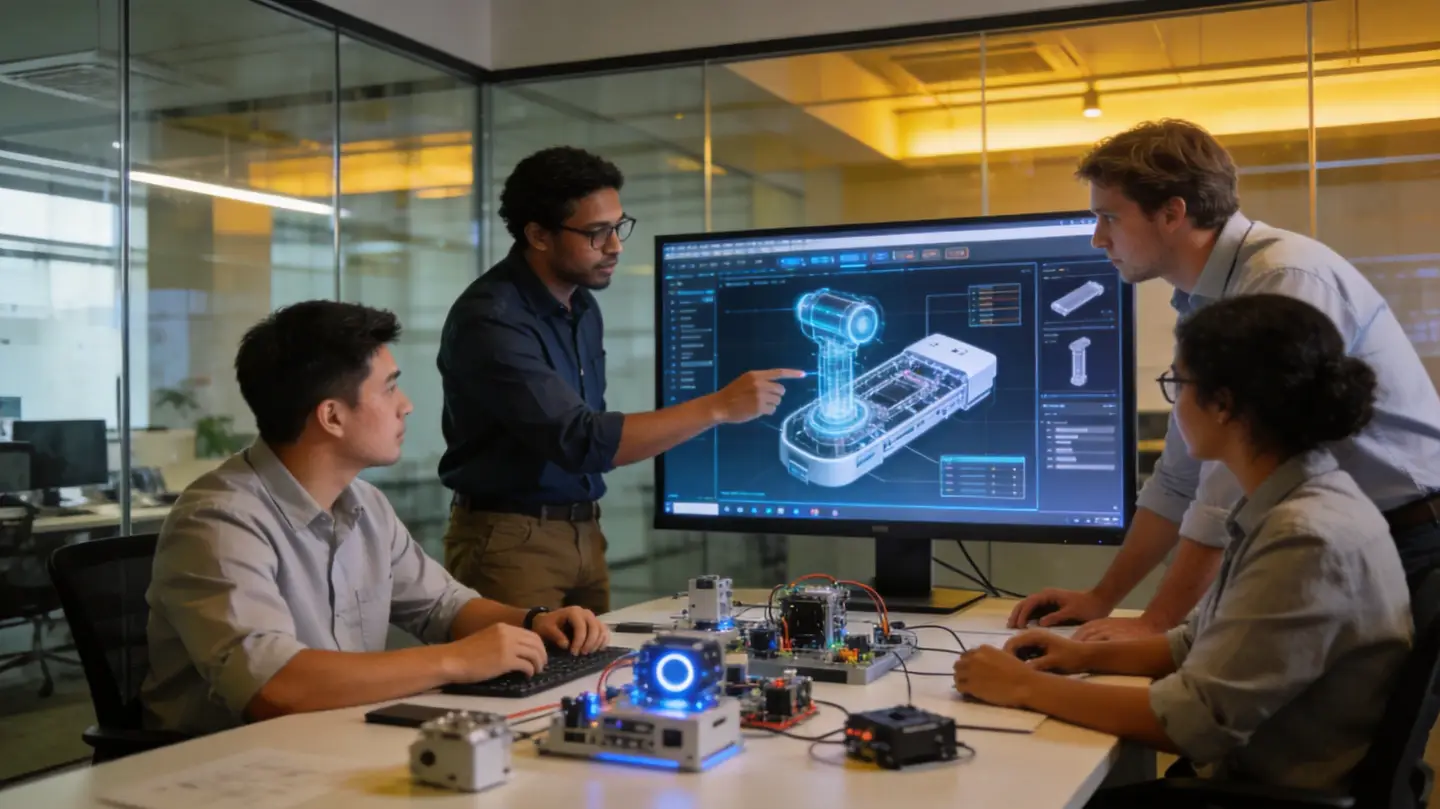
At OPD Design, we view AI as a powerful tool in our engineering toolkit—not a replacement for human expertise. Our senior engineers use AI to work faster and smarter, but they remain in control of design decisions. The result is products that benefit from AI capabilities while maintaining the judgment and creativity that define great design.
The Future: What’s Next for AI in Hardware Development
Emerging Capabilities to Watch
Foundation Models for Hardware: Just as large language models revolutionized text, “foundation models” for physical design—trained on millions of designs and their outcomes—will enable AI systems with unprecedented design intuition.
Autonomous Development Agents: AI systems that can manage entire development phases, coordinating between design, simulation, and manufacturing tools with minimal human intervention.
Digital Twins at Scale: Real-time digital replicas of products in the field, feeding data back to improve future designs continuously.
AI-Generated Testing: Systems that automatically generate test plans, test fixtures, and validation protocols based on design requirements.
What Doesn’t Change
Despite AI’s transformative potential, certain fundamentals remain constant:
- Physics still rules: AI can optimize within physical constraints, but can’t violate them.
- Manufacturing has limits: The best AI design is worthless if it can’t be manufactured.
- Customer needs drive decisions: AI optimizes for defined objectives; humans define those objectives based on understanding customers.
- Relationships matter: Great products emerge from collaboration between talented people, not just powerful tools.
Frequently Asked Questions
How much does AI-powered hardware development cost?
AI tools vary widely in cost. Many CAD vendors now include basic AI features in standard licenses. Specialized AI tools (generative design, advanced simulation) may cost $5,000-$50,000 annually for professional licenses. The key is calculating ROI: AI that reduces development time by 30% on a $500,000 project pays for itself quickly.
Do I need AI experts on my team?
Not necessarily. Most modern AI tools are designed for hardware engineers, not AI specialists. With 2-4 weeks of training, typical hardware engineers can become productive with AI-augmented design tools. For advanced applications, consider partnering with specialists or your design agency.
Can AI replace hardware engineers?
No—and it shouldn’t. AI excels at optimization within defined parameters. Hardware development requires defining those parameters, interpreting results, and making judgment calls that involve customer understanding, business constraints, and creative problem-solving. AI amplifies engineer productivity; it doesn’t replace the fundamental human elements of design.
How do I choose the right AI tools?
Start with your biggest pain points. If PCB routing consumes most of your time, prioritize AI PCB tools. If prototypes fail due to thermal issues, focus on AI thermal simulation. Evaluate tools based on:
- Integration with your existing workflow
- Learning curve for your team
- Cost versus projected time savings
- Vendor support and development roadmap
Is AI-generated design IP safe?
This is an evolving legal area. Most AI tool vendors provide indemnification for their tools. However, if you’re concerned about proprietary design data, use on-premises AI tools or vendors with strong data protection policies. Always review terms of service before using AI tools with sensitive designs.
Conclusion: Embracing the AI-Augmented Future
The hardware development landscape of 2026 looks nothing like that of 2020—and the pace of change is accelerating. AI tools have moved from novelty to necessity, from experimental to essential.
For hardware founders, the message is clear: AI-augmented development isn’t optional anymore. Teams that master these tools will ship better products faster, at lower cost, with fewer failures. Those that don’t will find themselves increasingly disadvantaged.
But AI isn’t a magic wand. It amplifies human capabilities—it doesn’t replace human judgment, creativity, or experience. The best outcomes emerge from thoughtful integration: AI handling optimization within defined parameters, humans providing direction, context, and creative problem-solving.
At OPD Design, we’ve invested heavily in AI-augmented development capabilities. Our teams use AI tools across the entire development workflow, from generative concept design to AI-powered DFM analysis. This investment lets us deliver better products to our clients—faster, at lower cost, with higher quality.
If you’re building hardware in 2026, the question isn’t whether to use AI in your development process. It’s how quickly you can integrate it effectively.
Ready to see how AI-augmented development can transform your hardware project? Contact OPD Design to discuss your next product.