
Waterproof product design is no longer a premium feature — it is a baseline expectation. Whether you are building a wearable, an outdoor IoT sensor, or a kitchen appliance, understanding IP ratings and sealing strategies early in your product strategy can save you six figures in tooling revisions and certification delays. This guide breaks down the IEC 60529 IP rating system, core waterproofing design principles, material selection, testing procedures, and cost implications — everything a hardware founder needs to get waterproofing right the first time.
| Key Takeaway | Detail |
| IP rating system | Defined by IEC 60529; two digits cover dust and water protection |
| Most common target | IP67 for wearables and outdoor electronics |
| Biggest failure cause | Temperature cycling creates pressure differentials that breach seals |
| Cost impact | Waterproofing adds $0.50–$5.00 per unit depending on IP level |
| When to design for it | From concept phase — retrofitting is 10× more expensive |
Introduction: Why Waterproofing Can Make or Break Your Product
A product that fails when it gets wet is a product that gets returned. In 2026, consumers expect their earbuds to survive a downpour, their fitness tracker to handle a shower, and their outdoor security camera to function through a monsoon. Insurance claims data from major retailers shows that water damage accounts for nearly 30% of all consumer electronics returns — a staggering figure when you consider that most of these failures are preventable through proper waterproof product design.
For hardware founders, the stakes are even higher. A waterproofing failure discovered after mass production means recalled inventory, reputational damage, and potentially millions in losses. The solution is not to “add more glue” at the end — it is to treat water ingress as a first-order engineering constraint from day one, integrated into your industrial design and mechanical engineering workflows.
This guide walks through everything you need to know: how IP ratings work, what sealing strategies to use, which materials perform best, how to test, and what it all costs.
Understanding IP Ratings: The IEC 60529 Standard
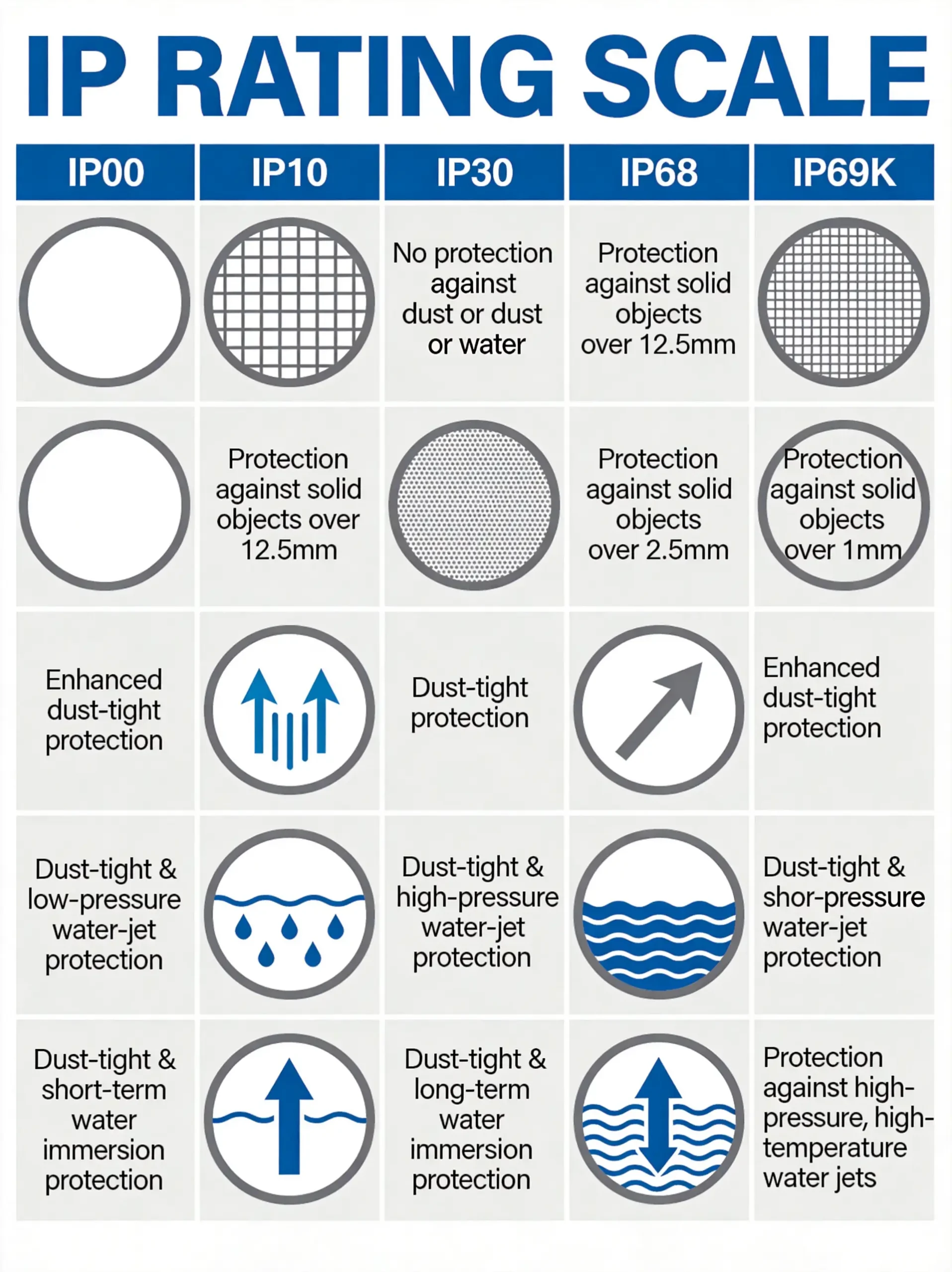
The IP (Ingress Protection) rating system, codified as IEC 60529, is the international standard for classifying how well an enclosure protects against solids and liquids. The format is always “IP” followed by two digits — the first for solid particle protection, the second for liquid protection. A comprehensive overview of the full rating scale is available on the Wikipedia IP Code page.
IP Rating Breakdown
First Digit — Solid Particle Protection (0–6):
| Digit | Protection Level | Description |
| 0 | No protection | No special protection against solids |
| 1 | >50 mm | Protected against large body surfaces (back of hand) |
| 2 | >12.5 mm | Protected against fingers or similar objects |
| 3 | >2.5 mm | Protected against tools and thick wires |
| 4 | >1 mm | Protected against most wires and small screws |
| 5 | Dust-protected | Dust ingress not entirely prevented but does not affect operation |
| 6 | Dust-tight | No ingress of dust; fully sealed |
Second Digit — Liquid Protection (0–9K):
| Digit | Protection Level | Description |
| 0 | No protection | No special protection against liquids |
| 1 | Dripping water | Vertical dripping water has no harmful effect |
| 2 | Dripping water (15° tilt) | Dripping water when tilted up to 15° from normal |
| 3 | Spraying water | Water falling as spray at up to 60° from vertical |
| 4 | Splashing water | Water splashing from any direction |
| 5 | Water jets | Low-pressure water jets (6.3mm nozzle) from any direction |
| 6 | Powerful water jets | High-pressure water jets (12.5mm nozzle) from any direction |
| 6K | Powerful high-temp water jets | High-pressure, high-temperature water jets |
| 7 | Immersion (1m, 30 min) | Temporary immersion up to 1 meter depth |
| 8 | Continuous immersion | Submersion beyond 1 meter (manufacturer-specified depth/time) |
| 9K | High-pressure, high-temp jets | Close-range, high-pressure, high-temperature water jets |
Which IP Rating Should You Target?
| Product Type | Recommended IP Rating | Rationale |
| Indoor consumer electronics | IPX2–IPX4 | Basic splash and drip protection |
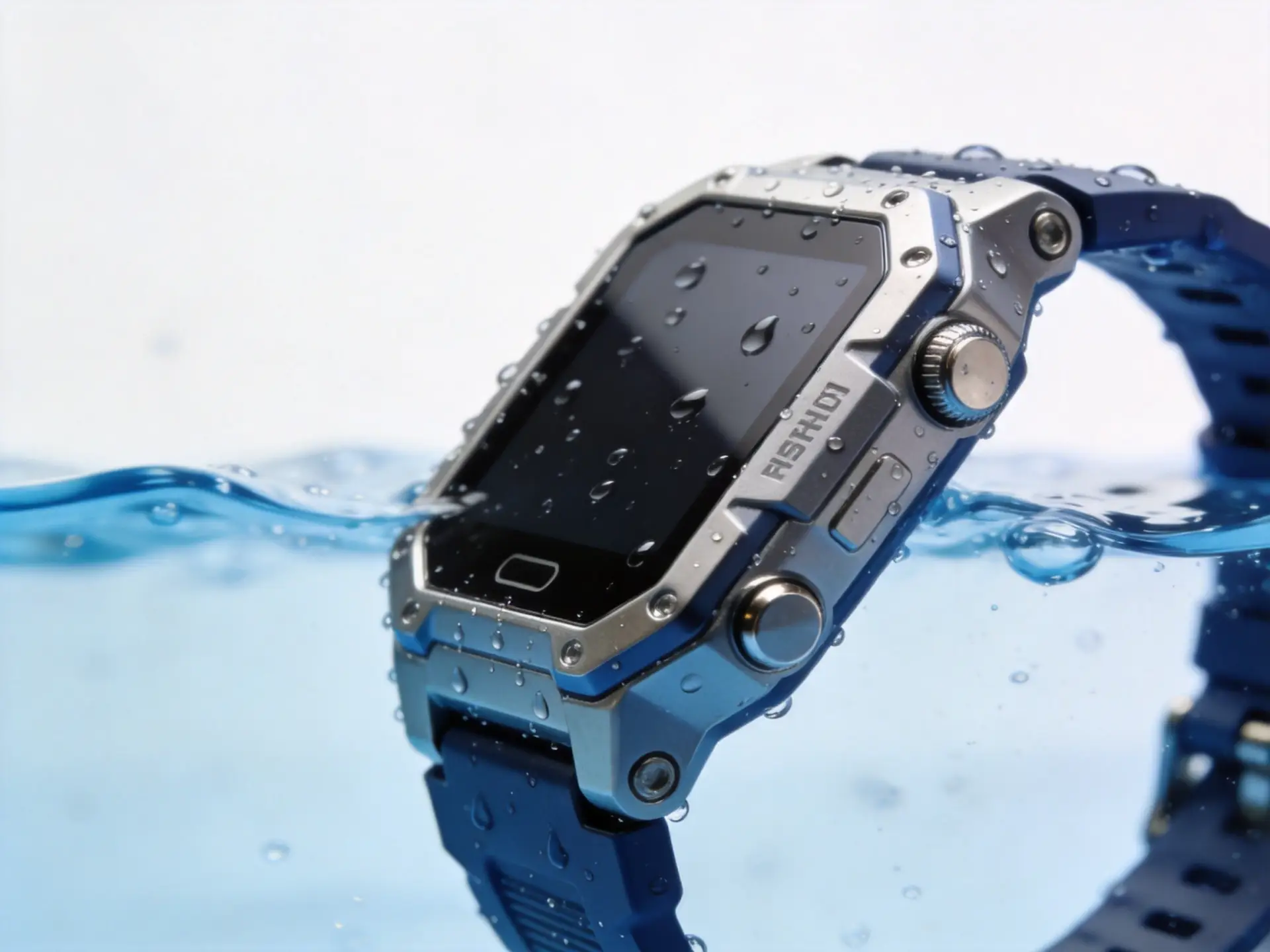
| Wearables and fitness trackers | IP67 | Sweat, rain, and shower resistance |
| Outdoor security cameras | IP66 or IP67 | Rain, wind-driven water, and dust |
| Marine and diving equipment | IP68 | Continuous submersion capability |
| Food processing equipment | IP69K | High-pressure washdown compatibility |
| Medical devices (handheld) | IP54–IP65 | Fluid resistance per IEC 60601 |
Pro Tip: An “X” in the rating (e.g., IPX7) means the solid protection level was not tested — it does not mean zero protection. However, for marketing and liability purposes, always test both digits.
Core Waterproof Design Principles
Effective waterproof product design relies on four interrelated strategies: enclosure geometry, gasket engineering, PCB-level protection, and interface sealing. Get any one of these wrong, and the entire system fails.
1. Enclosure Geometry and Parting Line Strategy
The enclosure is your first line of defense. The goal is to minimize the number of openings and seams where water can enter. This means:
• Minimize parting lines: Every seam is a potential leak path. Design enclosures with as few split lines as possible.
• Avoid horizontal parting lines on products exposed to rain — water pools along horizontal seams and eventually penetrates.
• Use labyrinth seals: Instead of a single straight seam, design interlocking geometries that force water to navigate multiple turns before reaching the interior.
• Design drainage channels: If water will reach the enclosure surface, give it a path to flow away rather than pool.
These decisions are made during the industrial design phase and locked in during mechanical design. Changing parting line strategy after tooling is complete is prohibitively expensive.
2. Gasket and O-Ring Engineering
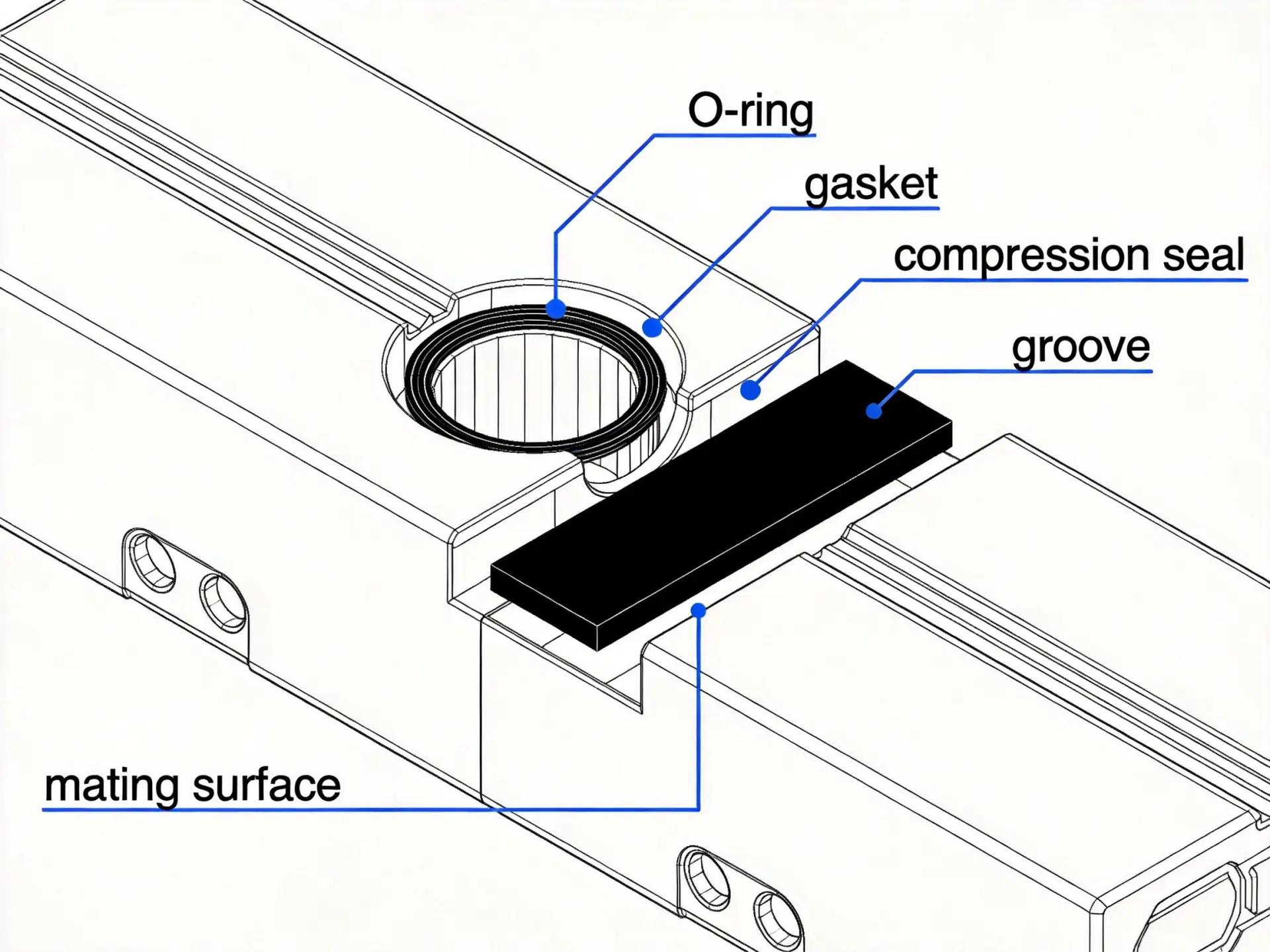
Gaskets and O-rings are the most common sealing method for IP-rated products. The key engineering parameters are:
• Compression ratio: O-rings typically require 15–25% compression to form a reliable seal. Too little compression leaks; too much causes permanent deformation and fatigue.
• Groove design: The groove must accommodate the O-ring’s volume with 15–20% fill. Overfilling causes the seal to extrude; underfilling allows it to shift under pressure.
• Surface finish: Mating surfaces should have a roughness of Ra ≤ 0.8 μm. Rough surfaces create micro-leak paths that no amount of compression can close.
• Shore hardness: 50–70 Shore A is the sweet spot for most consumer electronics. Softer seals conform better but degrade faster; harder seals last longer but need higher compression force.
3. Potting and Conformal Coating
When enclosure sealing alone is insufficient — or when you need defense-in-depth — apply protection directly to the PCB:
• Conformal coating: A thin (25–75 μm) polymer film applied to the PCB surface. Protects against humidity, condensation, and splash. Adds $0.10–$0.50 per board. Types include acrylic, silicone, polyurethane, and parylene.
• Potting: The PCB is fully encapsulated in an epoxy or polyurethane resin. Provides maximum protection against immersion and vibration. Adds $1.00–$5.00 per unit and complicates rework.
• Gasket-in-place (FIP) dispensing: Robotically dispensed liquid gaskets that cure in place. Ideal for complex geometries where pre-formed gaskets cannot be installed.
4. Connector and Interface Sealing
Every connector, button, speaker port, and sensor window is a potential water entry point. Common solutions include:
• Waterproof connectors: Bayonet-lock or screw-on connectors with integrated O-rings (e.g., USB-C with IP68-rated overmold).
• Membrane switches: Silicone or PET membranes that seal button areas while allowing actuation.
• Acoustic vents: Waterproof membranes (e.g., Gore-Tex acoustic vents) that allow sound transmission while blocking water.
• Ultrasonic welding: Permanently bonds plastic enclosure halves with no gasket needed. Creates a hermetic seal but makes the joint non-serviceable.
Real Case: A wearable fitness tracker startup approached OPD with an IP54-rated prototype that failed during user testing after sweat and rain exposure. We redesigned the enclosure with ultrasonic welding at the parting line, added custom silicone gaskets at the button and charging port interfaces, and applied conformal coating to the PCB. The result: IP67 certification achieved in a single tooling cycle, with a per-unit cost increase of only $0.80.
Material Selection for Waterproof Products
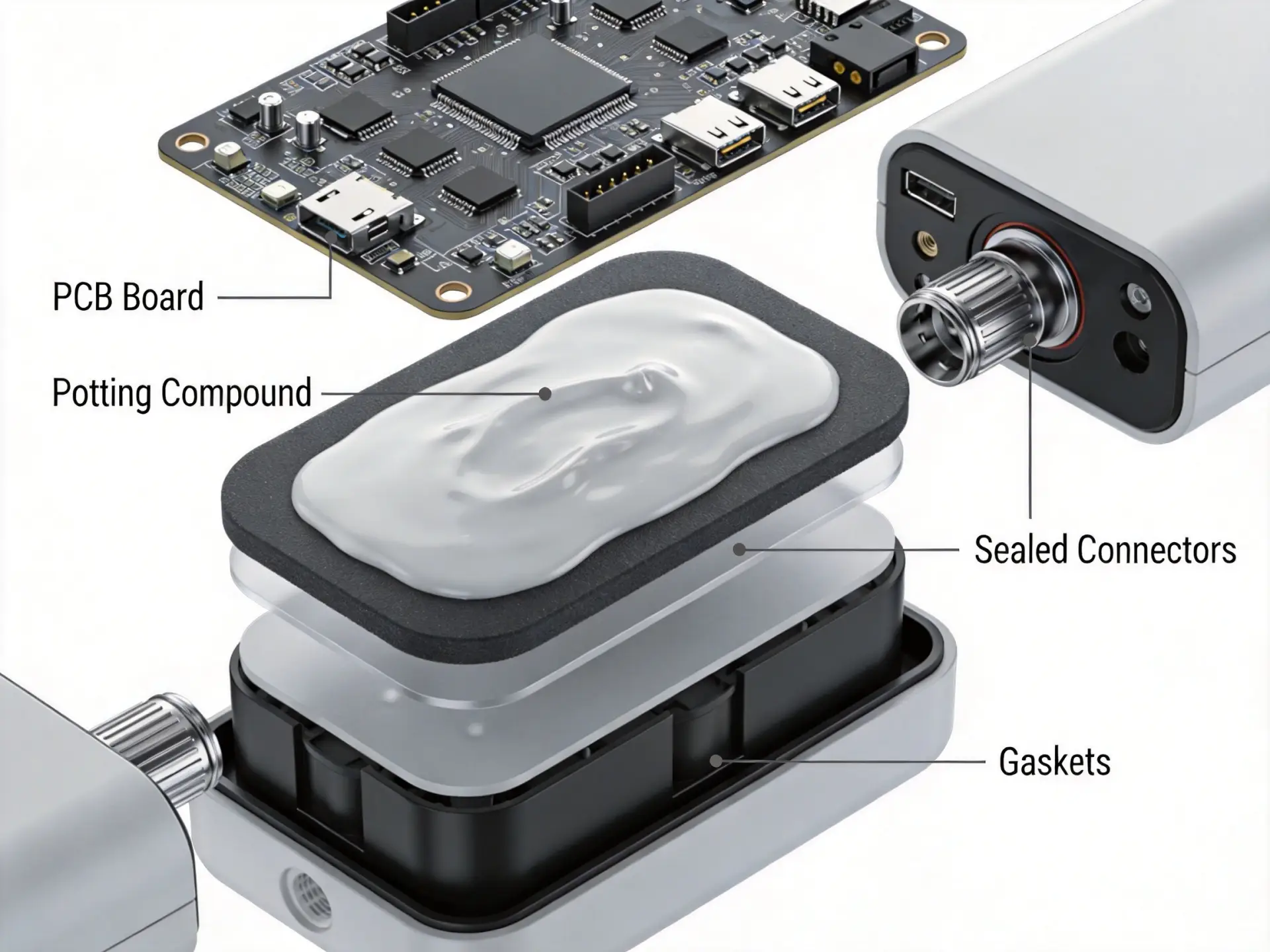
Material choices directly determine whether your waterproof design survives real-world conditions — not just the lab test.
Enclosure Materials
| Material | Typical IP Rating | Pros | Cons | Best For |
| Polycarbonate (PC) | Up to IP68 | Impact-resistant, transparent options | UV degradation if uncoated | Consumer electronics, wearables |
| ABS/PC blend | Up to IP67 | Good balance of cost and strength | Limited chemical resistance | Mid-range consumer products |
| Glass-filled nylon | Up to IP68 | High strength, dimensional stability | Abrasive on molds, higher cost | Industrial and outdoor equipment |
| Aluminum (anodized) | Up to IP68 | Premium feel, excellent durability | Conductive, requires insulation | Premium consumer electronics |
| Stainless steel | Up to IP69K | Corrosion-resistant, rugged | Heavy, expensive | Marine and industrial |
Seal Materials
| Seal Material | Temperature Range | Compression Set | Chemical Resistance | Cost |
| Silicone (VMQ) | -60°C to 200°C | Excellent | Good | Medium |
| EPDM | -50°C to 150°C | Very good | Excellent (water, steam) | Low |
| FKM (Viton) | -20°C to 200°C | Good | Excellent (oils, fuels) | High |
| TPE | -40°C to 120°C | Fair | Good | Low |
| NBR (Buna-N) | -30°C to 100°C | Good | Good (oils) | Low |
For most consumer electronics, silicone is the default choice. For outdoor products with UV exposure, EPDM outperforms. For products exposed to oils or fuels, FKM is worth the premium.
Material selection is tightly coupled with your mold development strategy — the seal groove geometry must be machined into the mold, and material shrinkage rates affect groove tolerances.
Common Waterproofing Failure Modes
Understanding how waterproofing fails is just as important as knowing how to design it. Here are the five most common failure modes we see in products that pass lab testing but fail in the field:
1. Thermal Pressure Breathing
When a sealed product heats up during operation and then cools rapidly (e.g., brought from a warm pocket into cold rain), the internal air contracts, creating negative pressure. This pressure differential can pull water past seals that performed perfectly in static lab tests. The solution: integrate a waterproof breathable vent (ePTFE membrane) to equalize pressure while blocking liquid water.
2. Capillary Action Through Cables
Cables are not solid — they are bundles of stranded wire with microscopic gaps between strands. Water can travel along these gaps through capillary action, bypassing enclosure seals entirely. The solution: use water-block connectors, apply sealant at cable entry points, or specify cables with water-blocking yarn.
3. UV and Ozone Degradation
Silicone and EPDM seals degrade under prolonged UV exposure, becoming brittle and losing compression force. Products designed for outdoor use must specify UV-stabilized seal compounds and account for seal replacement in the service plan. This is a critical consideration in mechanical design for outdoor products.
4. Mechanical Fatigue
Drop impacts, vibration, and repeated button presses gradually degrade seal compression. A product that passes IP67 testing new may fail after 500 drop cycles. Always test waterproofing after mechanical stress testing, not before.
5. Manufacturing Tolerance Stack-Up
Even a perfect design fails if manufacturing tolerances are too loose. If the O-ring groove is 0.1mm too deep, compression drops below the sealing threshold. This is why design for manufacturing analysis must include tolerance stack-up calculations for all seal interfaces.
Testing and Validation
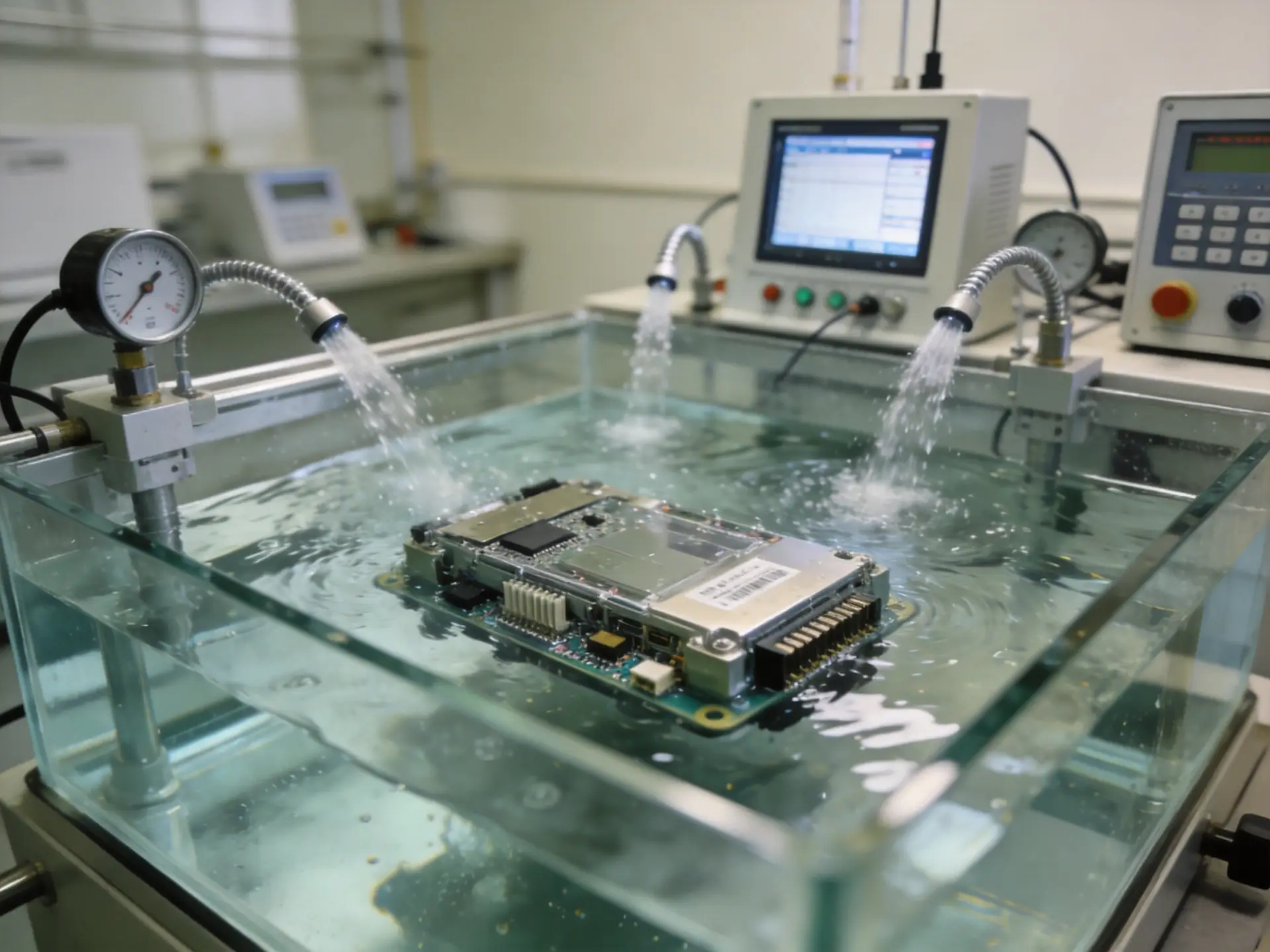
IP rating certification is not self-declaratory — it requires testing by an accredited laboratory. However, you should never wait until certification to discover waterproofing problems. Here is when to test, and what to expect:
When to Test in the Development Cycle
| Development Stage | Test Type | Purpose |
| Prototype (EVT) | Informal splash and immersion | Validate sealing concept before tooling |
| Design Validation (DVT) | Pre-certification IP testing | Catch issues before formal certification |
| Production Verification (PVT) | IP testing on production units | Verify manufacturing process consistency |
| Mass Production | Periodic sampling | Ongoing quality assurance |
Common Test Failures
1. Seepage at button openings: Membrane thickness or adhesion insufficient.
2. Leakage at connector interfaces: O-ring compression inadequate due to tolerance stack-up.
3. Condensation inside enclosure: Temperature cycling without pressure equalization.
4. Seal deformation after thermal cycling: Material selection inappropriate for operating temperature range.
For formal certification, testing follows the IEC 60529 procedures. In North America, NEMA enclosure ratings provide an alternative classification system that covers additional environmental factors like corrosion and ice formation. Your compliance certification partner can help determine which standard applies to your product and market.
DFM Considerations for Waterproof Products
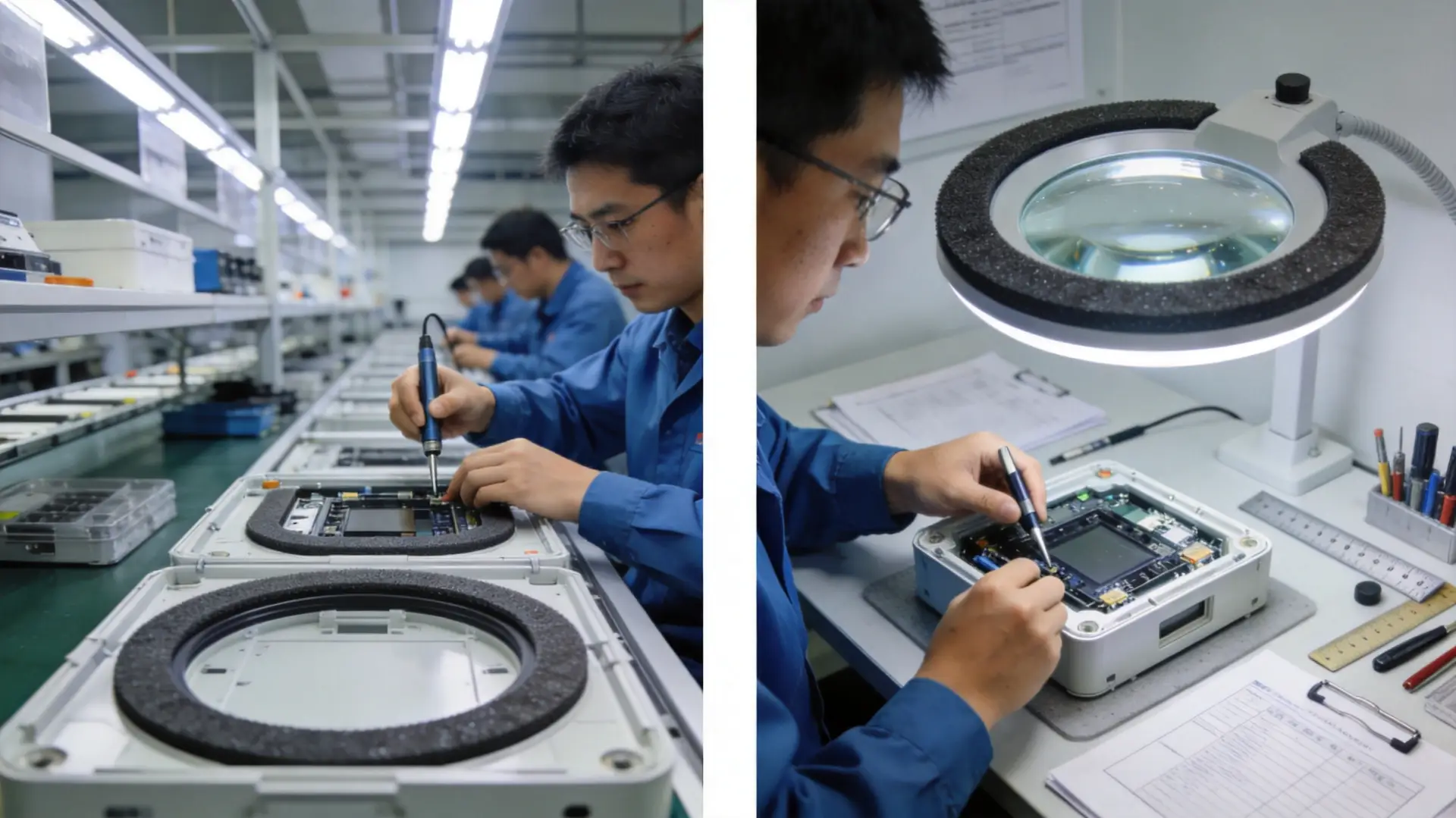
Waterproof design introduces specific manufacturing challenges that must be addressed during the DFM phase. Skipping these considerations leads to high defect rates, inconsistent sealing performance, and costly production-line rework.
Tolerance Control
Seal grooves require tighter tolerances than standard cosmetic features. Typical requirements:
| Feature | Standard Tolerance | Waterproof Tolerance | Impact |
| O-ring groove depth | ±0.2 mm | ±0.05 mm | Ensures consistent compression |
| Groove width | ±0.2 mm | ±0.1 mm | Prevents seal extrusion or shifting |
| Mating surface flatness | 0.3 mm | 0.05 mm | Eliminates micro-gap leak paths |
| Surface finish (Ra) | 1.6 μm | 0.8 μm | Reduces seal surface defects |
Assembly Process Design
Waterproof assembly requires controlled processes that standard consumer electronics lines may not support:
• Gasket installation: Manual installation is inconsistent. Automated dispensing (FIP) or robotic pick-and-place ensures repeatable seal placement.
• Ultrasonic welding: Requires precise energy director design and amplitude control. Weld parameters must be validated per material batch.
• Torque control: Screw-fastened enclosures need controlled torque to achieve consistent gasket compression without over-compressing.
• Leak testing: 100% in-line leak testing (pressure decay or helium mass spectrometry) is recommended for IP67+ products.
These requirements should be discussed with your manufacturing support partner during the DFM review, not discovered during pilot production. Integrating these processes into your mold development and tooling plan from the start avoids mid-production tooling modifications that can delay your launch by 4–8 weeks.
Cost Implications by IP Rating
Waterproofing is not free — but it is far cheaper to design in from the start than to retrofit. Here is a realistic cost breakdown:
| IP Rating | Added Cost Per Unit | Major Cost Drivers |
| IPX2–IPX4 | $0.20–$0.50 | Basic gaskets, drainage design |
| IPX5–IPX6 | $0.50–$1.50 | Enhanced gaskets, sealed connectors |
| IP67 | $1.00–$3.00 | Precision tooling, conformal coating, leak testing |
| IP68 | $2.00–$5.00 | Potting, specialized connectors, 100% testing |
| IP69K | $3.00–$8.00 | High-grade seals, robust enclosure, intensive testing |
Where costs escalate unexpectedly:
• Reworking tooling after DVT because seal grooves are out of tolerance: $5,000–$20,000 per mold
• Adding leak testing equipment to the production line: $10,000–$50,000
• Certification retesting after a design change: $2,000–$8,000 per test cycle
Cost optimization tip: If your product does not need immersion protection, do not over-engineer for IP67. An IP54 rating with good drainage design may be sufficient for indoor products and saves 2.50 per unit — which compounds significantly at volume.
FAQ: Waterproof Product Design
What does IP67 mean?
IP67 means the enclosure is completely dust-tight (digit 6) and can withstand immersion in water up to 1 meter deep for 30 minutes (digit 7). It is the most common target rating for consumer wearables and outdoor electronics.
What is the difference between IP67 and IP68?
IP67 guarantees protection against temporary immersion (1 meter, 30 minutes). IP68 guarantees protection against continuous immersion at a manufacturer-specified depth and duration — typically deeper than 1 meter and longer than 30 minutes. IP68 products often use potting or hermetic sealing, while IP67 can often be achieved with gasket design alone.
Can waterproof products be repaired?
It depends on the sealing method. Products assembled with screws and replaceable gaskets can be opened and resealed. Products assembled with ultrasonic welding, adhesive bonding, or potting are effectively sealed permanently — opening them destroys the waterproofing. Always consider the serviceability trade-off when choosing a sealing strategy.
How much does waterproofing add to manufacturing cost?
For IP67, expect 3.00 per unit added cost, including precision tooling, gaskets, conformal coating, and leak testing. For IP68 with potting, costs can reach
5.00 per unit. The cost of not waterproofing — returns, warranty claims, and reputational damage — is almost always higher.
What is the difference between IP rating and NEMA rating?
IP ratings (IEC 60529) are international and focus on dust and water ingress. NEMA ratings (ANSI/NEMA 250) are primarily used in North America and cover additional environmental factors including corrosion, ice formation, and oil exposure. NEMA ratings are not directly equivalent to IP ratings, though approximate cross-references exist.
When should I start designing for waterproofing?
From day one. Waterproofing decisions — enclosure geometry, parting line location, material selection, and seal strategy — are foundational to the product architecture. Attempting to add waterproofing after the industrial design is locked typically requires complete tooling rework, costing 50,000 and adding 4–8 weeks to your timeline.
Ready to Build a Product That Survives Real-World Conditions?
Waterproof product design is not an afterthought — it is a core engineering discipline that spans industrial design, mechanical engineering, materials science, and manufacturing process control. Getting it right requires a partner who understands the full stack, from concept sketches to production-line leak testing.
At OPD Design, we have helped hardware founders across consumer electronics, medical devices, and industrial equipment achieve their target IP ratings without costly redesigns. Our integrated product development services cover everything from initial product strategy through industrial design, mechanical design, mold development, and manufacturing support — all under one roof in Shenzhen.
Don’t let water kill your product. Contact us to discuss your waterproofing requirements, and we will help you design a product that passes certification on the first try.