
If you are a hardware startup founder or product manager exploring development options, you have almost certainly asked this question: “How much does product development cost in China?”
You are not alone. It is the most searched question in the product development space — and the least clearly answered. Most articles either oversimplify with a single number or drown you in vague ranges that are impossible to act on.
This guide is different.
Based on our work with over 50 hardware projects at OPD Design, this article gives you a realistic, phase-by-phase breakdown of what product development cost China actually looks like in 2025 — from the first concept sketch to your first container of products heading to port. We will also cover hidden costs, regional differences, and how to budget without getting caught off guard.
Why Product Development Costs Vary So Much
Before we get into numbers, let us address an important question: why does “product development cost China” return such wide ranges?
The honest answer is that hardware is not software. A mobile app has near-zero marginal cost. A physical product requires raw materials, tooling, labor, compliance testing, logistics, and more. Every variable — product complexity, material selection, certifications required, and the number of prototypes — drives cost up or down.
Three primary factors determine your total budget:
1. Product complexity — A simple injection-molded enclosure costs a fraction of a multi-material IoT device with PCB, firmware, and wireless modules.
2. Development scope — Are you building one prototype or going through a full NPI (New Product Introduction) process with EVT, DVT, and PVT stages?
3. Partner selection — An end-to-end product design company China will bundle services in ways that reduce total cost; piecing together multiple vendors often adds 30–50% in coordination overhead.
💡 Key insight: The most common budget mistake first-time founders make is planning only for the design phase — and then being blindsided by tooling, certification, and logistics costs.
Phase-by-Phase Cost Breakdown
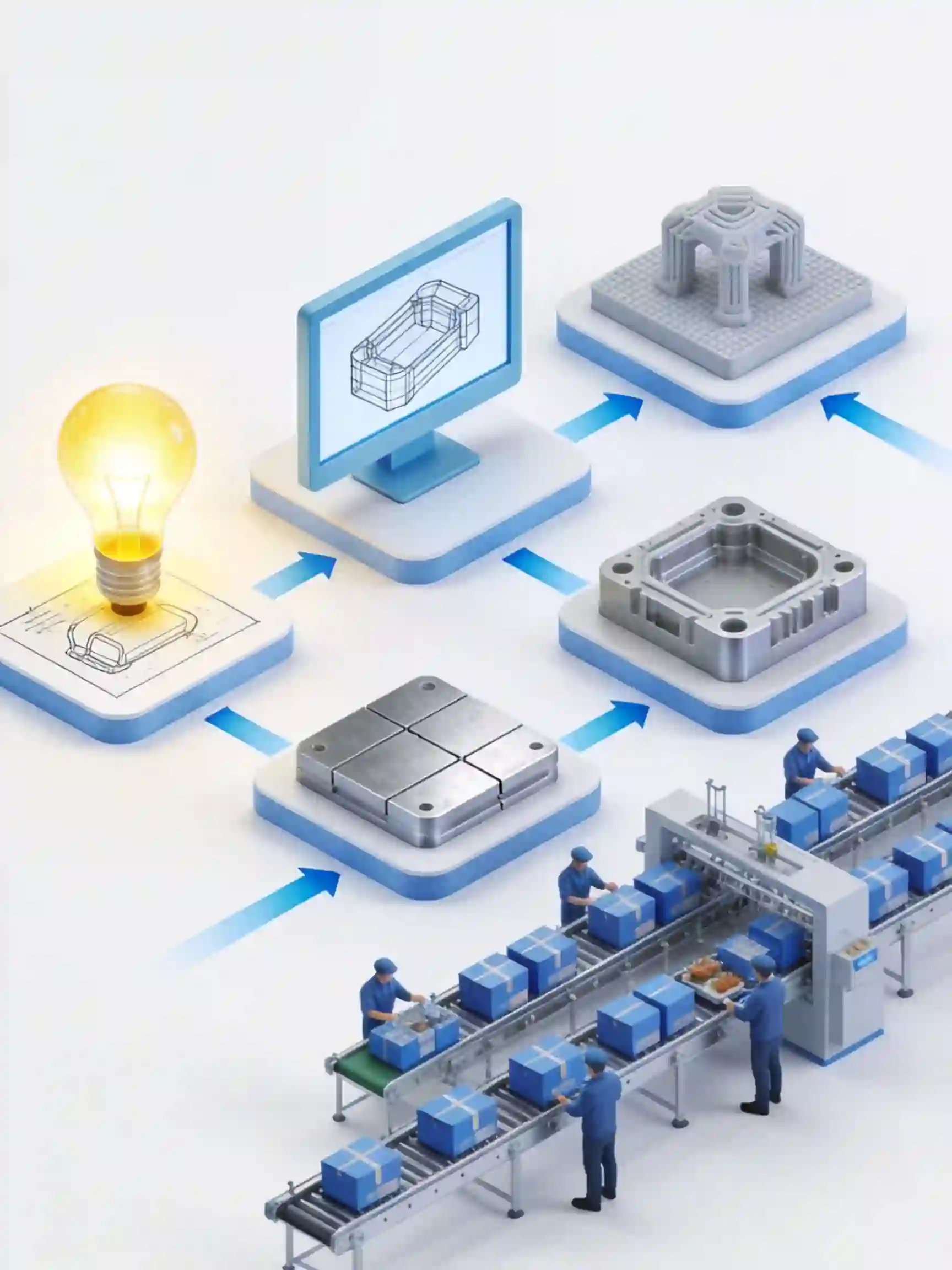
The following table summarizes typical cost ranges across the full product development lifecycle. These figures are based on projects we have delivered in the consumer electronics, smart hardware, and medical device categories.
| Development Phase | Typical Cost Range (USD) | Notes |
| Product Strategy & Concept | $2,000 – $8,000 | Market research, competitor analysis, functional definition |
| Industrial Design (ID) | $3,000 – $15,000 | Concept sketches, 3D renders, CMF (color/material/finish) exploration |
| Mechanical / Structural Design | $3,000 – $20,000 | CAD modeling, DFM analysis, tolerance engineering |
| Hardware & Firmware Development | $5,000 – $40,000 | PCB design, embedded software, wireless modules |
| Software & App Development | $3,000 – $30,000 | Mobile app, cloud backend, UI/UX (if applicable) |
| Rapid Prototyping | $2,000 – $25,000 | SLA/SLS 3D printing, CNC machining, sheet metal prototypes |
| Tooling (Injection Molding) | $5,000 – $50,000+ | Depends on cavity count, complexity, and steel grade |
| Certification & Compliance | $3,000 – $30,000 | CE, FCC, RoHS, UL, ISO 13485 (for medical) |
| Pilot Run / PVT | $5,000 – $30,000 | First production batches for quality validation |
| Packaging & Label Design | $1,000 – $5,000 | Structural packaging, graphic design, regulatory labels |
| Total Estimate | $30,000 – $250,000+ | Wide range reflects product complexity diversity |
What the range means in practice
• $30,000–$60,000: Simple to moderate hardware products — single-material injection-molded devices, basic electronics, minimal certification (e.g., a portable charger, a smart home sensor).
• $60,000–$120,000: Mid-complexity products — multi-material assemblies, PCB with custom firmware, wireless connectivity, standard market certifications (e.g., a Bluetooth speaker, a robotic pet feeder).
• $120,000–$250,000+: Complex products — advanced IoT devices, medical-grade hardware, multiple certifications, high-volume tooling requirements (e.g., a medical diagnostic device, a connected robotics system).
Product Development Cost China: Phase-by-Phase Breakdown
1. Product Strategy & Concept ($2,000–$8,000)
The phase most first-time founders skip — and later regret skipping.
Product strategy is where you define what you are building and why. It includes competitive landscape analysis, user research, functional requirements definition, and a technical feasibility assessment. This phase answers the question: “Should we build this at all, and if so, what is the minimum viable version?”
Skipping this phase to save $5,000 often leads to building the wrong product — a mistake that costs 10x more to fix after tooling.
2. Industrial Design ($3,000–$15,000)
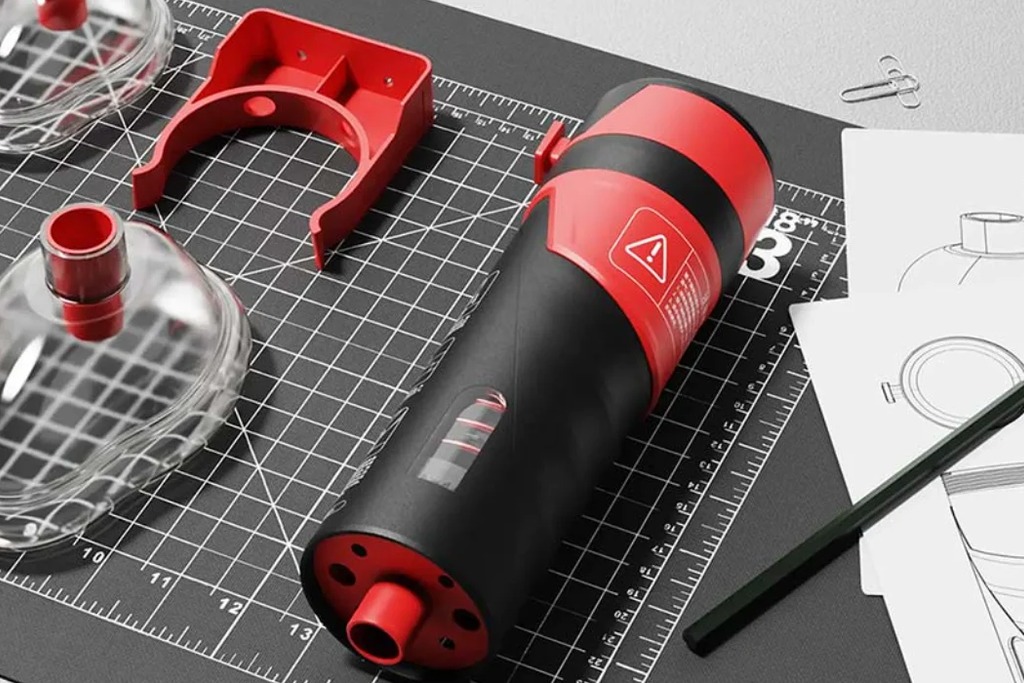
Industrial design covers the look, feel, ergonomics, and user experience of your product. Deliverables typically include concept sketches, 3D CAD models, high-quality renders, and CMF (color, material, finish) specifications.
A well-executed industrial design phase ensures your product is both desirable to users and manufacturable at scale. At OPD Design, we integrate DFM (Design for Manufacturing) principles from the first sketches — preventing costly redesigns later in the process.
3. Mechanical & Structural Design ($3,000–$20,000)
Mechanical design translates your industrial design into production-ready CAD files. This includes:
• Detailed part modeling with proper tolerances
• Assembly design and interference checking
• DFM analysis to identify manufacturing risks before tooling
• Mold flow analysis for injection-molded parts
• Material selection for performance, cost, and regulatory compliance
For products with moving parts, seals, or structural load requirements, this phase often requires more iteration — and more budget.
4. Hardware & Firmware Development ($5,000–$40,000)
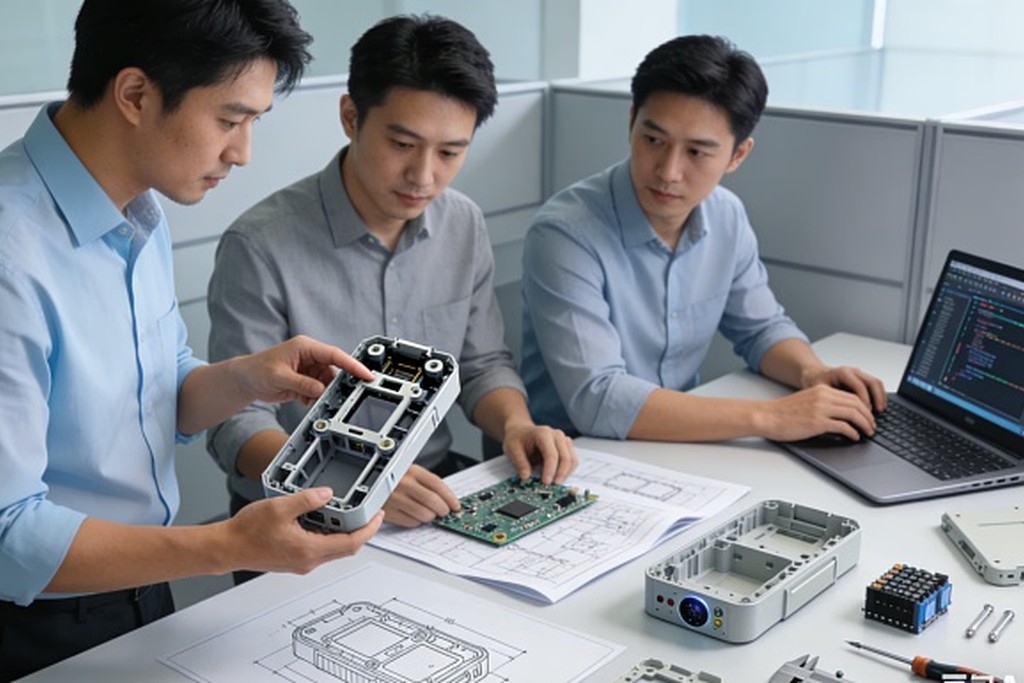
If your product has electronics, this phase covers PCB design, component selection, firmware development, and integration testing. Costs vary dramatically based on:
• PCB complexity: Single-sided boards are cheaper than multi-layer designs (4-layer, 6-layer, or more for high-speed signals).
• Wireless modules: Adding Wi-Fi, Bluetooth, Zigbee, or cellular connectivity increases both component cost and certification complexity.
• Firmware scope: Simple on/off logic is inexpensive; machine learning edge inference is not.
5. Software & App Development ($3,000–$30,000)
Not every hardware product needs a companion app — but if yours does, this is a significant budget line. Mobile app development includes UI/UX design, native or cross-platform development, cloud backend infrastructure, and ongoing maintenance.
Plan for at least two app development cycles: one for MVP launch and one for post-launch feature updates.
6. Rapid Prototyping ($2,000–$25,000)
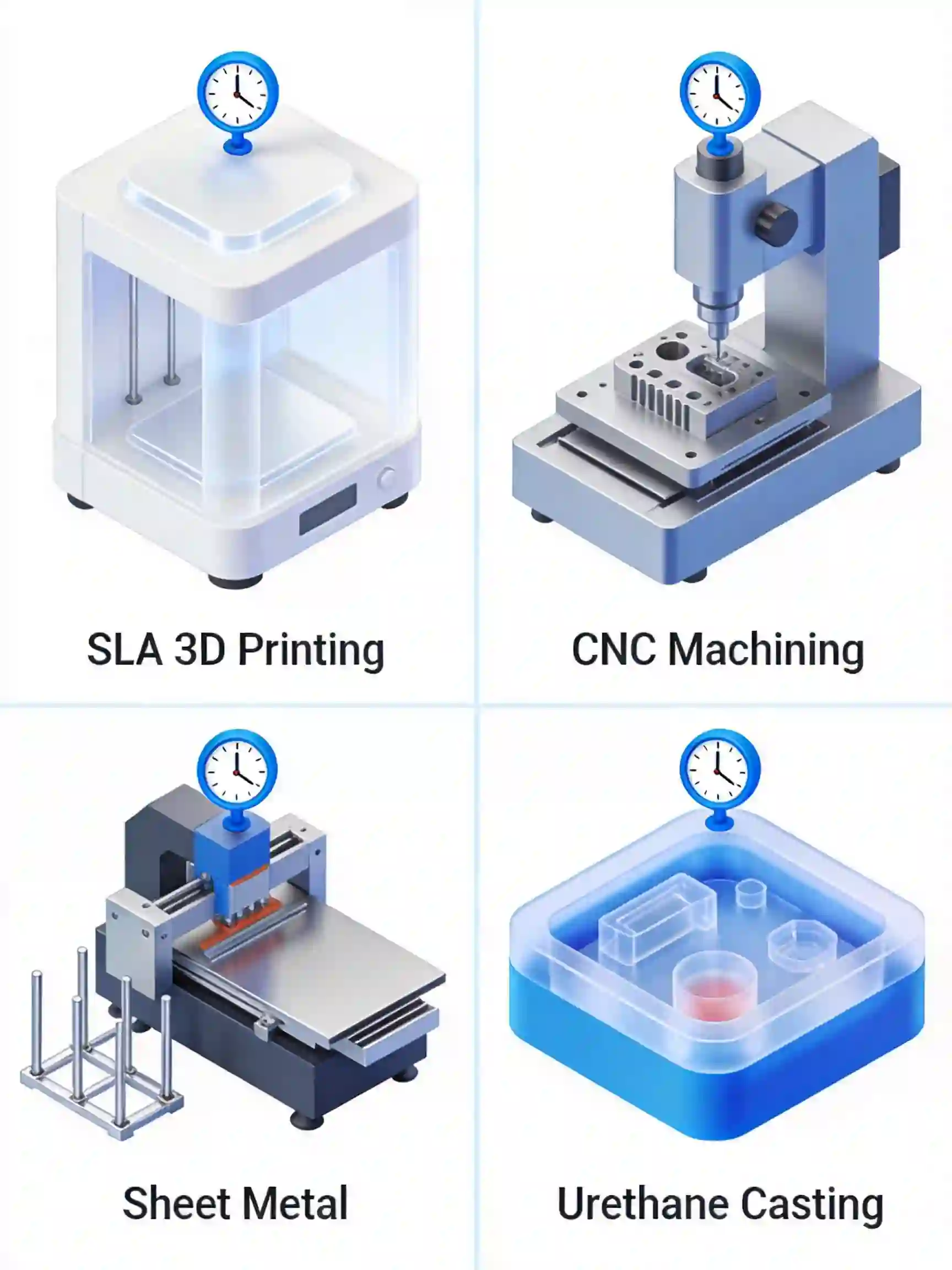
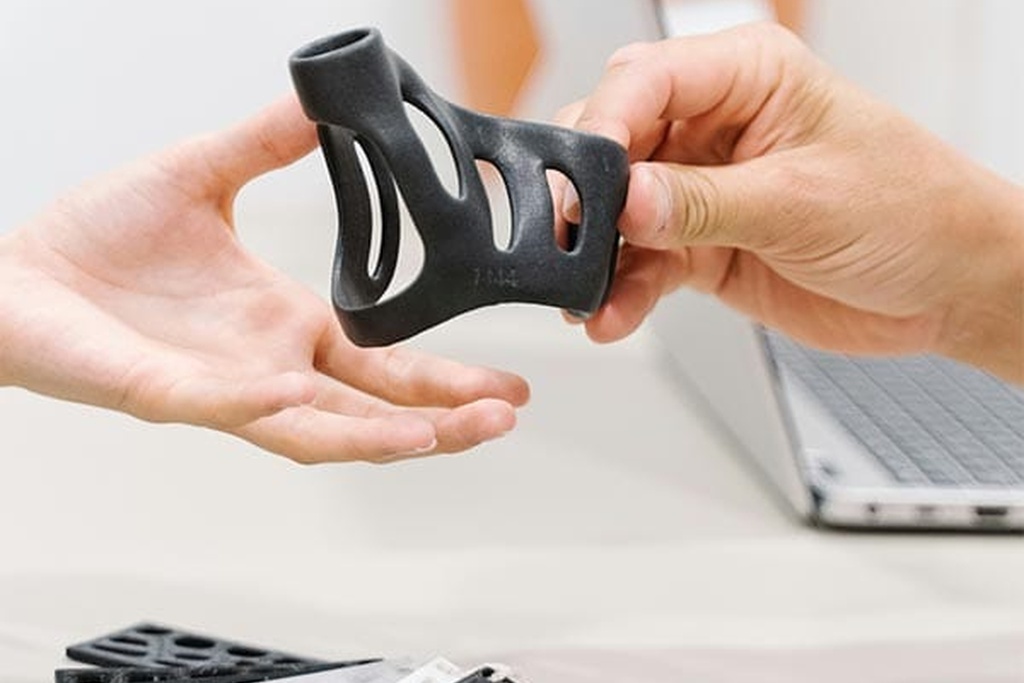
Prototyping validates your design before committing to expensive tooling. Common methods include:
| Method | Best For | Typical Cost per Part | Lead Time |
| SLA / SLS 3D Printing | Enclosures, cosmetic parts | $50 – $500 | 3–7 days |
| CNC Machining | Functional parts, metal components | $200 – $2,000 | 5–15 days |
| Sheet Metal Prototyping | Metal housings, brackets | $100 – $1,000 | 7–14 days |
| Soft Molding / Urethane Casting | Medium-volume outer parts | $500 – $3,000 | 10–20 days |
Expect 2–4 prototype iterations before a design is ready for tooling. Each iteration cycle adds both cost and time.
7. Tooling ($5,000–$50,000+)
This is the cost that surprises most first-time founders.
Tooling (mold making) is the process of creating the steel or aluminum molds that produce your parts at scale. It is one of the largest single line items in product development cost China budgets.
Key cost drivers:
• Number of cavities: Single-cavity molds are cheaper; family molds (multiple parts in one mold) are more expensive.
• Steel grade: P20 steel is standard; S136 stainless or tool steel for high-volume production is more expensive.
• Part complexity: Undercuts, slides, and complex geometries require more sophisticated mold engineering.
• Expected lifetime: Higher-volume products require more durable tooling.
For a consumer electronics product with 4–8 injection-molded parts, tooling typically ranges from $15,000-$40,000. Complex products with multi-material molding can exceed $80,000.
⚠️ Important: Never sign off on tooling without a thorough DFM review. A mold built from a flawed design can cost 3–5x the original mold price to fix.
8. Certification & Compliance ($3,000–$30,000)
If you plan to sell in the US, EU, or other regulated markets, you will need certifications. Common ones include:
| Certification | Region | Typical Cost | Products Affected |
| CE Marking | European Union | $3,000 – $15,000 | Electronics, machinery, medical |
| FCC (Part 15 / 18) | United States | $5,000 – $20,000 | Wireless and electromagnetic devices |
| RoHS / REACH | Global | $1,000 – $5,000 | Electronics with hazardous substances |
| UL / ETL | United States / Canada | $5,000 – $25,000 | Products with safety risks |
| ISO 13485 | Global (medical) | $15,000 – $30,000 | Medical devices |
Certification costs are often recurring (annual audits, renewal fees) — budget for this.
9. Pilot Run / PVT ($5,000–$30,000)
Before full mass production, your factory runs a pilot batch (PVT — Production Validation Test). This validates that the tooling works correctly at scale and identifies any assembly or quality issues. Pilot run costs include factory setup, initial material costs, and quality inspection.
Hidden Costs Most Founders Miss
Even with a thorough budget plan, hidden costs catch many teams off guard:
1. Shipping and Logistics
Sea freight from Shenzhen to Los Angeles runs $3,000–$8,000 per 20-foot container(more during peak seasons). Air freight for urgent samples can cost $5–$15 per kg.
2. Import Duties and Tariffs
US Section 301 tariffs on Chinese goods can add 7.5–25% to product cost depending on the HTS code. Factor this into your landed cost model early.
3. Product Photography and Content
Manufacturing samples need professional photography for e-commerce listings, Amazon, and marketing. Budget $2,000–$10,000 depending on the shoot scope.
4. Amazon FBA and Retail Preparation
FBA labeling, polybagging, and compliance documentation add $0.50–$3.00 per unit depending on product size and requirements.
5. Currency Fluctuation
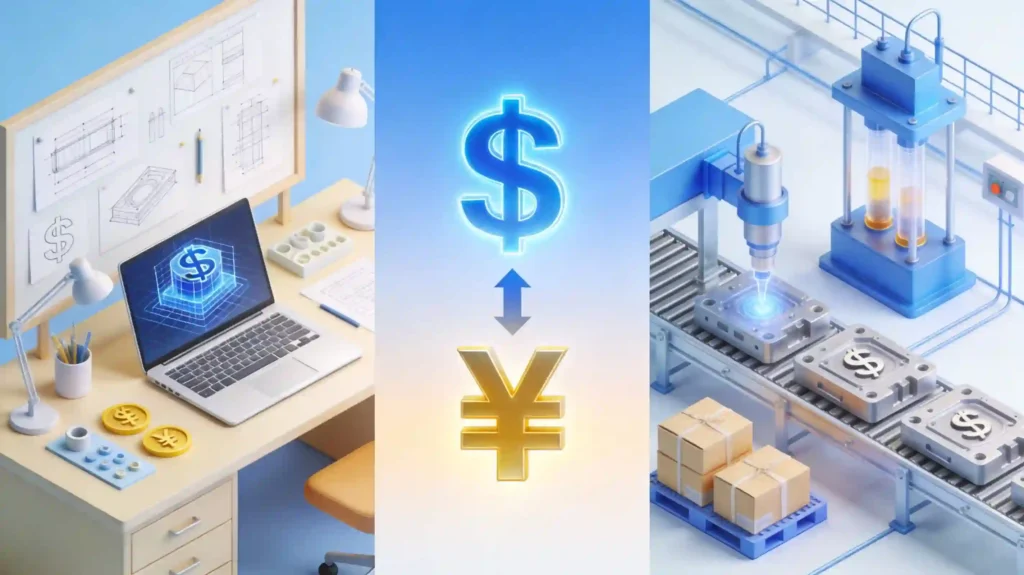
Most Chinese manufacturers quote in USD but invoice in RMB. A 5–10% currency shift can silently erode margins — plan for it.
6. Rework and Respins
If your first tooling attempt produces parts with defects, rework or re-tooling costs can add$5,000–$20,000 and 4–8 weeks to your timeline.
Why Develop in China? The Cost Advantage Explained
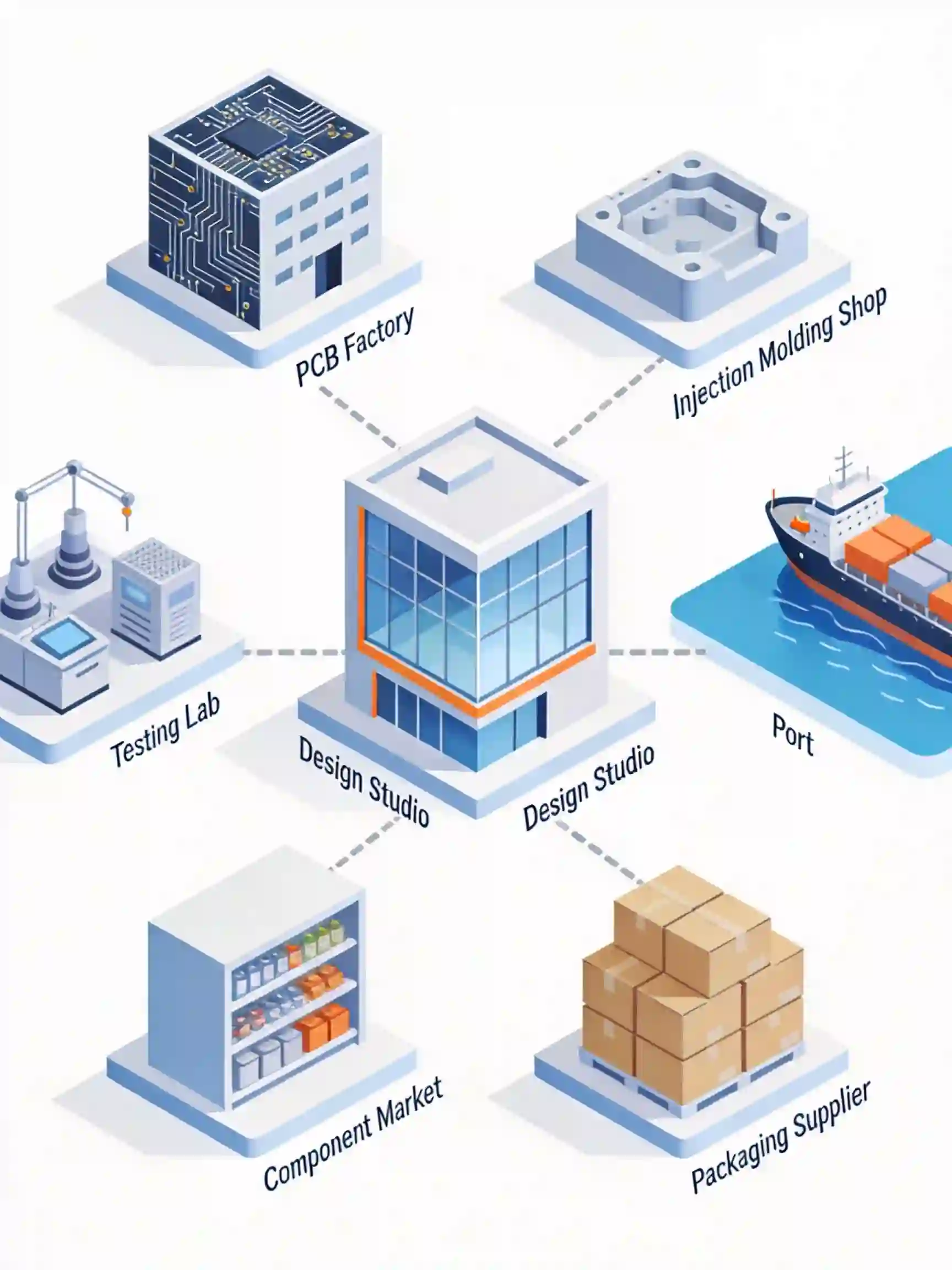
Given the complexity above, why do thousands of hardware startups still choose to develop in China?
The answer is not just labor cost. The Shenzhen hardware ecosystem offers a combination of advantages unavailable anywhere else on Earth:
• Supplier density: Within a 30-minute drive in Shenzhen, you can source components, sub-assemblies, packaging materials, and tooling services from hundreds of suppliers.
• Rapid iteration speed: Prototype fabrication that takes 3–4 weeks in Western countries often takes 3–7 days in Shenzhen due to proximity and supplier responsiveness.
• Tooling economics: Injection mold tooling in China costs 40–60% less than equivalent tooling in the US or Europe.
• Manufacturing volume flexibility: Chinese factories are accustomed to both small pilot runs (500–1,000 units) and high-volume production — without requiring massive MOQs.
A hardware startup that develops in Shenzhen typically achieves 25–40% lower total product cost compared to the same product developed and manufactured in North America or Western Europe — often within the first year.
How to Budget for Your First Hardware Product
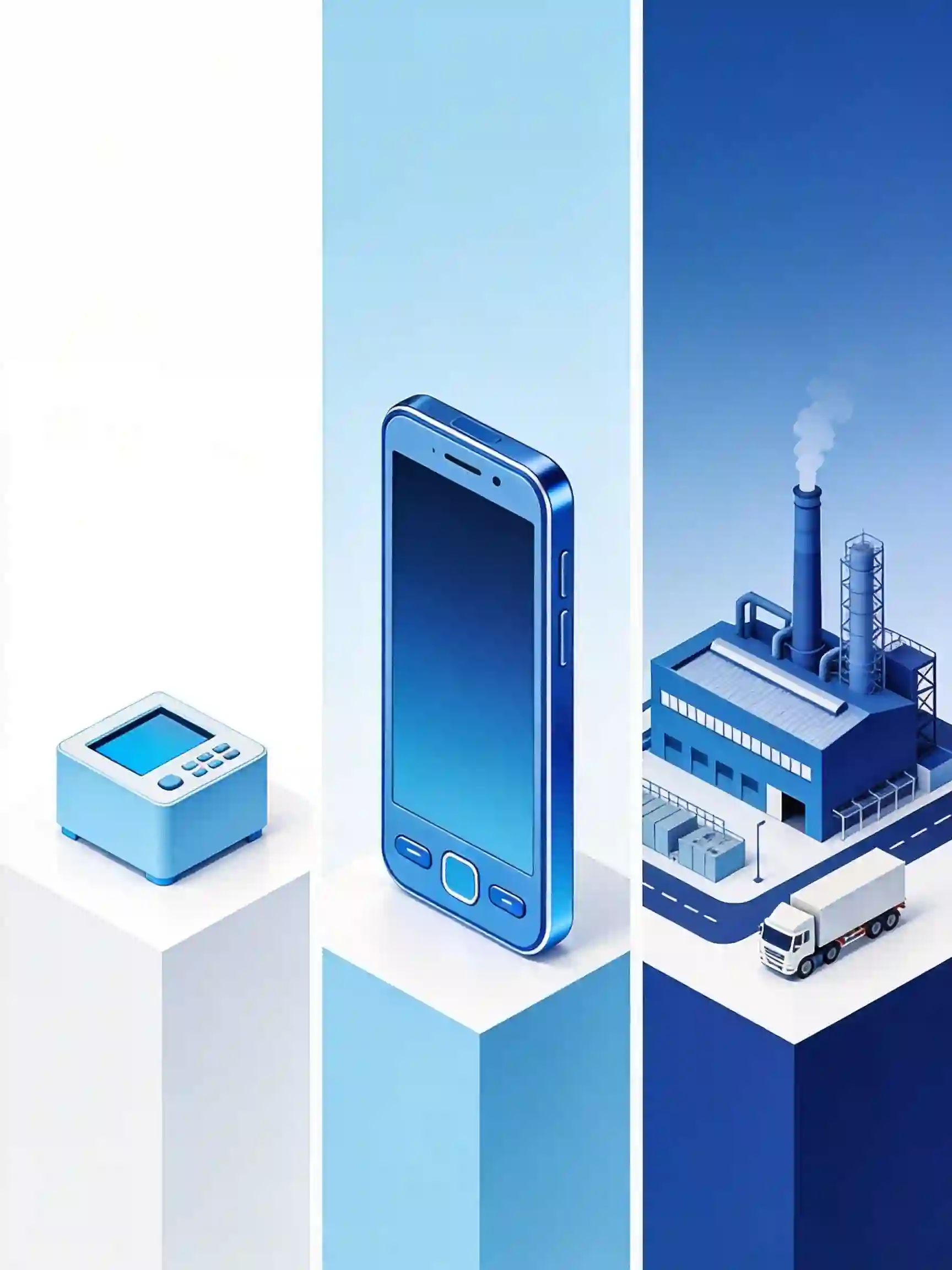
Here is a practical framework for first-time founders:
Tier 1: MVP / Proof of Concept ($30,000–$60,000)
• Focus: Validate core functionality only
• Skip premium materials and wireless features
• Use rapid prototyping (3D printing) instead of hard tooling
• Target: single market, no certification (pre-launch testing)
Tier 2: Market-Ready Product ($60,000–$120,000)
• Full industrial design with DFM
• Custom electronics with firmware
• Pilot tooling (aluminum molds for lower volume)
• Basic certifications for primary market (CE or FCC)
Tier 3: Production-Ready / High Volume ($120,000–$250,000+)
• Full NPI process (POC → EVT → DVT → PVT → MP)
• Steel tooling for high-volume production
• Multi-market certifications (CE + FCC + RoHS)
• Professional packaging and brand design
Working with a Product Design Company China: Is It Worth It?
One of the most common questions we receive: “Can’t I just find a factory directly and save money?”
You can. But the question is whether the saved cost exceeds the risk.
Working directly with a factory works well when your product is simple, your team has deep hardware expertise, and your timeline is flexible. However, most first-time founders face:
• Communication gaps: Factory engineers speak Mandarin; design intent gets lost in translation.
• DFM failures: Factories optimize for manufacturing efficiency, not for your product’s cost or quality — leading to designs that are hard to assemble or expensive to produce.
• IP risk: Without proper NDAs and structured IP assignment, your design can appear in the market under a different brand.
• Timeline surprises: Factories manage many clients simultaneously; your project gets priority only if it is large.
An end-to-end product design company China like OPD Design acts as your single point of accountability — bridging the language, engineering, and cultural gaps between your vision and the factory floor. The right partner pays for itself in avoided mistakes.
About OPD Design
OPD Design is a product design company China offering comprehensive end-to-end product development services — from initial concept to mass production. We specialize in smart hardware, consumer electronics, medical devices, and connected products.
Why OPD Design:
• 50+ commercial projects delivered across 15+ countries
• 300+ partner factory network across Guangdong and surrounding provinces
• Full-service capability: Product Strategy, Industrial Design, Mechanical Design, Hardware & Firmware, Software & App, Tooling, and Mass Production Support
• Fluent English project management with transparent pricing and milestone-based delivery
Whether you have a sketch on a napkin or a production-ready design, we can help you navigate the journey from concept to market — with clear budgets and realistic timelines.
📧 Reach out at www.opd-design.com to discuss your project.
Frequently Asked Questions (FAQ)
How much does it cost to develop a hardware product in China in 2025?
A basic to moderate hardware product typically costs $30,000 to $120,000 for full development through to mass production. Complex products with advanced electronics, multi-material assemblies, and multiple certifications can range from $120,000 to $250,000+. The exact cost depends on product complexity, number of prototypes, tooling requirements, and target market certifications.
Is it cheaper to develop a product in China than in the US?
Yes, in most cases. Total product development cost in China is typically 25–40% lower than equivalent development in the US or Western Europe. The biggest savings come from tooling (40–60% less), labor costs, and the speed of the Shenzhen supplier ecosystem. However, total cost should include logistics, import duties, and quality management — which partially offset the savings.
What is the biggest hidden cost in hardware development?
Tooling is the most commonly underestimated cost in product development cost China budgets. First-time founders often budget $5,000–$10,000 for molds, only to discover that production-quality tooling costs$20,000–$40,000 or more. We recommend allocating at least 20–30% of your tooling budget as a contingency reserve.
How long does product development take in China?
A typical timeline for a moderate-complexity product ranges from 6 to 14 months from concept to first production shipment:
• Product Strategy & ID: 1–2 months
• Mechanical Design & Prototyping: 2–3 months
• Tooling: 2–4 months (can overlap)
• Pilot Run / PVT: 1–2 months
• Certification (parallel): 2–4 months
Complex products with medical-grade requirements or multi-market certifications can take 18–24 months.
Do I need certifications to sell my product?
If you plan to sell in the United States, European Union, or most regulated markets — yes. At minimum, you will need:
• FCC certification for electronic products sold in the US
• CE marking for products sold in the EU
• RoHS compliance for electronics sold globally
Selling without required certifications risks product seizure, fines, and reputational damage.
Can I protect my IP when developing in China?
Yes, with proper precautions. Key steps include:
• Filing Chinese utility and design patents before disclosing your invention
• Using ironclad NDAs and IP assignment agreements with all partners
• Conducting Freedom to Operate (FTO) searches
• Registering trademarks in China proactively
China has significantly strengthened IP enforcement over the past decade, but protection requires active management — not passive hope.
Should I use a design company or go directly to a factory?
For most first-time founders and early-stage startups, working with a full-service product design company China like OPD Design provides better value than going directly to a factory. A design partner provides engineering expertise, DFM optimization, quality management, and IP protection that factories typically do not offer. The added cost of a design partner is almost always less than the cost of a failed tooling run or a delayed launch.