
Consumer electronics are designed in stages: research, industrial design, hardware engineering, software, prototyping, packaging, and production. Electronic packaging design should start alongside the product, not after it, because the box must protect, present, and ship the device. This guide walks through each stage and shows where teams lose time.
Electronic packaging design is one of the most overlooked steps when a team builds a new device from scratch. Most founders think about the circuit board and the shape first. The box comes last, and it often causes late delays. At OPD Design, we guide clients through the whole path, from the first sketch to the finished box. This guide explains how consumer electronics are designed from scratch, one stage at a time.
The Short Answer
A consumer electronic product starts as a need, not a shape. The team studies the user and the market. Then designers define the look, engineers build the inner structure and circuits, and developers write the code. Prototypes test every choice. Packaging and compliance close the loop before mass production.
These stages overlap. A battery size affects the shell. The shell affects the box. The box affects shipping cost. When one team sees the whole chain, each choice supports the next one.
Stage 1: Idea, Research, and Planning
Every project begins with a few plain questions. Who will use this device? What problem does it solve? What price will buyers accept?
Our strategy team answers these questions before design starts. The team sets the target user, the must-have features, and a rough cost range. It also checks competing products and spots gaps in the market.
A feasibility study usually takes two to three weeks. It tests whether the technology works and whether buyers want it. Teams that skip this step often redesign later, which costs far more than a few weeks of planning.
Set a Cost Target Early
Write down the target retail price on day one. Work backward to the factory cost, the packaging cost, and the shipping cost. This simple habit keeps feature lists honest.
Stage 2: Industrial Design
Industrial design gives the device its form, color, texture, and feel in the hand. Designers sketch many directions, then narrow them to one. They build 3D models and test size, grip, and button placement.
Good industrial designers shape products that look right and feel right. They also think about how the device will be made. A curve that looks great on screen may be hard to mold. A thin wall may crack in a drop.
This stage links directly to packaging. The outline of the device sets the size of the tray, the insert, and the outer box. Teams that plan the box at this point save rework later.
Stage 3: Mechanical and Electronic Hardware Design
Once the look is set, engineers make it work. This stage has two parts that must move together.
Mechanical Design
Mechanical engineers turn the shape into real parts. They set wall thickness, screw points, seals, and the order of assembly. They leave room for batteries, boards, and cables. They also plan how a service team can open the product if it needs repair.
Electronic Hardware Design
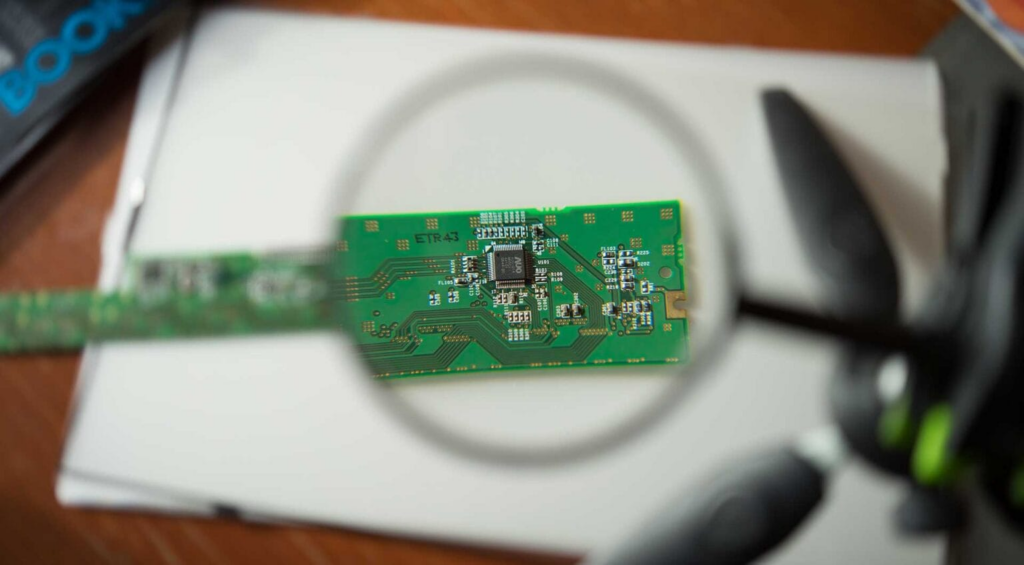
Electronic hardware design covers the circuit boards, the power system, the sensors, and the wireless modules. Our electronic hardware design team picks parts, draws the schematic, and lays out the board.
Space is the main challenge. A wireless charger, a battery, and a speaker all want the same corner of the shell. Heat, signal noise, and antenna placement add more limits. Good electronic hardware design starts at the same time as the shell, not after it.
The parts list also affects packaging. A lithium battery brings shipping rules. A glass screen needs extra cushioning. A heavy magnet may call for a different insert. Electronic packaging design works best when the packaging designer sees the parts list early.
Stage 4: Software and Firmware
Most modern devices run code. Firmware controls the hardware. A mobile app lets the user set it up and control it. A cloud service may store data or push updates.
Many new products now add smart features such as voice, image, or sensor analysis. That is where AI software development enters the plan. The team decides which features run on the device and which run in the cloud. Those choices affect chip cost, battery life, and privacy.
Software also changes the box. A device with an app needs a clear setup guide and a QR code. A device that needs a charge before first use needs a note on the outer pack. Small details like these shape the first minutes of ownership.

Stage 5: Prototyping and Testing
Prototypes turn drawings into objects people can hold. Most projects move through three rounds.
- Proof of concept: a rough model that checks size, form, and basic function.
- Working prototype: a unit with real electronics that tests features and battery life.
- Appearance sample: a unit with the final color, texture, and finish.
Our party box speaker project followed this path. The team tested drop resistance, battery life, splash protection, and audio quality across the rounds. You can read more in our party box speaker case.
The smart massage comb project built 10 to 20 hand-made prototypes. Those units tested misting, wireless charging, battery life, and drop resistance. The final product earned FCC and CE certification. See the details in our massage comb case.
Prototype rounds are also the right time to test the pack. A packaging sample that holds a prototype shows early if the insert fits, the lid closes, and the unit stays still. Exploring how to turn your device idea into a real product?Our team has helped startups and brands turn ideas into real, manufacturable products.Book a free consultation to discuss your idea.
Stage 6: Electronic Packaging Design
Electronic packaging design is the work of creating the box, the inserts, the labels, and the printed guides around a device. Our electronic packaging design service treats the pack as part of the product, not as an add-on.
A good pack does four jobs. It protects the device. It tells the brand story. It guides the user. It ships at a fair cost.

Protection in Transit
Electronics face drops, vibration, and stacking loads on the way to the buyer. Foam, molded pulp, and paper trays hold the device in place. The right choice depends on weight, shape, and fragile parts such as screens.
The International Safe Transit Association is a nonprofit focused on transport packaging. It publishes lab test procedures that simulate shipping hazards. You can learn how its Transit Tested program works. Testing a pack against these procedures catches weak points before launch.
The Unboxing Moment
The first look at the box shapes how buyers feel about the product. Clean structure, strong print, and an easy reveal all help. Many brands design the opening order: first the device, then the cable, then the guide.
Our gift boxes case shows how we approach packaging as part of the brand experience.
Labels, Marks, and Manuals
Electronic packaging design must leave room for required text. Barcodes, model numbers, battery warnings, and compliance marks all need space. In the United States, the FCC’s Office of Engineering and Technology runs the equipment authorization program for radio-frequency devices. Check which marks your device needs before the artwork is final.
Cost and Size
A box that is a few millimeters too large can add real cost across thousands of units. It changes how many units fit in a carton and on a pallet. Smart electronic packaging design trims empty space and cuts material without losing protection.
Sustainability
More buyers now expect less plastic. Paper-based inserts, fewer print layers, and right-sized boxes reduce waste. These choices often cut cost too.
Stage 7: Compliance and Mass Production
Before a device goes on sale, it must pass the rules of each target market. Common examples are FCC for the US, CE for Europe, and RoHS for restricted substances. Tests run on the final version of the product, so the design must be stable first.
After testing, the team runs a design check for manufacturing. Engineers confirm that parts can be molded, assembled, and tested at steady quality. Then mold development begins, followed by a pilot run and mass production.
The pack joins this process. Cartons, inserts, and labels go through the same trial run. A pilot batch shows if the packing speed is realistic and if the device arrives clean.
How Long Does the Whole Process Take?
A standard consumer electronics or smart device project at OPD Design takes about 6 to 10 months from idea to mass production. The table below shows a planning range.
| Stage | Typical time | Main output |
|---|---|---|
| Feasibility study | 2 to 3 weeks | Direction and cost target |
| Industrial and mechanical design | 6 to 8 weeks | Form and inner structure |
| Prototyping and engineering validation | 4 to 6 weeks | Tested samples |
| Design check for manufacturing | 3 to 4 weeks | Build-ready files |
| Mold development | 5 to 8 weeks | Production tools |
| Packaging design and testing | Runs alongside the stages above | Tested pack and print files |
| Pilot and mass production | Depends on the project | Finished units |
Treat these times as a guide, not a promise. Each project is different.
Common Mistakes When Designing From Scratch
The same problems appear again and again.
- Starting engineering before the user is clear
- Designing the shell without planning space for the battery
- Leaving electronic packaging design until the last month
- Choosing parts without checking supply and cost
- Testing the device but not the pack
- Ignoring compliance marks until artwork is final
Each one leads to rework. Plan the look, the parts, the code, and the pack together from week one. That habit saves more time than any single tool.
How to Choose a Design Partner
Ask a few direct questions before you sign.
- Does the team cover design, engineering, software, and packaging?
- Can they show case studies for products like yours?
- How do they check that a design can be built at a fair cost?
- Who owns the design files and prototypes?
- How often will you get updates?
At OPD Design, overseas clients work with English-speaking project managers. They get weekly updates, video reviews, and shared dashboards. We sign a mutual NDA before project talks, and all files and prototypes belong to the client. Our team works with 300+ cooperative factories and places quality engineers on every project.
Conclusion
Consumer electronics are designed from scratch through a chain of linked stages. Research sets the target. Industrial design shapes the product. Hardware and software make it work. Prototypes prove it. Electronic packaging design protects it and presents it to the buyer. Teams that plan these stages together avoid most late surprises.
OPD Design is a product design and development company based in Shenzhen, China. Our services run from strategy to production support, including brand design, packaging design, and compliance help. If you have a device idea and want to talk through your plan, contact us today.
FAQs
1. What is the first step in designing a consumer electronic product?
The first step is research and planning. The team defines the user, the problem, the key features, and a cost target before any design work begins.
2. When should electronic packaging design start?
It should start during industrial design, once the device size is known. Early planning lets the pack match the product and avoids late changes to the shell or the box.
3. How long does it take to design a consumer electronic device?
A standard consumer electronics or smart device project at OPD Design takes about 6 to 10 months from idea to mass production. The time depends on the product and on how many prototype rounds it needs.
4. Do I need software as well as hardware design?
Most connected devices do. Firmware runs the hardware, and an app or cloud service often handles setup and updates. A simple device with no connectivity may need very little code.
5. Can one company handle design, packaging, and production support?
Yes. OPD Design covers strategy, industrial design, engineering, software, packaging, prototyping, and production support in one team. That means fewer handoffs between vendors.