

Wearable Brain-Computer Product Development
Project Background
The prevalence of ADHD among children aged 5–12 in China is approximately 6.3%. However, current interventions have significant limitations. Drug treatments carry side effects, behavioral interventions are costly and show poor compliance, and medical resources remain scarce.
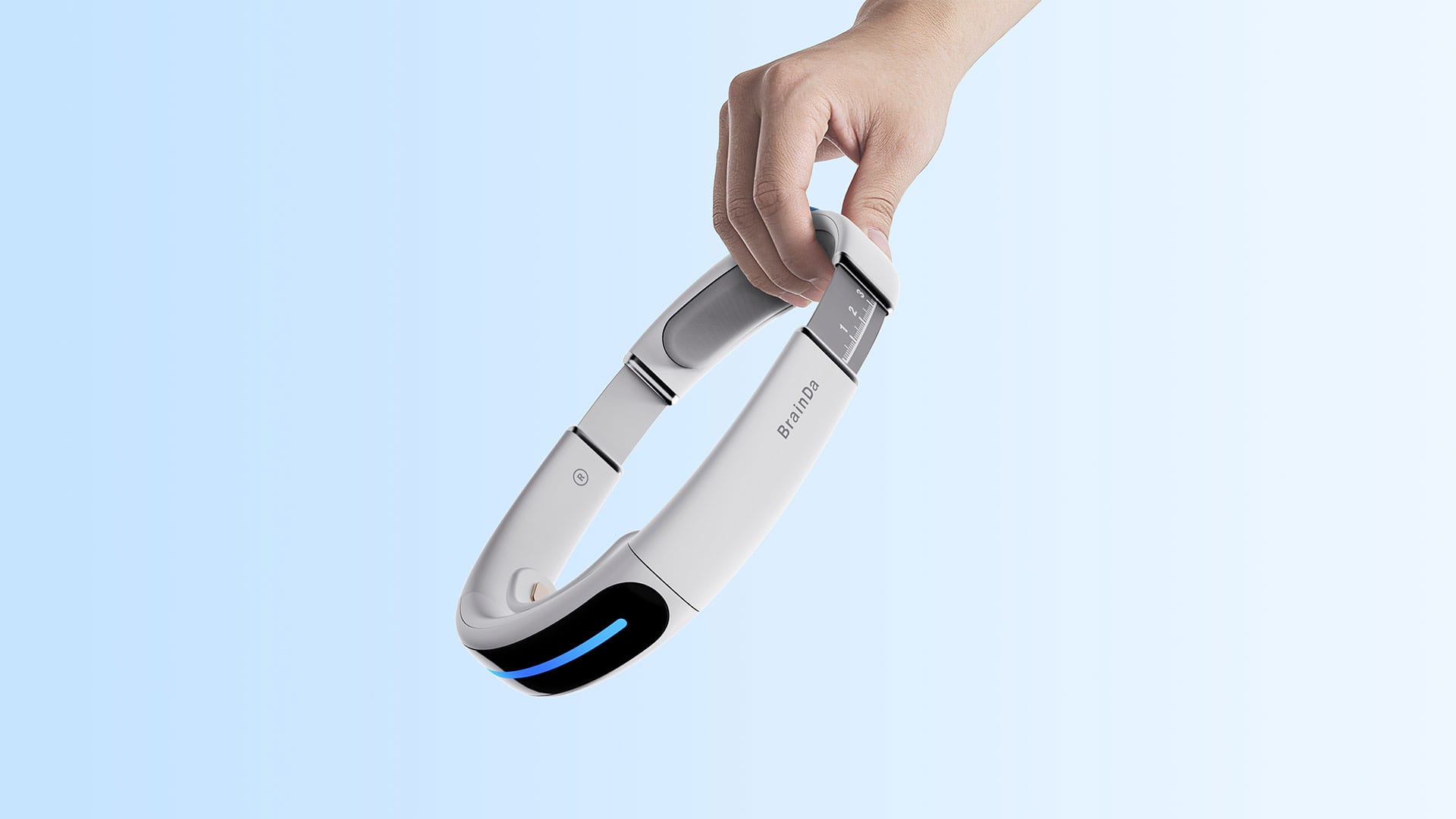
Therefore, this project set out to develop a forehead-worn EEG intervention device for children. The goal was to leverage non-invasive, portable, home-based neuromodulation technology. This wearable brain-computer product development aimed to fill the gap in safe and efficient home care, supporting early intervention and recovery for children with ADHD.
Solution
Size Adaptive Adjustment
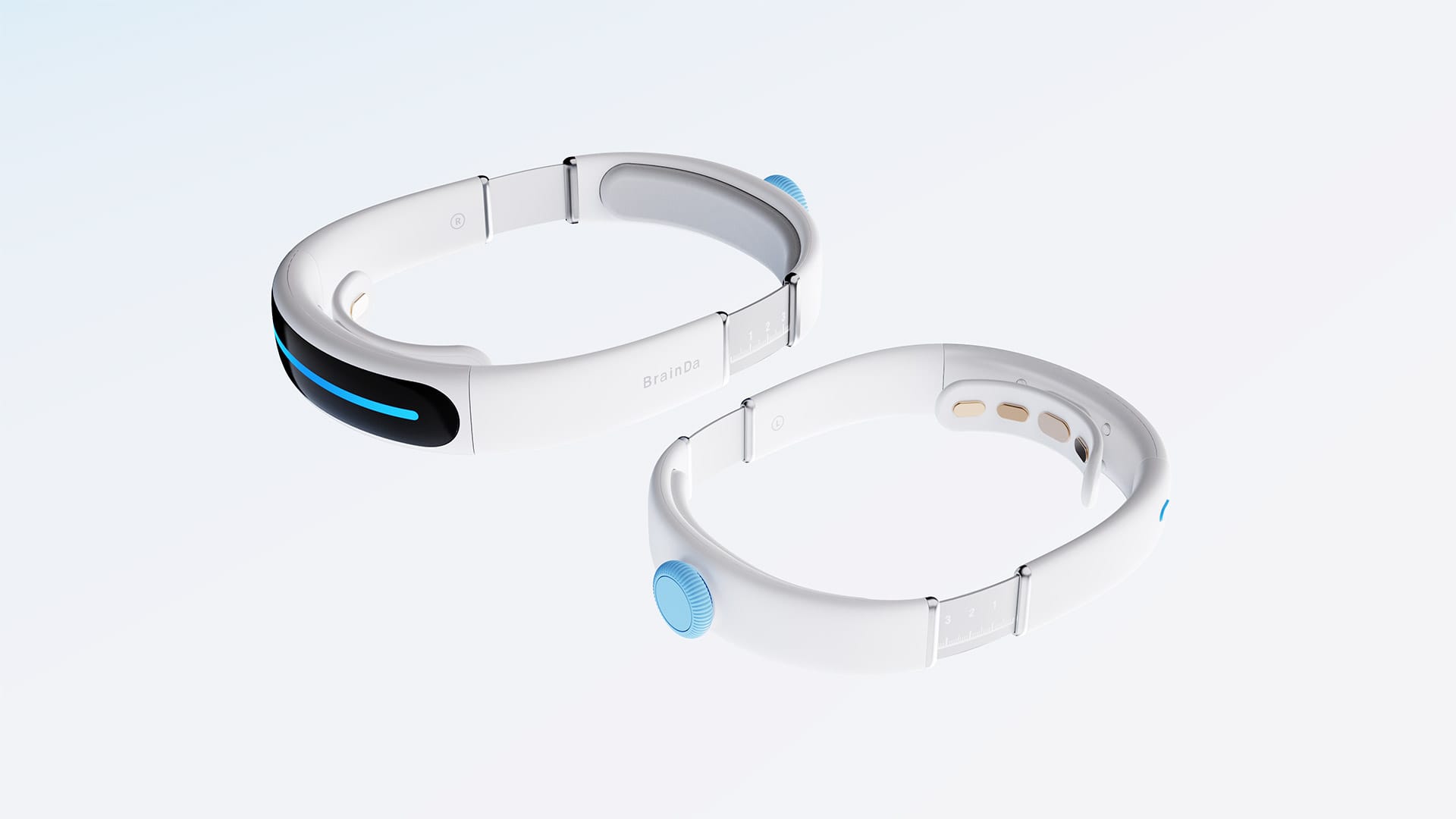
To fit different head circumferences of children aged 5–12 and even adults, we adopted a segmented adjustable buckle with scale markers.
The main body uses a multi-segment flexible connection. This enables stepless adjustment within a 12 cm range via a sliding buckle, with precise positioning through scale markings. Moreover, the adjustment knob features a large, non-slip texture for easy operation by both children and parents. Medical-grade elastic hinges at the joints ensure a snug fit while avoiding pressure on the head.
Interactive Lighting Interface
We realized an intuitive user experience through a visual status lighting system. A ring-shaped diffused LED light strip indicates different working statuses with distinct colors: blue for intervention mode, green for fully charged, and red for low battery alert.
Additionally, the lighting uses soft diffusion technology to avoid strong light irritation to children’s eyes. The lighting system also links with the APP to support basic status indication, making core functions clear and easy to understand.
Safe Materials and Protection
We established a full-chain safety and protection system based on children’s health, environmental protection, and practical scenarios.
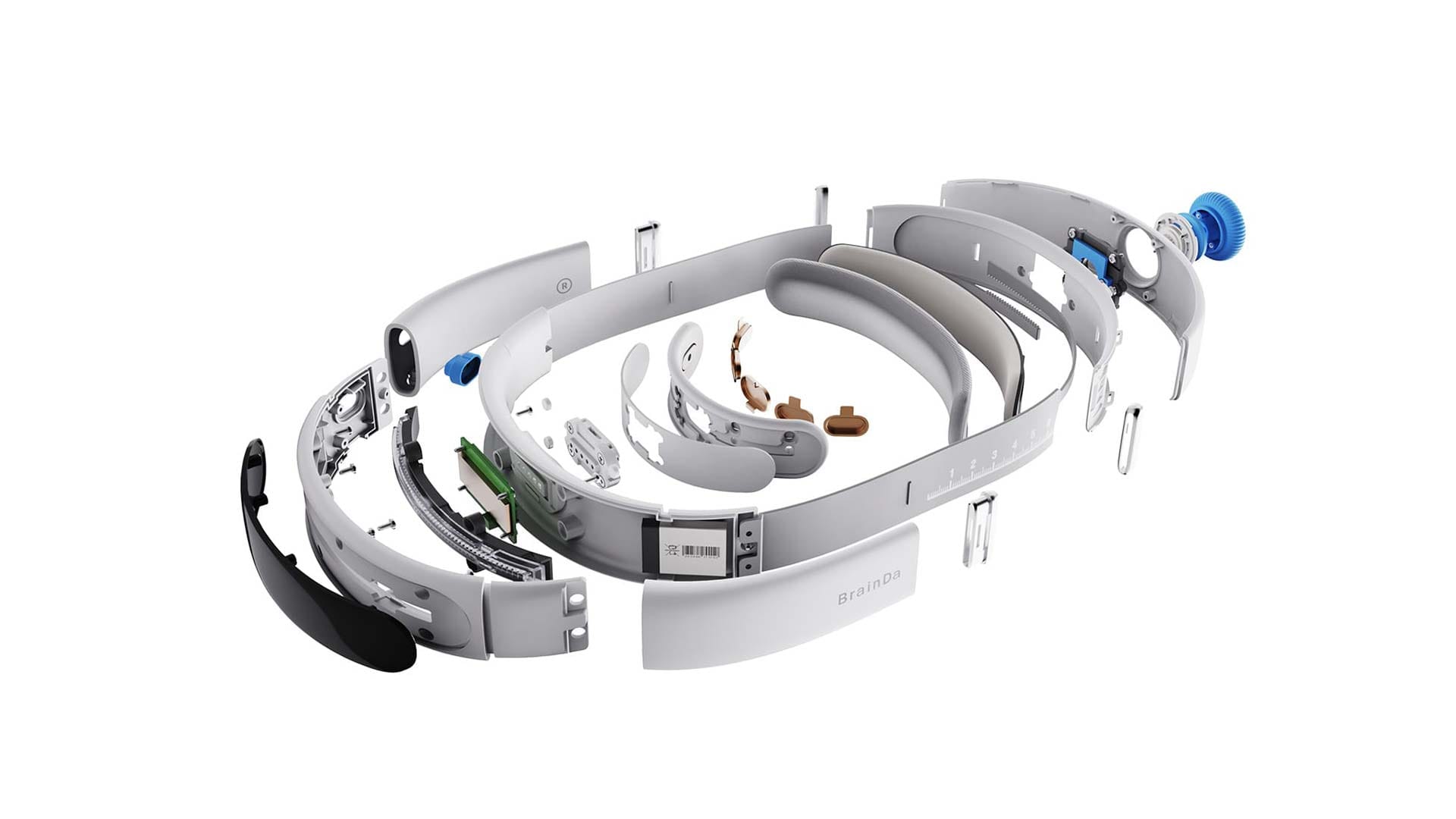
Skin-contact parts use maternal-infant grade liquid silicone, certified by EU REACH and China GB 4806 standards. Therefore, the device is odorless, non-irritating, and suitable for children’s sensitive skin. The outer casing uses biodegradable bio-based plastics to reduce environmental impact, while providing excellent drop resistance and stain resistance.
Furthermore, all internal components use lead-free soldering, and packaging materials are recyclable pulp. The product achieves IPX4 water resistance, protecting against daily splashes such as hand washing or accidental rain exposure. Additionally, the total weight is controlled at 150g, balancing structural strength and wearing comfort.
Child-Friendly Experience Optimization
The appearance features a rounded, edge-free design to prevent injuries from bumps. We used fresh white and light blue color matching to reduce the medical-device perception and improve children’s acceptance.
Moreover, the operation logic is simplified with only core function buttons, supported by lighting prompts. This lowers the learning curve for both parents and children. The wearing structure fits the physiological curve of the forehead to distribute pressure evenly, without interfering with children’s daily activities and study.
Project Results
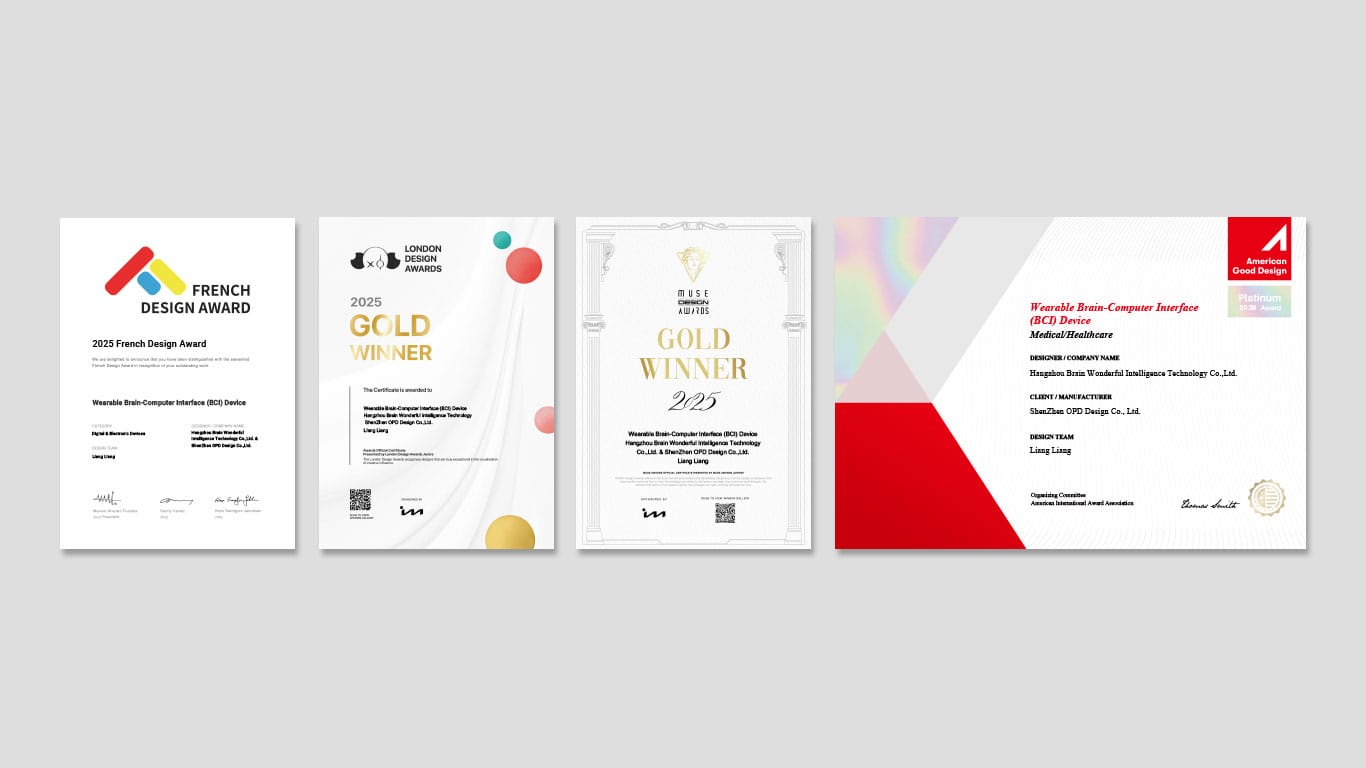
This wearable brain-computer product development project won four international design awards. The device successfully bridges the gap between clinical neuromodulation technology and home-based care for children with ADHD.
Moreover, the forehead-worn EEG intervention device achieved all key design targets: 12 cm stepless adjustment range, IPX4 water resistance, 150g lightweight comfort, and maternal-infant grade skin safety. The product is now ready for mass production, providing a non-invasive, portable solution for early ADHD intervention.
What is a wearable brain-computer interface device?
A wearable brain-computer interface device reads brain signals (EEG) through non-invasive sensors placed on the skin. In this project, the device uses forehead-mounted electrodes to monitor brain activity and deliver gentle neuromodulation. Therefore, it supports non-invasive, home-based intervention for children with ADHD without medication side effects.
What services did OPD Design provide for this project?
We delivered full-scope services for this wearable brain-computer product development. Our scope included industrial design, mechanical design, functional prototyping, packaging design, and mold development. We handled the entire process from concept research to mass production preparation.
How did you ensure the device is safe for children?
How does the size adjustment work for different age groups?
What awards did this project win?
Frequently Asked Questions
Start Your Product Development Project
Looking for product development that combines medical technology with human-centered design? OPD Design delivers end-to-end services — from industrial design to engineering, prototyping, and manufacturing preparation.
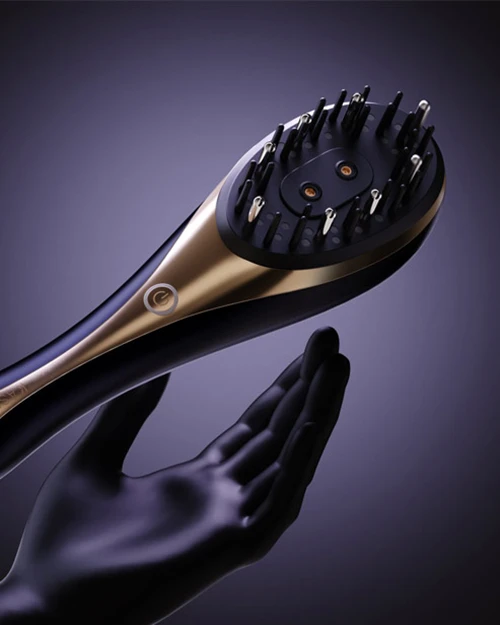
Smart Comb
A scalp care comb with a misting function, featuring an ergonomic design that combines style and practicality.
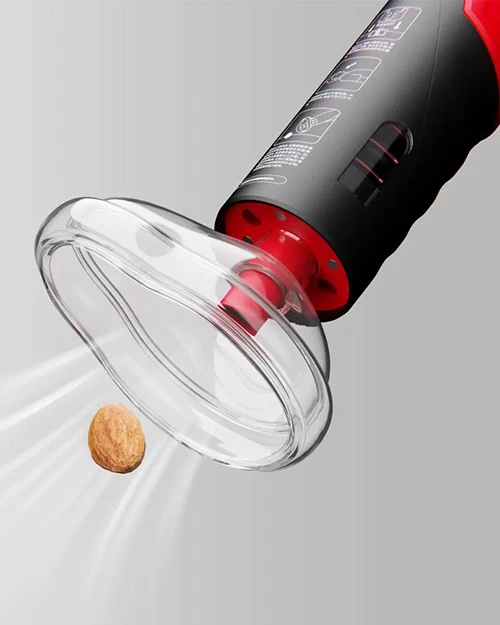
Anti-Choking Device
A home-use Heimlich maneuver device developed based on the principles of the Heimlich maneuver.
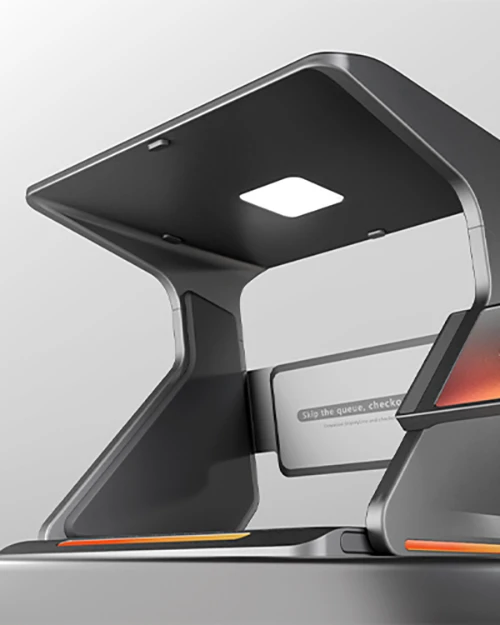
Self-Service Checkout System
These are the core devices supporting the "unmanned shopping" scenario and the key terminals for improving shopping efficiency.
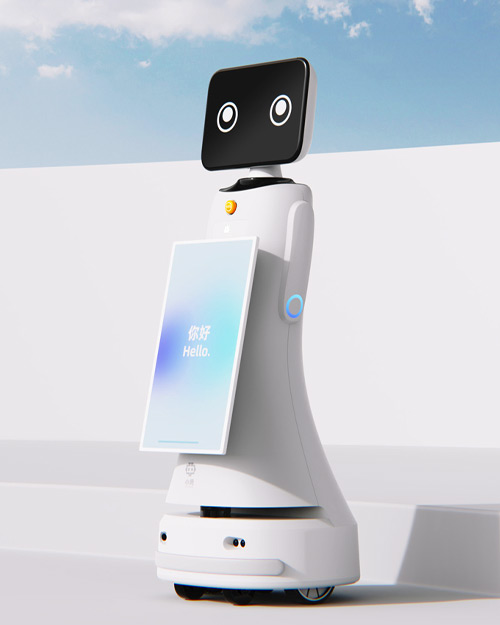
Care Robot
A care robot that integrates safety monitoring, daily assistance, and emergency response.
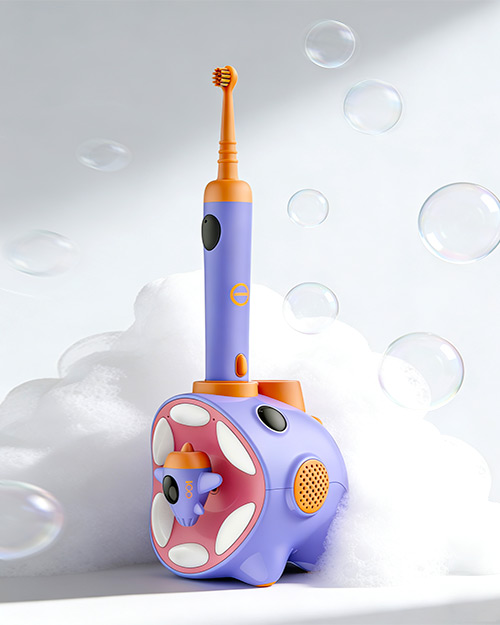
Kids Smart Toothbrush
Let children learn to brush their teeth independently in a fun way.
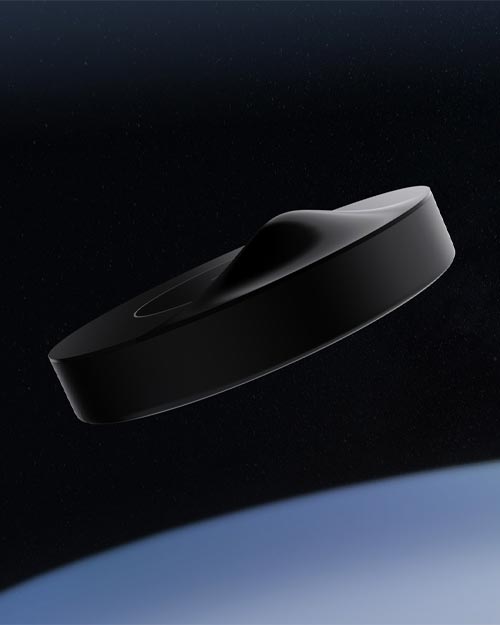
Sci-fi style electric ceramic stove
Spaceship-themed electric ceramic stove: a modern lifestyle.
![Children's KVT educational device — product compliance and safety certification by OPD Design]](https://www.opd-design.com/wp-content/uploads/2025/12/A6.829-1.jpg "OPD DESIGN | Wearable Brain-Computer")
Children's KVT
Allowing children to learn through play and grow through learning.
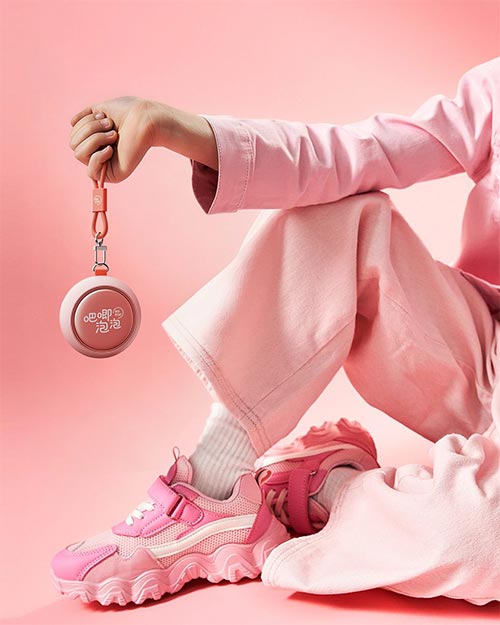
AI interactive terminal
This project uses AI to recognize NFC chips, match IP-specific audio effects, enabling “one Baji, one exclusive interaction”