
Industrial IoT Product Development
From IIoT concept to mass production, building reliable, connected, and manufacturable smart industrial equipment.
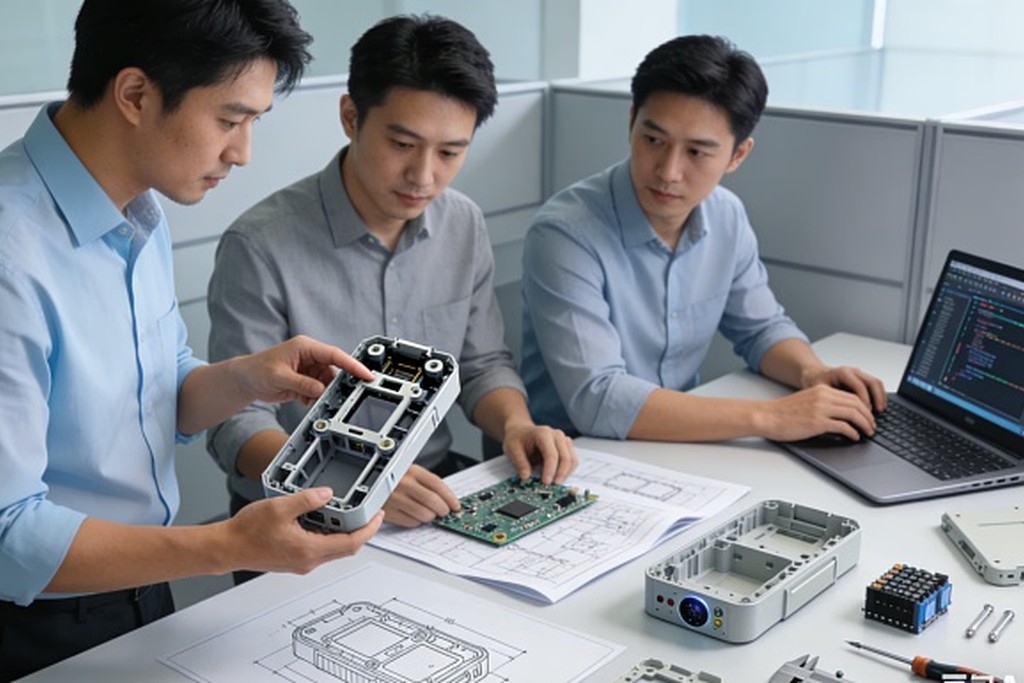
OPD Design provides end-to-end IIoT product development services for industrial enterprises, technology companies, startups, and innovative brands.
We help clients transform concepts such as industrial sensors, equipment monitoring systems, IoT gateways, edge computing devices, smart control devices, and asset tracking devices into truly manufacturable, deployable, and scalable industrial products.
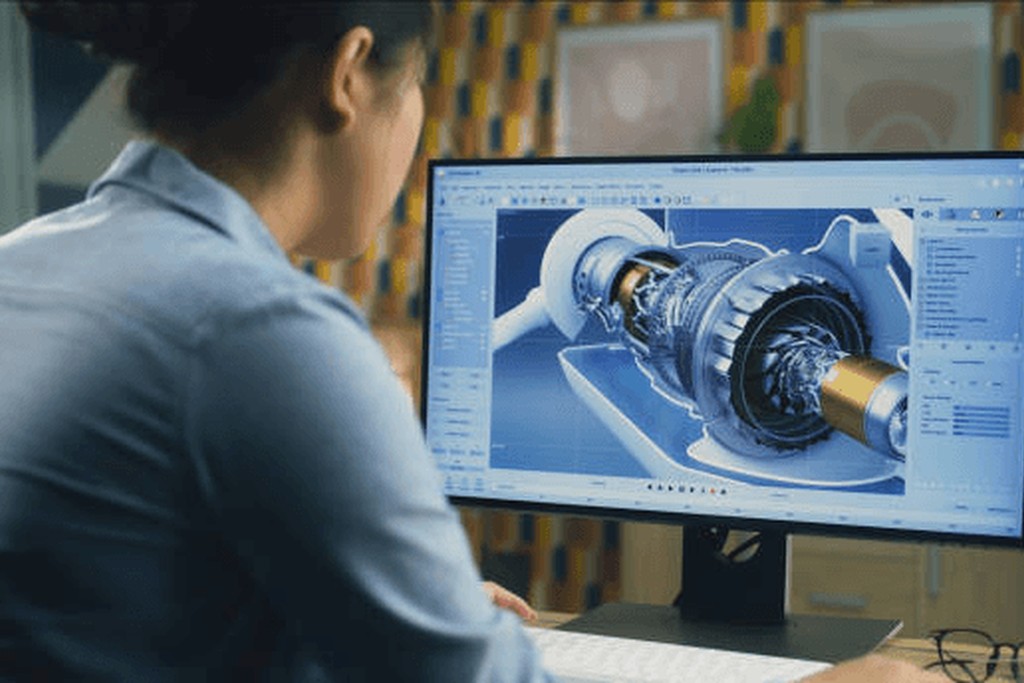
By integrating industrial design, mechanical structure, electronic hardware, embedded software, wireless connectivity, prototyping, DFM, and mass production support, OPD Design helps clients reduce product development complexity and accelerate the process from proof of concept to market.
Industrial IoT Product Development Service Module
Industrial IoT products are typically not just simple electronic devices; they require addressing multiple challenges simultaneously, including sensors, electronic hardware, communication, data acquisition, embedded software, structural design, reliability, and manufacturing costs.
OPD Design can provide varying levels of R&D support based on product requirements, ranging from single-module development to complete product development.
Industrial IoT Hardware Development
01
Design and develop IoT hardware products for industrial environments, including sensors, data acquisition devices, controllers, gateways, and smart terminals.
Industrial Design & Mechanical Engineering
02
Product appearance, structure, and mechanical engineering design are carried out in consideration of industrial environment, installation method, operation scenario, and maintenance needs.
Embedded System Development
03
The embedded systems required for product development include MCU, Embedded Linux, device control, data acquisition, communication protocols, and system logic.
Wireless & Connectivity
04
Based on the application scenario, it integrates wireless connectivity technologies such as Wi-Fi, Bluetooth, BLE, 4G/5G, LoRaWAN, LTE-M, NB-IoT, and GNSS.
IoT Gateway Development
05
Develop an IoT Gateway for data communication and protocol conversion between devices, sensors, and cloud platforms.
Prototype Development
06
Validating electronics, structure, communication, power consumption, and product interaction through engineering prototypes and functional prototypes prepares the ground for subsequent EVT, DVT, PVT, and mass production.
DFM & Manufacturing
07
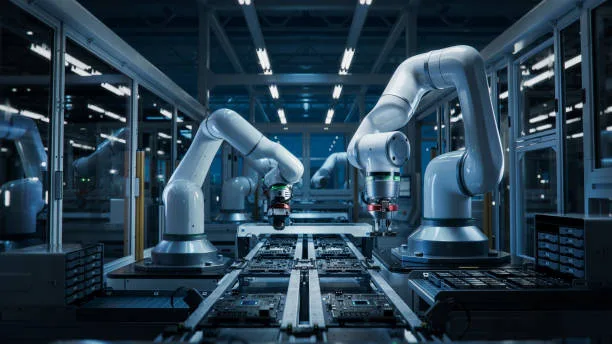
By simultaneously considering materials, parts, processes, assembly, supply chain, and cost during the product development phase, we help industrial IoT products smoothly transition from prototype to mass production.
Industrial IoT Products We Develop
Industrial
Sensors

Temperature & Humidity Sensors
Pressure Sensors
Vibration Sensors
Motion Sensors
Light Sensors
Air Quality Sensors
Gas Detection Devices
Flow Sensors
Level Sensors
Environmental Sensors
Equipment Condition Sensors
Industrial
Monitoring Devices

Equipment Monitoring
Condition Monitoring
Energy Monitoring
Environmental Monitoring
Temperature Monitoring
Vibration Monitoring
Safety Monitoring
Remote Equipment Monitoring
IoT Gateway
Development

Wi-Fi Gateway
Bluetooth / BLE Gateway
Cellular Gateway
LoRaWAN Gateway
Ethernet Gateway
RS485 / Modbus Gateway
Multi-Protocol Gateway
Edge Computing
Devices

Edge Controllers
Industrial Edge Devices
Data Acquisition Devices
Edge AI Devices
Local Processing Units
Industrial Computing Terminals
Smart Industrial
Equipment

Smart Control Panels
Industrial HMI
Connected Equipment
Digital Instruments
Portable Industrial Devices
Smart Controllers
Remote Control Devices
Industrial Monitoring Terminals
Asset Tracking &
Location Devices

GPS Asset Trackers
BLE Trackers
UWB Tracking Devices
Fleet Tracking Devices
Equipment Tracking Devices
Portable Tracking Devices
Have an Industrial IoT
Product Idea?
Whether you’re developing an industrial sensor, IoT gateway, edge device, equipment monitoring product, or smart industrial equipment, OPD Design can help you move from concept to a manufacturable product.
Share your product requirements with our team. We can help assess the development path, technical risks, prototyping solutions, and mass production needs based on your product features, technical requirements, target market, and projected production volume.
Industrial IoT Development Challenges
1. Reliability
Industrial equipment typically requires continuous operation for extended periods, so electronic systems, structural design, and heat dissipation solutions all need to consider long-term reliability.
2. Connectivity
Different industrial scenarios have different requirements for communication methods. Technologies such as Wi-Fi, BLE, Cellular, LoRaWAN, and Ethernet need to be selected based on the deployment environment, communication distance, data volume, and power consumption.
3. Low Power Consumption
For battery-powered wireless sensors and remote monitoring devices, low-power design directly impacts product maintenance cycles and operating costs.
4. Harsh Environments
Some industrial equipment may need to face the following:
- Dust
- Water
- Vibration
- Temperature Changes
- Outdoor Exposure
- Electromagnetic Interference
Therefore, product structure, sealing, protection, materials, and electronic design all need to be optimized for the actual application environment.
5. Data Acquisition
Sensor accuracy, sampling frequency, data processing method, and communication protocol all affect the final data quality.
6.Manufacturing Cost
Industrial products often require long-term supply, so it is necessary not only to verify the prototype, but also to consider the BOM, supply chain, assembly efficiency and mass production costs during the design phase.
Our Industrial IoT Development Process
Industrial IoT products typically involve multiple technical fields such as sensors, electronic hardware, embedded software, wireless communication, mechanical structures, and manufacturing. To reduce development risks, OPD Design adopts the NPI (New Product Introduction) process, which divides product development into five key phases. Each phase has clear development goals, verification priorities, and phased results. Only after solving the core problems of the current phase can the next phase be entered.
The POC phase focuses on addressing the question: “Can the core technology of this product be implemented?”
We first identify the most critical and uncertain technical risks in the project, and then confirm them through rapid prototyping and technical verification.
The EVT phase focuses on addressing the question: “Can the complete engineering system function properly?” After validating key technologies through a Proof-of-Concept (POC), we begin integrating the various technical modules into a complete engineering product.
The DVT phase focuses on addressing the question: “Can this design become the final product?” Once the product has engineering functionality, further optimization of the design, structure, materials, reliability, and user experience is undertaken to gradually bring the product closer to mass production.
The PVT phase focuses on addressing the question: “Can this product be produced stably according to the predetermined quality, cost, and efficiency?”
This phase transforms R&D results into repeatable production processes.
After PVT verification is completed, the product enters the formal mass production stage.
At this point, the product has completed the full NPI process from: technical verification, engineering verification, design verification, production verification to stable mass production.
PS: Different customers are at different product stages when they enter the project. Therefore, OPD Design does not require that all projects must start with a POC. We maintain a flexible cooperation model. No matter which stage you are in, we are all focused on the same goal:
Turn Industrial IoT Ideas into Reliable, Manufacturable Products.
Designed for Real Industrial
Environments
Industrial IoT products don’t just work in the laboratory; we take into account real-world application environments during the product development process.
01
Outdoor Environments
Applicable to:
Agricultural Equipment
Infrastructure Monitoring
Outdoor Equipment
Energy Systems
Remote Monitoring
02
Portable & Mobile Applications
Applicable to:
Field Equipment
Asset Tracking
Fleet Management
Portable Monitoring Devices
03
Indoor Industrial Environments
Applicable to:
Factory Equipment
Production Lines
Warehouses
Machinery
Building Systems
Designed for Supply Chain and Long-Term Production
The development of industrial IoT products cannot remain at the prototype stage. A truly successful industrial product needs to have stable supply and long-term production capabilities. Therefore, OPD Design focuses on the following from the early stages of product development:
- Component Availability
- BOM Cost
- Manufacturing Process
- Assembly
- Testing
- Supplier Selection
- Production Scalability
- Quality Control
Through DFM and engineering optimization, products can move more smoothly from prototype to mass production.
Why Choose OPD Design for Industrial IoT Product Development?
One Integrated Product Development Team
Industrial IoT products typically involve multiple professional fields, and OPD integrates Industrial Design, Mechanical Engineering, Electronics, Embedded Software, Prototype, and Manufacturing into a single product development process.
Shenzhen Manufacturing Ecosystem
Located in Shenzhen, OPD can leverage mature resources in electronics, machinery, mold making, PCB, supply chain, and manufacturing. For overseas customers requiring rapid prototyping, supplier integration, and mass production deployment, this significantly reduces cross-supplier communication costs.
Design for Manufacturing
We focus not only on whether a product can be manufactured, but also on whether it can be produced reliably.
From materials, components, structure, PCB, assembly to the supply chain, we consider manufacturing and cost simultaneously throughout the product development process.
Flexible Development Models
Depending on project requirements, clients can choose from:
• Product development from scratch
• Engineering development
• Hardware development
• Mechanical engineering
• Prototype development
• DFM optimization
• Manufacturing support
Typical Industrial IoT Applications
Industrial IoT can be applied to multiple industries:
Manufacturing
Energy
Agriculture
Logistics
Smart Buildings
Infrastructure
Featured Projects

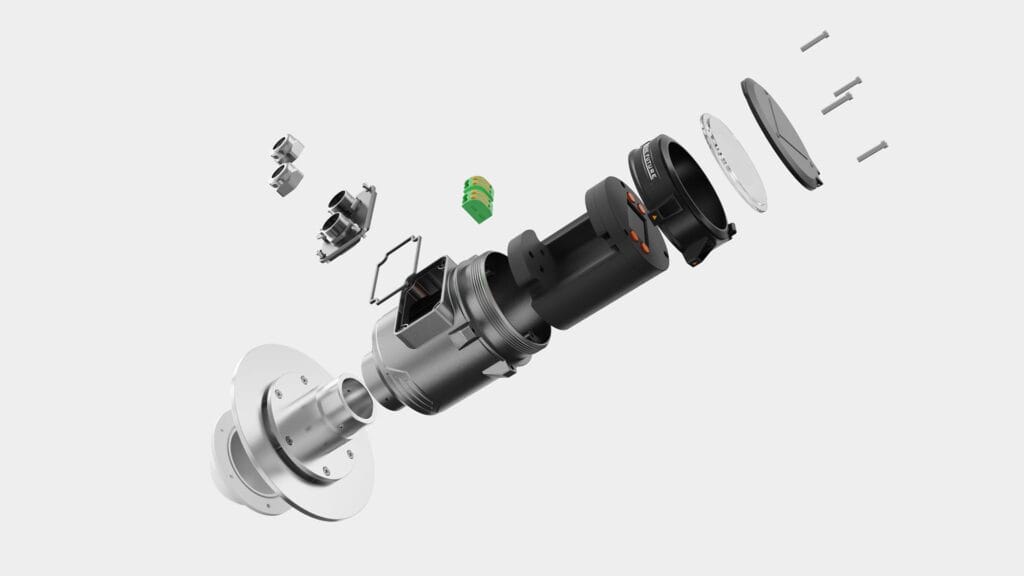
Radar level gauge
Industrial radar level gauges reflecting minimalist and utilitarian design trends

Car sunshade
This automotive electric sunshade, featuring smart convenience and high-efficiency heat insulation

Portable Radio Detector
Portable radio detectors that meet the needs of detection in complex outdoor environments

Face recognition device
The rapid development of artificial intelligence technology has made facial recognition devices a crucial force in intelligentization.
FAQ
1. What is Industrial IoT Product Development?
Industrial IoT Product Development combines sensors, electronic hardware, embedded software, wireless communication, and industrial equipment to develop intelligent products capable of collecting, transmitting, and processing industrial data.
2. Can OPD Design develop an Industrial IoT device from scratch?
Yes. OPD Design can start from product concept and requirements definition, providing support for industrial design, structural engineering, electronic hardware, embedded software, prototyping, DFM, and mass production.
3. Can you develop custom IoT hardware?
Yes. OPD can develop custom IoT hardware based on customers’ functional, communication, power consumption, size, and cost requirements.
4. Can you integrate Wi-Fi, Bluetooth, 4G, 5G or LoRaWAN?
Yes. We select the appropriate connectivity solution based on the deployment environment, communication distance, data volume, power consumption and cost. Supported options include Wi-Fi, Bluetooth/BLE, 4G/5G, LoRaWAN, LTE-M, NB-IoT, Ethernet and GNSS.
5. Can you develop industrial sensors?
Yes. OPD can participate in the hardware and product development of sensor products for monitoring temperature and humidity, pressure, vibration, motion, environment, and equipment condition.
6.Can you develop an IoT Gateway?
Yes. We can develop different types of IoT Gateways, such as Wi-Fi, BLE, Cellular, LoRaWAN, Ethernet, RS485, and Modbus, according to project requirements.
7.Can you work with our existing cloud platform?
Yes. If the customer already has a Cloud Platform, App, or IoT Platform, the OPD can focus on the device-side hardware, firmware, and connectivity, and complete the interface integration between the device and the existing system according to project requirements.
8.Can you help move an Industrial IoT prototype into mass production?
Yes. OPD can continue to support EVT, DVT, PVT, DFM, and Mass Production from Prototype Development.
9.Do you support low-volume production?
Yes. For industrial IoT startups, product validation projects, and market testing, we can support Prototype, small-batch, and subsequent mass production, depending on the project stage.