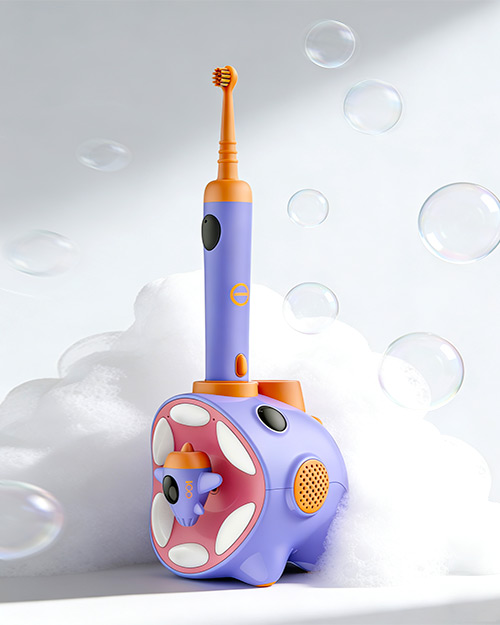
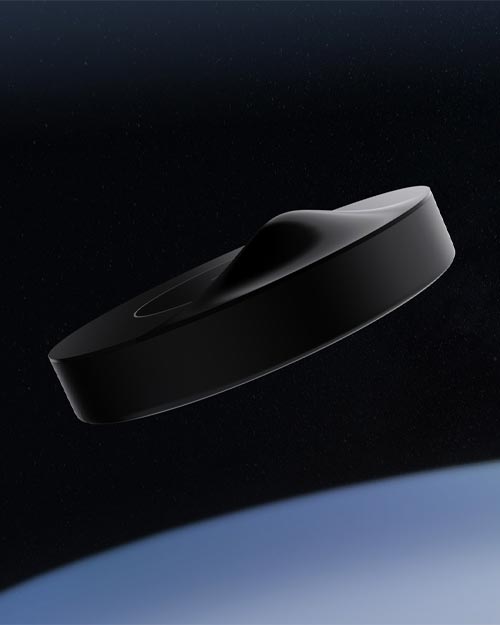
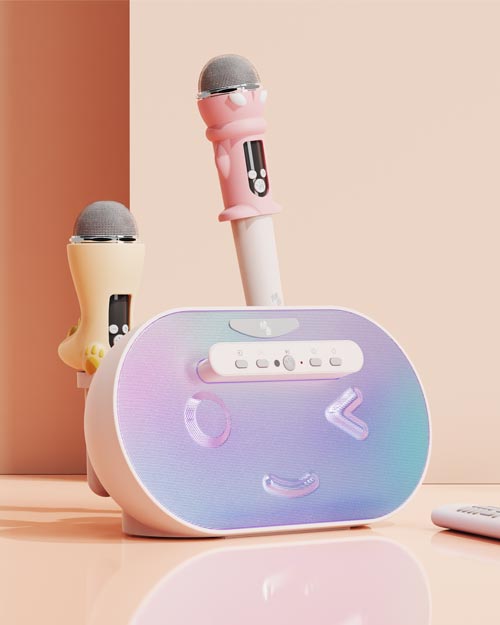
Step 1-Industrial Design
1. Cross-Disciplinary Technology Mapping
Using TRIZ innovation methodology, we integrated microfluidics, mechanical dynamics, and electronic engineering:
Mechanical Design Breakthrough: Replaced traditional roller-ball mechanisms with MEMS-based microelectromechanical systems;
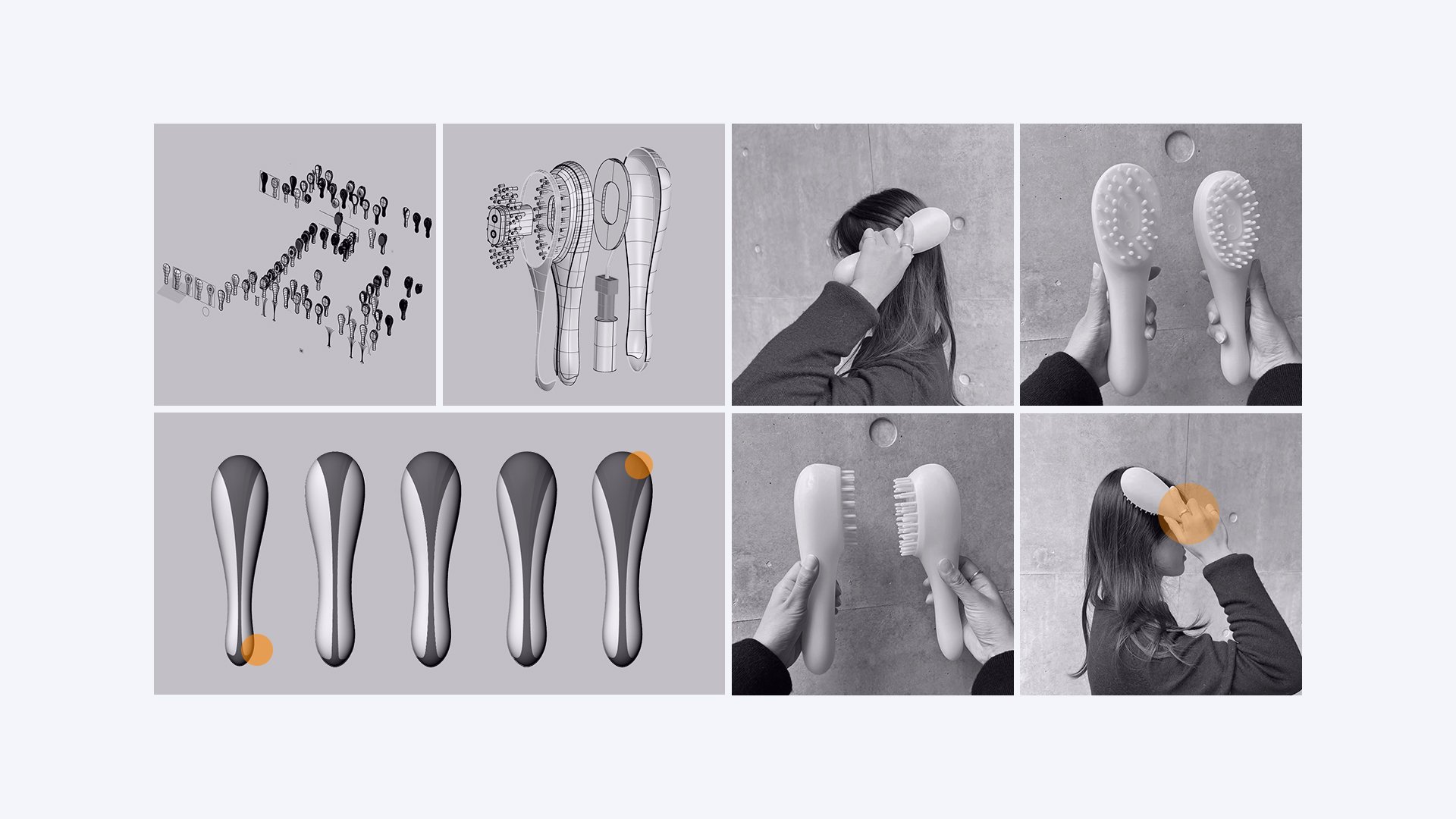
Industrial Design Empowerment: Defined a 47° golden grip angle based on scalp curvature big data (100,000+ Asian user models).
2. Function-Form Integrated Design
Morphological Semantics: Inspired by “plant root systems,” the fractal flow channel housing symbolizes natural hair growth;
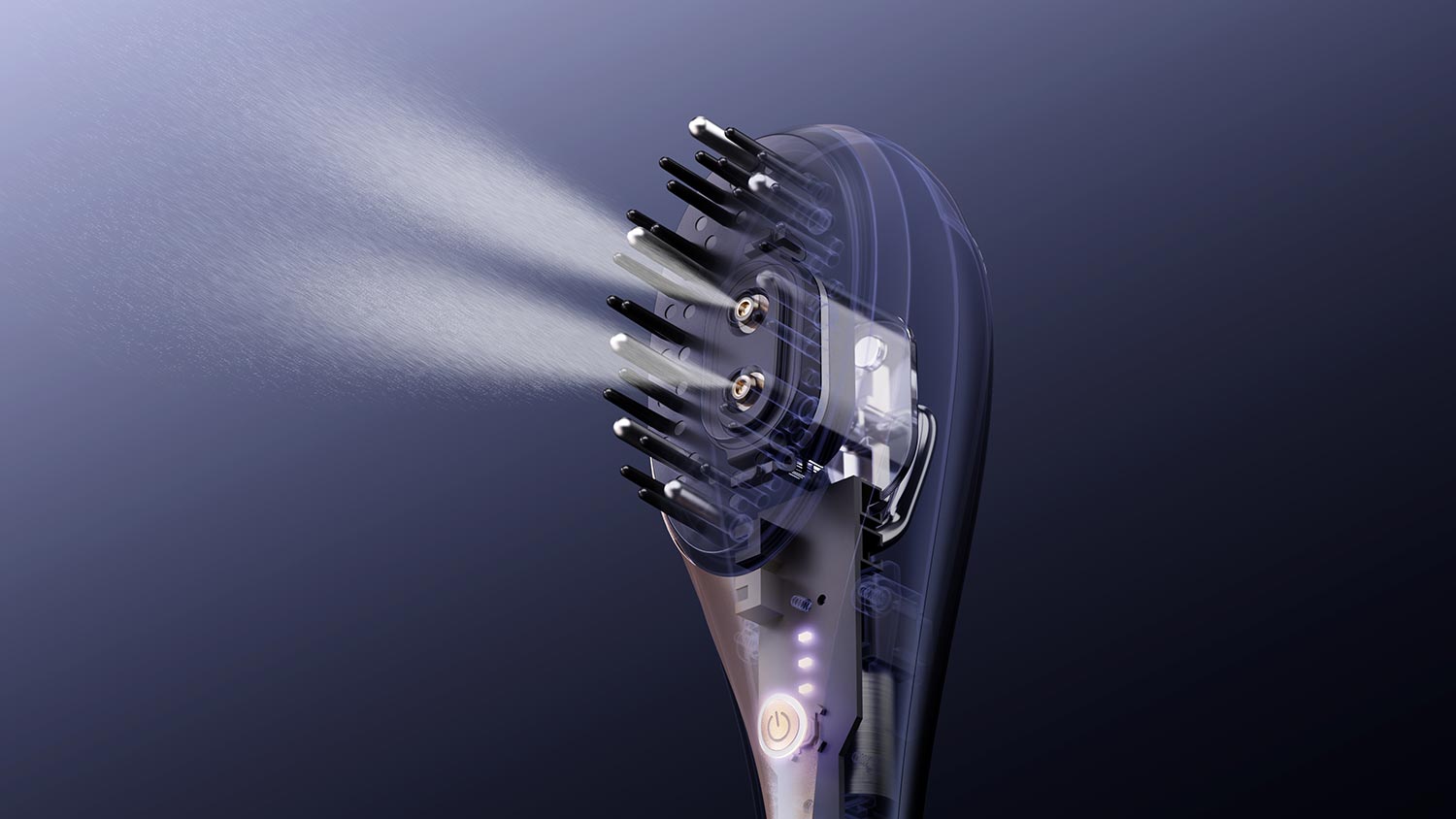
Mechanical Aesthetics Visualization: Sapphire glass windows expose precision atomization components to enhance technological trust.
Step 2-Mechanical Design
1. Atomization Module Innovations
Piezoelectric Ceramic Drive System:
Optimized vibration frequency (15kHz±2%) via ANSYS mechanical dynamics simulation to adapt to 20-500cP viscosity liquids;
Self-Cleaning Blade Mechanism (Patent No. ZL2023XXXXXX):
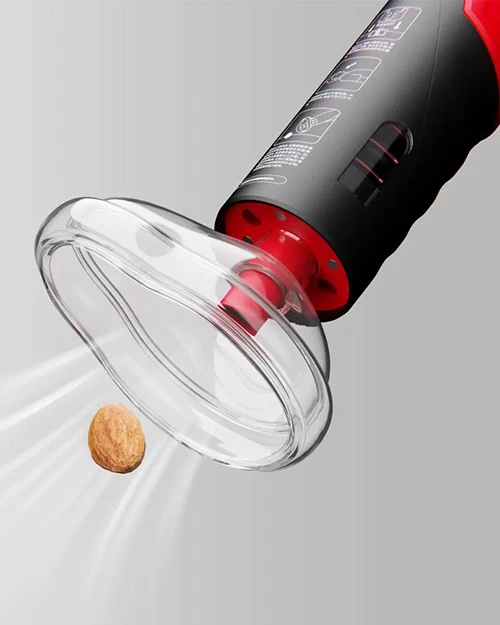
A 20,000rpm titanium alloy blade driven by a micro-motor eliminates high-viscosity liquid crystallization blockages.
2. Medical-Grade Mechanical Standards
Zero-Residue Delivery System:
3D topology-optimized titanium alloy atomization chamber with ±0.05mm wall thickness precision;
IPX7 Waterproof Structure:
Seamless housing via nano-injection molding, enduring 72-hour salt spray testing without performance degradation.
Step 3: Prototyping and Validation
Using our functional prototyping capabilities, we built iterative prototypes to validate the MEMS atomization system:
– **MEMS Performance Testing:** Validated 8μm mist precision across 20-500cP viscosity liquids
– **Self-Cleaning Mechanism Testing:** Confirmed 20,000rpm titanium blade prevents clogging after 1,000+ cycles
– **Ergonomic Validation:** Tested 47° grip angle with 50+ Asian users, confirming comfort and ease of use
– **Medical-Grade Testing:** IPX7 waterproof rating validated after 72-hour salt spray exposure
Step 4: Manufacturing Preparation
The final phase translated the validated design into production-ready assets:
– **DFM Analysis:** Optimized titanium alloy atomization chamber for mass production (±0.05mm wall thickness)
– **Nano-Injection Molding:** Developed seamless housing process for waterproof construction
– **Quality Control Framework:** Established testing protocols for MEMS performance, self-cleaning function, and ergonomic fit
– **Packaging Design:** Created retail-ready packaging that communicates medical-grade quality