
All Oil & Gas Products Can Be Redefined with New Energy
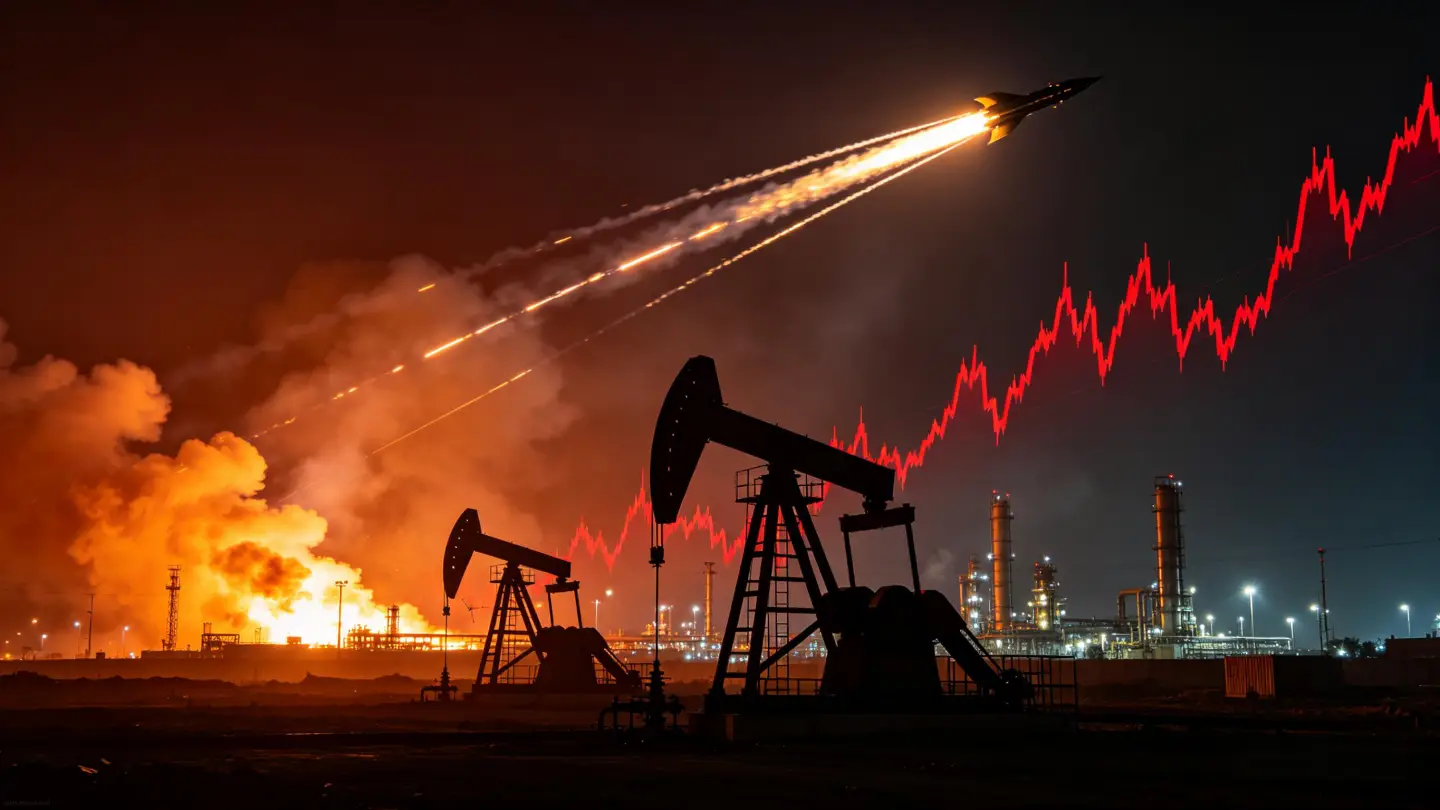
The Strait of Hormuz carries 21% of the world’s oil. When it closed, global energy markets learned a painful lesson. But one country barely noticed.
While Europe scrambled for LNG tankers and Japan rationed electricity, China’s gas stations stayed open. Factories kept running. No state of emergency was declared. Not because China has its own oil fields — it doesn’t. But because a decade ago, China made a bet that is now paying off: replace oil and gas with hardware that runs on sun, wind, and batteries.
This article makes a simple argument: Every product that burns fossil fuels today can be redesigned to run on new energy. The current crisis is accelerating demand for exactly this kind of hardware — across Europe, North America, and the Middle East.
Why China Wasn’t Panicking: A 10-Year Head Start
China is the world’s largest oil importer. By conventional logic, it should have been the most vulnerable when the Strait of Hormuz closed. Instead, it was among the least affected.
Three structural advantages explain why.
1. Oil and Gas Are a Smaller Part of China’s Energy Mix
| Country/Region | Oil & Gas Share of Primary Energy |
|---|---|
| China | ~27% |
| European Union | >60% |
| United States | ~72% |
“Oil price spikes hit Europe and the US immediately because their economies run on oil and gas,” says Lin Boqiang, director of China Institute for Studies in Energy Policy at Xiamen University. “China’s impact is smaller because oil and gas are a much smaller piece of the puzzle.”
More importantly, China generates only ~3% of its electricity from oil and gas. Coal and renewables account for 92%. Your electricity bill in China barely moves when oil prices double.
2. Import Diversification: No Single Chokepoint
Many assume China depends on the Strait of Hormuz. The reality: only 30% of China’s crude imports pass through it — compared to over 70% for Japan and Korea, and 98% for the Philippines.
Why? Because China spent fifteen years building four strategic energy corridors:
- Northwest: Central Asia natural gas pipeline
- Northeast: Russia crude oil pipeline
- Southwest: China-Myanmar oil and gas pipeline
- Maritime: Diversified shipping routes with multiple suppliers
Iran isn’t even among China’s top five crude suppliers. When one door closes, others stay open.
3. The New Energy Strategy: Active Replacement, Not Passive Defense
The two points above are defensive. This one is offensive.
China began systematically investing in solar, wind, batteries, and EVs during its 12th Five-Year Plan (2011-2015). By the end of 2025, the results were undeniable:
| Metric | Data |
|---|---|
| Renewable energy capacity | 2.34 TW (~60% of total power capacity) |
| Wind + solar capacity | Surpassed coal for the first time |
| EV penetration | 48.1% (March 2026) |
| Global battery cell production share | ~85% |
| Global solar supply chain share | >80% |
As Lin Boqiang notes: “The Hormuz crisis has proven one thing — China’s strategy of replacing oil with wind, solar, storage, and EVs was exactly right. The crisis is not a blow to that strategy. It’s a validation.”
A Core Thesis: Every Oil and Gas Product Can Be Redefined with New Energy
Think about the products that run on fossil fuels today:
- Cars, trucks, buses → EVs
- Home heating boilers → Heat pumps
- Diesel generators → Solar + battery storage
- Gas-powered lawn equipment → Battery-electric tools
- Industrial furnaces → Green hydrogen
- Remote mining operations → Solar-diesel hybrids
- Oil tankers → Methanol or ammonia-powered vessels
Each of these is a new energy hardware product waiting to be redesigned. And each redesign follows the same pattern: replace combustion with electrification, replace fuel supply chains with local generation, replace centralized distribution with distributed systems.
This isn’t a climate argument anymore. It’s an energy security argument — and it’s resonating with governments, businesses, and consumers across Europe, the Middle East, and North America.
Five Hardware Categories Primed for Growth
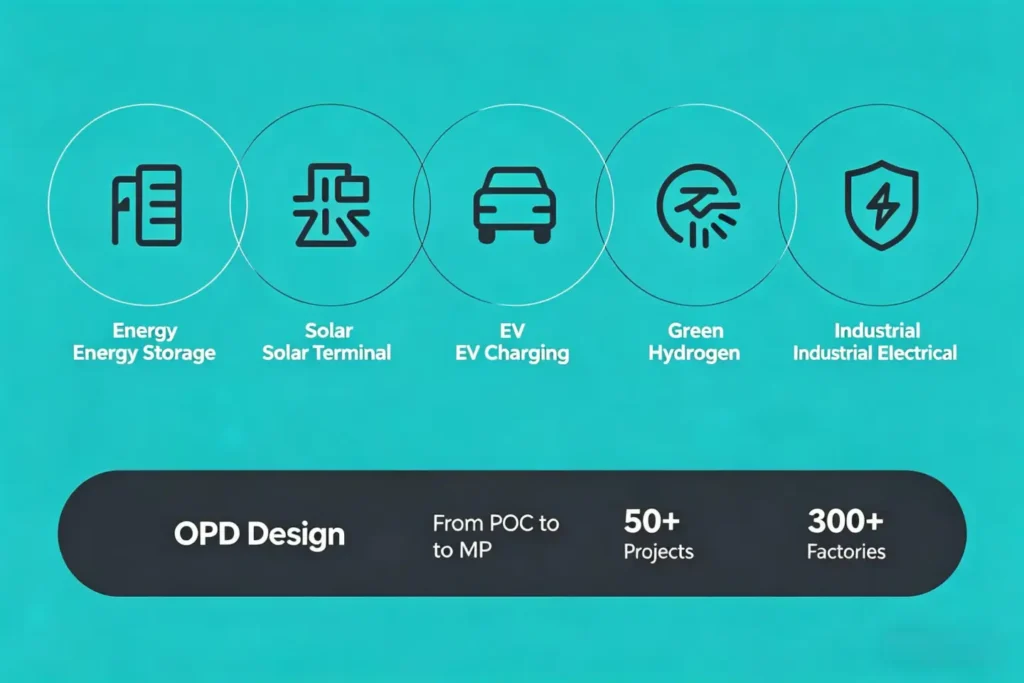
The crisis is creating immediate demand for five types of new energy hardware.
1. Energy Storage Systems
Solar and wind are intermittent. Without storage, they cannot provide baseload power. CITIC Securities analysts expect this crisis to replicate Europe’s 2022 storage boom — but on a larger global scale.
Hardware opportunities:
- Residential battery systems (modular, scalable)
- Commercial & industrial storage cabinets
- Portable power stations for emergency backup
- Battery management systems (BMS) with advanced safety
Target markets:
- Europe: Home electricity bills remain high; storage payback periods are now 3-5 years
- Middle East: World’s best solar resources, but storage deployment is severely underdeveloped
- North America: High-demand in grid-unstable regions like California and Texas
2. Solar-Powered Devices
Not every solution needs to be grid-scale. Plug-and-play solar devices are becoming the first choice for consumers and small businesses.
Hardware opportunities:
- Solar-integrated EV charging stations
- Portable solar generators (home backup)
- Solar-powered IoT sensors (remote monitoring)
- Building-integrated photovoltaics (BIPV)
Special note for Middle East markets: Products need heat resistance and dust protection. These are DFM requirements, not afterthoughts.
3. EV Charging Infrastructure
Higher oil prices directly drive EV adoption. According to Cui Dongshu, secretary general of the China Automobile Dealers Association, sustained high oil prices could increase EV penetration by 2-3 percentage points.
Hardware opportunities:
- Fast-charging stations with grid stabilization
- Wireless charging pads (residential and fleet)
- Vehicle-to-grid (V2G) bidirectional chargers
- Portable emergency chargers
4. Green Hydrogen Equipment
Green hydrogen is no longer just a decarbonization tool — it’s becoming a strategic national asset. Unlike oil and gas, hydrogen can be produced domestically from solar, wind, and water. No chokepoints. No foreign dependence.
Hardware opportunities:
- Electrolyzers (alkaline, PEM, solid oxide)
- Hydrogen compression and storage systems
- Fuel cells for heavy transport
- Integrated solar-hydrogen off-grid modules
5. Industrial Electrification Equipment
During this crisis, diesel-dependent industries were hit first. Australian iron ore miner Fenix Resources reported fuel supply disruptions within weeks.
Hardware opportunities:
- Electric mining trucks and haulers
- Solar-diesel hybrid systems for remote sites
- Battery swapping stations for industrial fleets
- Off-grid energy management systems
Market-Specific Product Strategies
Europe & North America
| Market Characteristic | Product Strategy |
|---|---|
| Mature electricity markets, aging grids | Focus on residential storage, V2G, smart charging |
| Strong environmental awareness, subsidies | Emphasize carbon reduction and regulatory compliance (IRA, Net-Zero Industry Act) |
| High certification requirements | Plan UL, CE, FCC paths early |
| Brand premium exists | Design quality and user experience are differentiators |
Product positioning keywords: reliable, safe, well-designed, certified, recyclable
Middle East (UAE, Saudi Arabia, Israel, Jordan, etc.)
| Market Characteristic | Product Strategy |
|---|---|
| World’s best solar resources | Solar + storage is a natural advantage |
| Energy subsidies are phasing out | Users care about long-term savings |
| New infrastructure, no legacy grid | Skip grid upgrades; deploy distributed solutions directly |
| Hot, dusty climate | Thermal management and dust protection are core design challenges |
Product positioning keywords: high-temperature resistant, reliable, low-maintenance, off-grid capable, local service
Note on Israel: Despite abundant sunshine, Israel’s 30% renewable target has been slowed by transmission grid bottlenecks. This creates unique value for microgrid and off-grid solutions in the Israeli market.
Three Strategic Recommendations for Hardware Developers
1. Speed to Market Is Now a Competitive Advantage
Energy security is a government priority. Approvals are accelerating. Subsidies are landing. The first-mover window is narrower than usual.
If you separate industrial design, mechanical engineering, hardware development, and tooling across different vendors, coordination alone can consume six months.
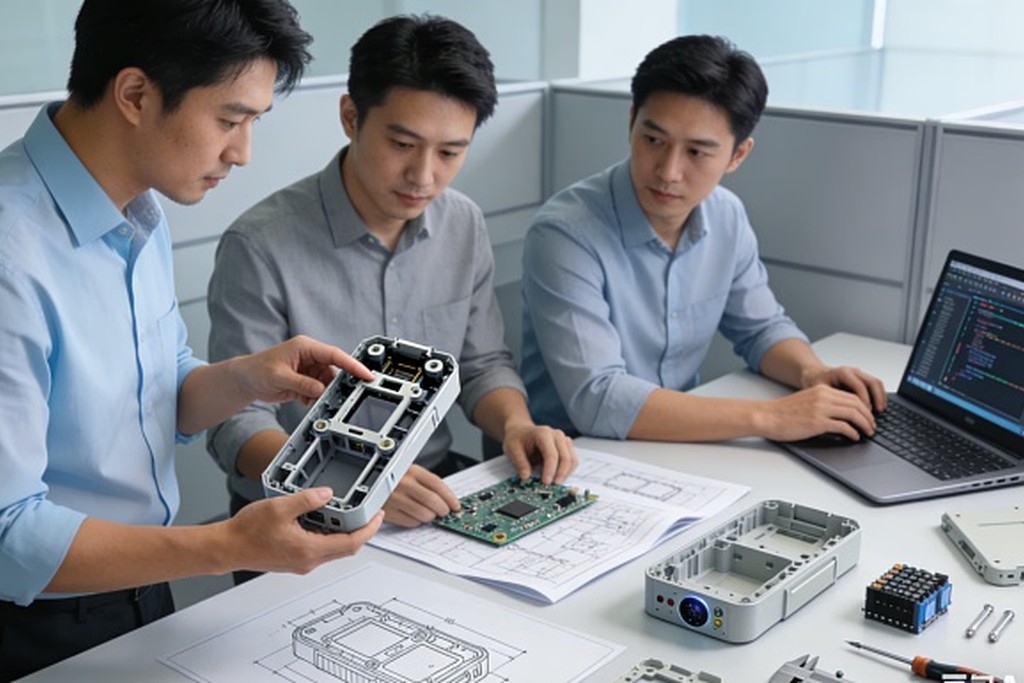
OPD Design offers end-to-end product development — from Product Strategy, Industrial Design, and Mechanical Design to Hardware Development, DFM, and Manufacturing Support. One partner from POC to MP.
2. DFM (Design for Manufacturing) Is Non-Negotiable
Supply chains remain fragile. Complex designs, non-standard components, and special processes lead to long lead times and unpredictable costs.
Products designed for this era follow DFM principles from day one:
- Use standard components and processes where possible
- Modular architecture for easier assembly and repair
- Manufacturing cost evaluated early, not after design completion
OPD Design integrates DFM throughout development. Our 300+ partner factory network provides early manufacturability feedback — before you commit to tooling.
3. Modularity Is a Requirement, Not a Nice-to-Have
This crisis proved one thing: distributed, modular systems are more resilient than centralized, monolithic ones.
Modular products are easier to repair, upgrade, and scale. When one component faces supply delays, the rest can still ship. In an era of supply chain uncertainty, this is a real commercial advantage.
China’s Role and OPD Design’s Value
China’s supply chain dominates global new energy hardware:
| Sector | Global Share | Key Advantage |
|---|---|---|
| Solar | ~80% | Lowest cost, highest efficiency |
| Wind | ~70% | 26MW offshore turbines (world record) |
| Storage batteries | ~85-90% | Complete ecosystem from materials to systems |
| Lithium processing | >60% | Dominant refining capacity |
But manufacturing scale alone is not a moat. As experts agreed at the China Development Forum 2026: “China’s new energy sector doesn’t have ‘too much’ capacity — it doesn’t have nearly enough.”
Global demand for new energy hardware is massive and growing. The companies that win will be those that design better products — not just cheaper ones.
OPD Design helps international clients leverage China’s manufacturing capabilities while delivering mass-production-ready designs that meet Western quality and compliance standards.
We are not a render studio. We are an end-to-end product development partner from POC to MP. 50+ commercial projects delivered. 300+ partner factories. This is what “manufacturing-ready” means.
Conclusion: The Crisis Will End. The Shift Will Not.
The Strait of Hormuz will reopen. Oil prices will fall.
But the shift in energy security thinking will not reverse. Every government, business, and consumer affected by this crisis will reevaluate their dependence on centralized fossil fuels.
That reevaluation translates into real demand — for storage, solar, hydrogen, smart charging, and every new energy hardware product that helps people generate and manage their own energy.
Over the next decade, trillions will be invested in energy infrastructure. But that infrastructure is not just concrete and wires. It is products. Solar inverters. Battery packs. Electrolyzers. Charging stations. Smart meters. Portable generators.
Each of these products needs to be designed, engineered, and manufactured. Each one can be better than what came before — more efficient, more reliable, more cost-effective.
Every product that runs on oil and gas today can be redesigned to run on new energy. The question is not whether this will happen. The question is who will design and build those products.
If you are developing new energy hardware and want to move quickly without compromising on quality or manufacturability, let’s talk.
OPD Design
End-to-end product development partner from POC to MP
www.opd-design.com