
Introduction: Why DFM Is the Difference Between Prototype and Production
Introduction: Why DFM Is the Difference Between Prototype and Production
You have a working prototype. It looks great on your desk, impresses investors, and functions exactly as intended. Then you get your first injection mold quote back—and the price is three times what you expected. Or worse: your first production run arrives and parts don’t fit together, crack during shipping, or require hours of hand-finishing.
This is the “industrialization gap” at work—the painful chasm between a functional prototype and a manufacturable product. In 2026, this gap has become the biggest bottleneck for hardware startups, with 70% of manufacturing costs locked in during the design phase—not during tooling or production. If you’re new to hardware development, understanding how product development costs work is essential before diving into DFM.
Design for Manufacturing (DFM) is the discipline that bridges this gap. It’s not about making your design “cheaper”—it’s about making smart decisions early that keep your product producible, reliable, and cost-effective at scale.
In this guide, you’ll learn the core DFM principles that separate products that manufacture smoothly from those that drain budgets and delay launches.
What Is Design for Manufacturing?
Design for Manufacturing (DFM) is the practice of designing products with their manufacturing process in mind from day one. Rather than designing a product and then figuring out how to make it, DFM integrates manufacturing knowledge into the design process itself.
The goal is to:
- Reduce part count and assembly complexity
- Choose materials suitable for the intended manufacturing process
- Design features that are easy to mold, cast, machine, or fabricate
- Minimize costly rework and test iterations
DFM is not optional. Products designed without manufacturing in mind typically require 2-4 additional revision cycles, adding 3-6 months to timelines and often exceeding original budgets by 50% or more.
The Five Core Principles of DFM
1. Design for Your Manufacturing Process
Every manufacturing process has strengths and constraints. Designing against these realities—not against an idealized vision of your product—is fundamental.
Injection Molding Considerations:
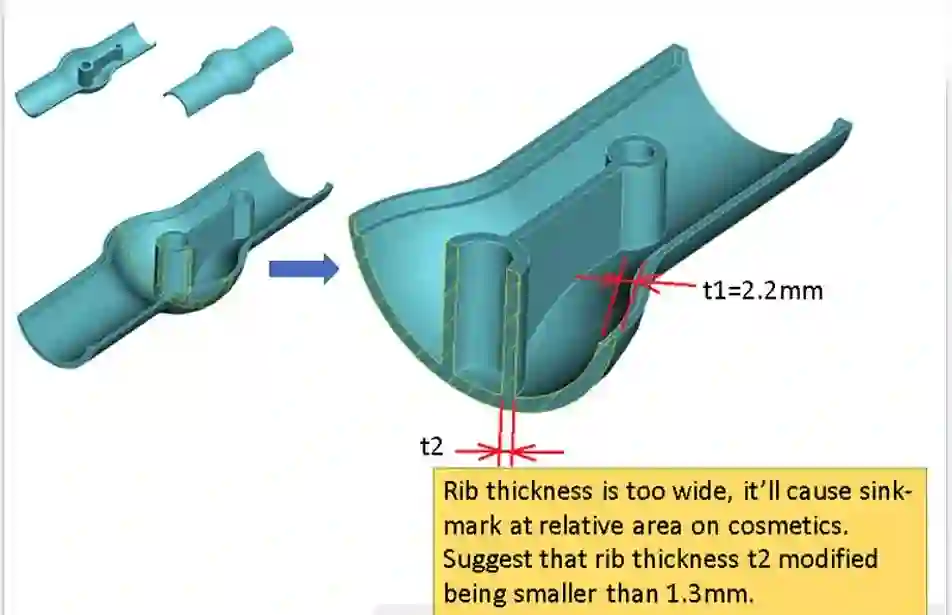
- Wall thickness must be uniform (ideally 1.5-3mm) to avoid sink marks and warpage
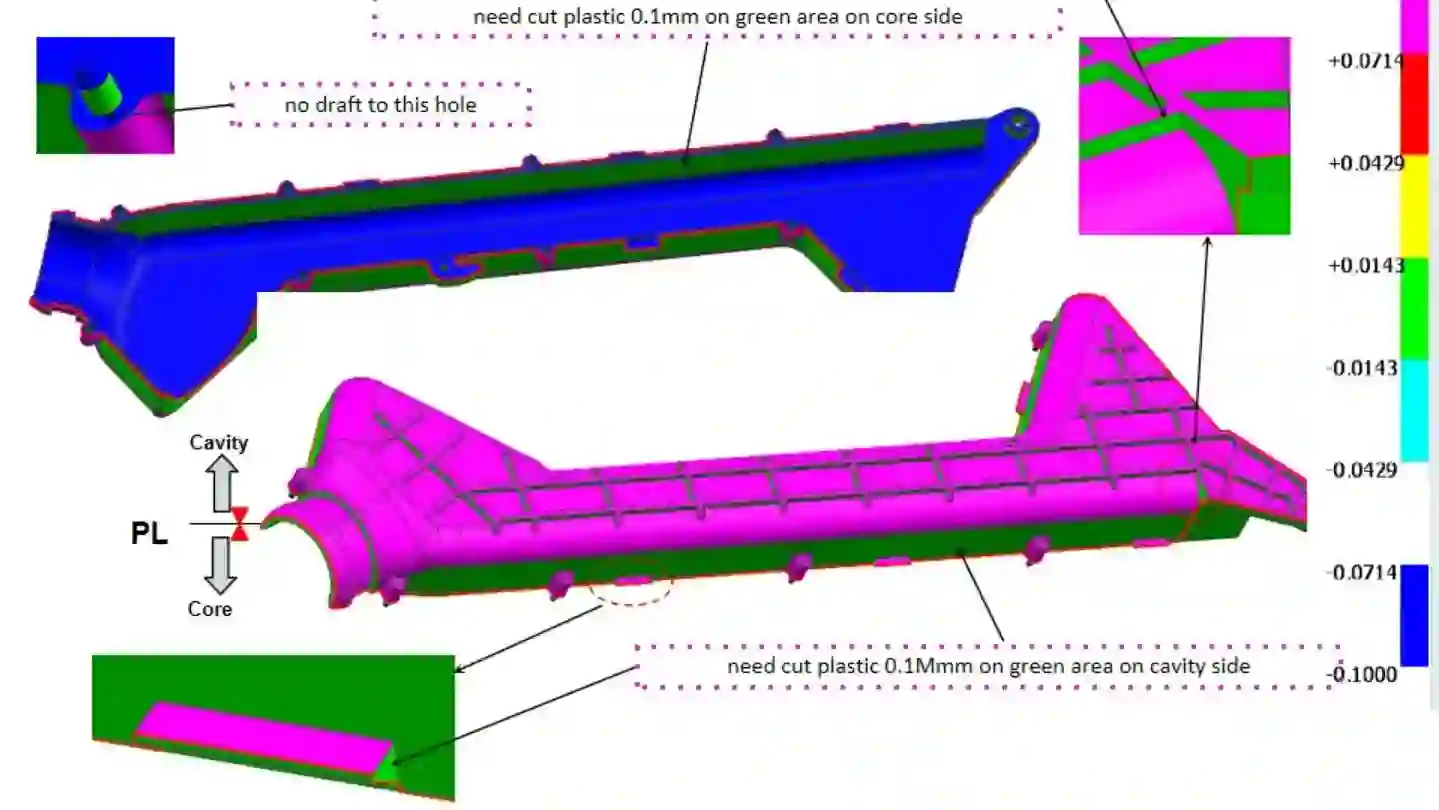
- Draft angles (typically 0.5-1° per side) are required for part release
- Ribs should be no thicker than 60% of adjacent wall thickness
- Sharp corners create stress concentrations—use radii instead
CNC Machining Considerations:
- Design for standard tool sizes where possible
- Minimize deep pockets and internal cavities that require long tooling
- Leave adequate clearance for tool access
Sheet Metal Considerations:
- Keep bend lines straight and parallel
- Account for bend compensation (k-factor)
- Avoid complex geometries that require multiple setups
2. Minimize Part Count
Every part is a potential failure point, a supply chain risk, and an assembly cost. The most elegant DFM decision is often eliminating a part entirely.
Strategies:
- Combine multiple features into a single molded part
- Use living hinges for flexible connections
- Design multi-shot or over-molded components instead of assemblies
- Consider whether a standard off-the-shelf component can replace a custom part
A product that launches with 15 parts instead of 25 can reduce assembly time by 40% and cut inventory management complexity significantly.
3. Design for Assembly (DFA)
Even if your parts are perfect, difficult assembly will undermine your margins. Design for automated assembly when possible, and manual assembly when necessary.
DFA Principles:
- Design parts that can only be assembled one way (self-locating features)
- Minimize orientations changes during assembly
- Provide generous access for grippers, fasteners, and tools
- Avoid adhesives and solvents where vibration or thermal cycling will weaken bonds
4. Material Selection with Manufacturing in Mind
Material choice affects both how a part can be made and how it will perform. Don’t design first and select materials later.
Key Considerations:
- Does the material flow well in thin sections? (Critical for injection molding)
- Will the material withstand your production method’s processing temperatures?
- Does the material meet your target market’s regulatory requirements? (UL, FDA, RoHS, etc.)
- Can you specify a material that’s readily available from multiple suppliers?
Common engineering plastics like ABS, polycarbonate, and nylon offer good processability and global availability. Specialty materials may require longer lead times and higher minimum order quantities. For detailed material properties, consult databases like IDES or MakeItFrom.
5. Design for Test and Quality
Designing for manufacturing includes designing for verification. Build quality checkpoints into your design.
Design for Testability:
- Add test points or features that allow easy verification
- Design fixtures that can hold parts in known positions
- Consider functional test access—what will your QC team need to inspect?
- Plan for statistical process control (SPC) with critical dimensions identified
Common DFM Mistakes (And How to Avoid Them)
After reviewing hundreds of product programs, these mistakes appear most frequently:
Mistake #1: Over-Designing for Appearance
Founders often specify surface finishes, tight tolerances, and cosmetic features that add significant cost without proportional user value. A “textured finish” that looks premium on a prototype may require expensive polishing tooling for production.
Solution: Define cosmetic requirements based on visible surfaces only. Non-visible areas can often use as-molded surfaces.
Mistake #2: Ignoring Tolerances
Specifying ±0.05mm tolerances everywhere “to be safe” dramatically increases manufacturing cost and inspection requirements. Most functional features only require ±0.1mm to ±0.2mm.
Solution: Only specify tight tolerances where they truly affect function. Work with your manufacturer to determine achievable tolerances for each process.
Mistake #3: Underestimating Draft
Without adequate draft, parts will stick in molds, scratch during ejection, or require so much force that they warp.
Solution: Always include minimum 0.5° draft per side. Add more draft for textured surfaces (1-2° per 0.5mm of texture depth).
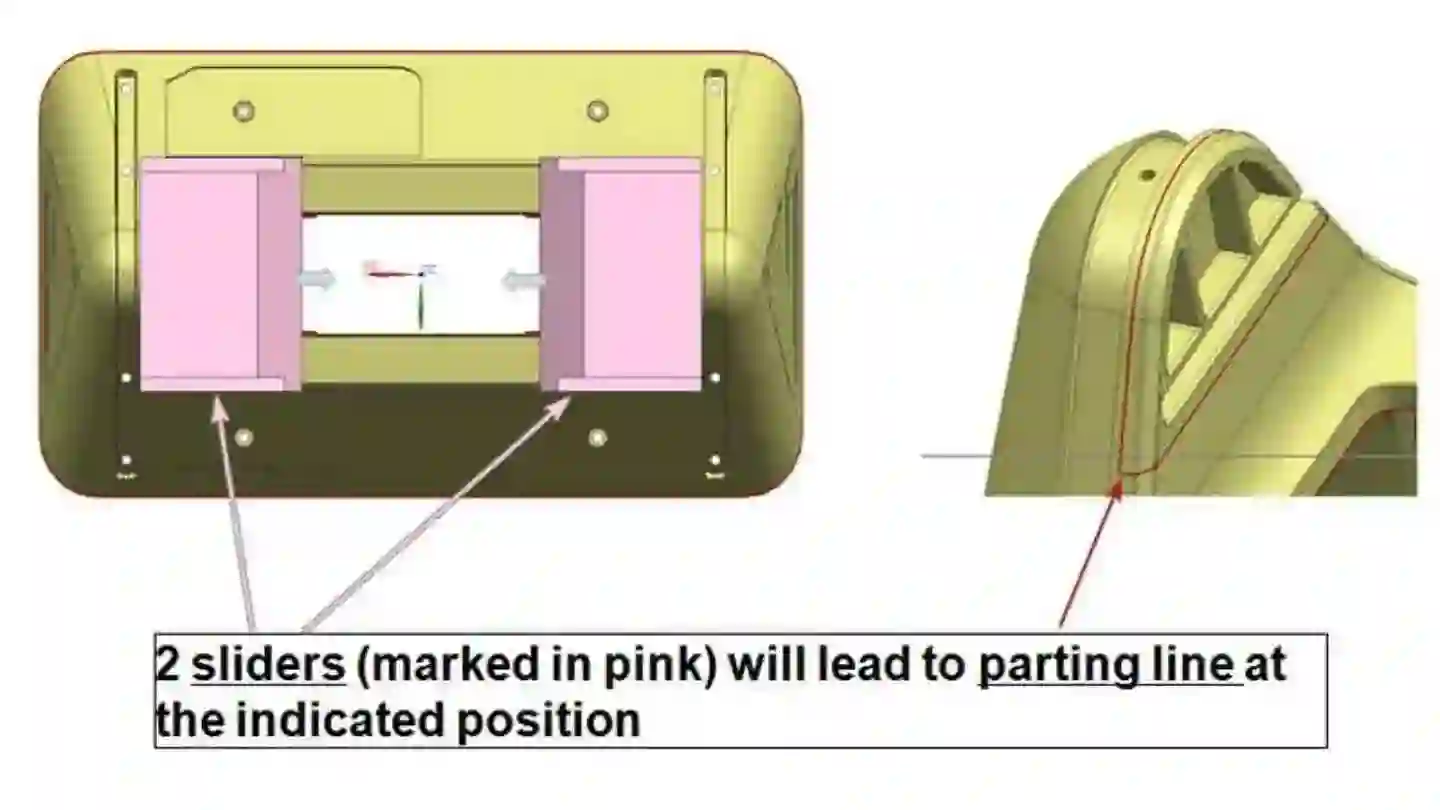
Mistake #4: Creating Undercuts Without Need
Undercuts require slides or lifters in injection molds—complex mechanisms that multiply tooling costs and extend lead times.
Solution: Redesign parts to eliminate undercuts where possible. If unavoidable, consolidate multiple undercuts into single slide mechanisms.
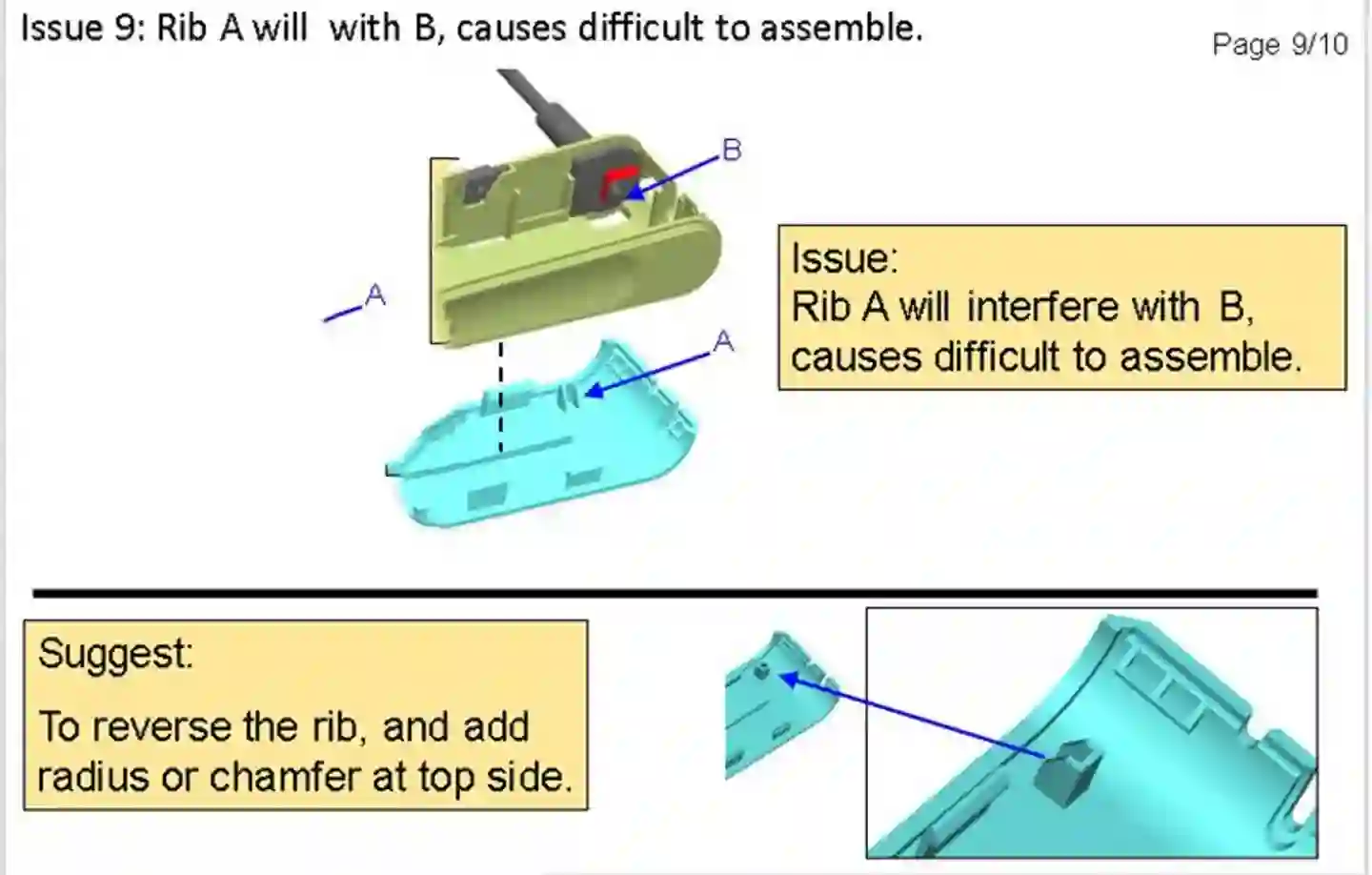
Mistake #5: Treating Suppliers as Vendors
Waiting until design is complete, then sending drawings to suppliers for quotes, guarantees friction. Suppliers who understand your vision can suggest design changes that dramatically improve manufacturability.
Solution: Engage manufacturing partners early. A two-hour conversation during concept phase can save weeks and thousands later.
When to Apply DFM: The Development Timeline
DFM isn’t a single step—it’s a continuous discipline across the development cycle:
| Phase | DFM Activity |
|---|---|
| Concept | Identify target manufacturing process; begin material scouting |
| Industrial Design | Discuss cosmetic vs. functional surface requirements; flag manufacturability concerns |
| Mechanical Design | Apply DFM principles to CAD model; run preliminary DFMA analysis |
| Prototype | Use prototypes to validate assembly and test design assumptions |
| Pre-Production | Conduct structured DFM review with manufacturing partner; finalize tooling design |
| Production | Monitor quality data; identify continuous improvement opportunities |
The earlier DFM principles are applied, the cheaper changes become. A design modification before tooling costs $500-2,000. The same modification after tooling can cost $5,000-50,000+.
How OPD Design Applies DFM
At OPD Design, DFM isn’t a service we offer—it’s the foundation of every product program. Our mechanical engineering team has deep experience across injection molding, die casting, CNC machining, and sheet metal processes. We integrate DFM principles from the earliest concept phases:
- Concept Phase: Manufacturing process recommendation based on volume, cost targets, and quality requirements
- Industrial Design: Collaborative refinement balancing aesthetics with manufacturability
- Structural Development: Full DFM analysis including draft assessment, wall thickness optimization, and moldability review
- Pre-Production: Tooling design collaboration with trusted manufacturing partners; first article inspection (FAI) support
- Mass Production: On-site or remote production monitoring; continuous engineering support
Our integrated approach means DFM decisions made during design directly inform tooling design and production planning—no costly handoffs between disconnected partners.
Frequently Asked Questions
What’s the difference between DFM and DFMA?
DFM (Design for Manufacturing) focuses on designing parts that are easy to manufacture. DFMA (Design for Manufacture and Assembly) adds the assembly dimension—optimizing both how parts are made AND how they fit together. DFMA is more comprehensive for multi-part products.
Do I need DFM if I’m using 3D printing?
Yes, but differently. 3D printing (additive manufacturing) has different constraints than traditional processes—you can create complex geometries but face limitations in material properties and surface finish. DFM principles adapt: focus on minimizing supports, optimizing orientation for strength, and designing for printability rather than moldability.
How much does a DFM analysis cost?
It varies. Some manufacturers offer free basic DFM reviews as part of quoting. Dedicated DFM consulting services typically range from $2,000-10,000 for comprehensive analysis, depending on product complexity. The return on investment is typically 5-10x through avoided tooling changes and production issues.
When should I engage a DFM expert?
Ideally, before you have a CAD model. Even a rough concept sketch shared with an experienced manufacturer can surface critical manufacturability concerns before you’ve invested weeks in detailed design. Realistically, a formal DFM review should occur before tooling design begins.
What if my design already has manufacturing issues?
It’s not too late. Even products in production can benefit from DFM analysis. Engineering change orders (ECOs) during production are costly but often less expensive than shipping problematic products or accepting high failure rates.
Conclusion: DFM Is Your Competitive Advantage
In 2026’s hardware landscape, speed-to-market and manufacturing reliability are survival factors. Products that embrace DFM principles from the start reach market faster, scale more predictably, and maintain better margins than those that treat manufacturing as an afterthought.
DFM isn’t about compromising your vision—it’s about achieving your vision through smart, manufacturable design. The founders who understand this ship products. The ones who don’t ship excuses.
Ready to bring your hardware vision to life? Connect with OPD Design’s engineering team to discuss how we can help you design for manufacturing success.