
After more than a decade in product design and having worked on over 100 hardware startups, I’ve seen the same patterns repeat themselves. Many first-time founders fall into the same traps early — and those hardware product development mistakes can cost months and tens of thousands of dollars.
Here’s a hard truth: bringing a new physical product to market now costs twice what it did ten years ago. Even with MVP prototyping, failure rates range from 60% to 85% in certain categories. Most “great ideas” never become profitable products.
But most failures are not caused by bad ideas. They are caused by avoidable hardware product development mistakes — ones that a structured end-to-end product development process can prevent.
Below are the five most common and costly mistakes I’ve seen — and how to avoid each one.
Mistake 1: Skipping Market Validation Before Development
Many founders fall in love with their idea and jump straight into design. But the first question should be: “Does anyone actually want this?”
Why this happens
You believe in the idea. Friends say it’s great. But personal pain points don’t always translate into market demand.
How to avoid it — with Product Strategy
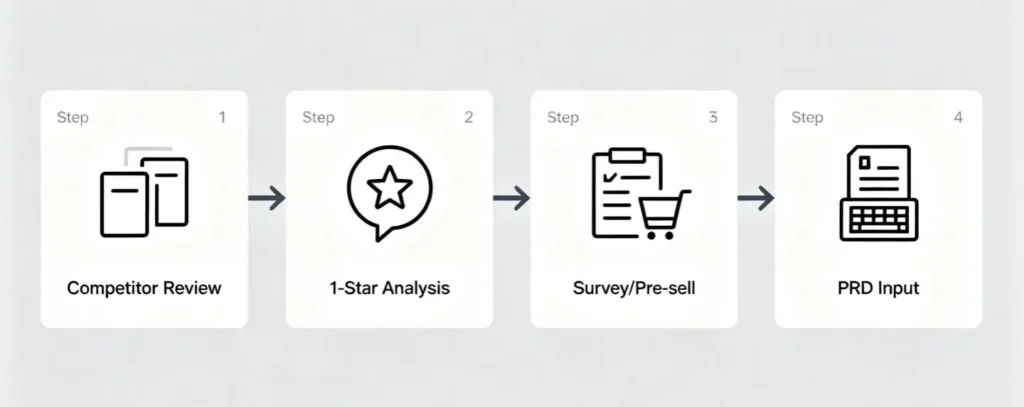
Before any design work begins, you need evidence. This is where a proper end-to-end product development partner adds value:
- Competitor analysis & user research – studying 1-star reviews to find real pain points
- Functional definition & PRD input – defining V1 scope
- Technology & risk assessment – evaluating feasibility before committing budget
💡 This single step prevents more hardware product development mistakes than any other. A proper validation phase can save six months of wasted effort.
Mistake 2: Making the First Version Too Complex
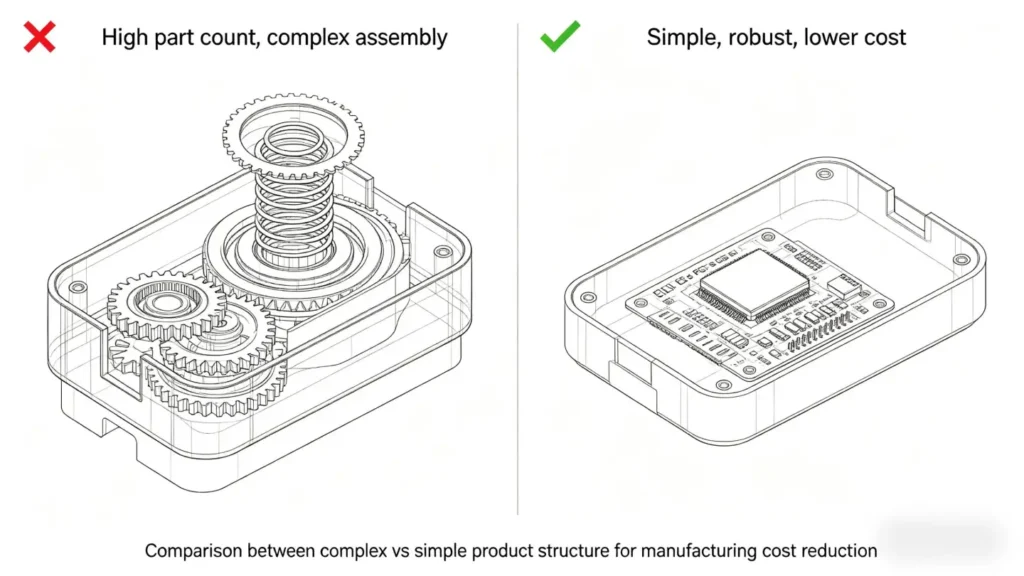
When founders think of their product, they often think “more features = more value.” This leads to complex assemblies and moving parts.
Why this is dangerous
Every additional part adds cost, failure risk, and tooling complexity.
How to avoid it — with Industrial Design & Mechanical Design
The best industrial design is not the most complex — it’s the simplest one that still delivers a great user experience.
A professional process enforces DFM (Design for Manufacturing) from day one:
- Concept sketches with feasibility reviews
- DFM (Design for Manufacturing) analysis before tooling
- Rapid prototyping to catch assembly issues early
✅ There’s a common saying: “The best structure is often the simplest structure.” Many successful V1 products prove this.
Mistake 3: Choosing a Design Partner Based Only on Price
Many founders start with: “How much is the design fee?” and negotiate the lowest price.
But product design is not a commodity. One of the most expensive hardware product development mistakes is optimizing for price instead of experience.
What you’re really paying for
- Mass production track record (not just concept renders)
- Understanding of DFM, tolerances, and assembly
- Knowledge of process limitations (injection molding, sheet metal, etc.)
How to avoid it — with an end-to-end NPI partner
Instead of the cheapest quote, look for a partner that offers end-to-end product developmentfrom POC to MP:
| Phase | Goal | Key Services |
|---|---|---|
| POC | Validate feasibility | Functional definition, tech assessment |
| EVT | Engineering validation | ID, MD, hardware, rapid prototypes |
| DVT | Design validation | DFM, mold design, system testing |
| PVT | Production validation | Pilot runs, quality system |
| MP | Mass production | Supply chain, quality monitoring |
⚠️ A beautiful design that cannot be molded will cost 3–5x more to fix later. Paying for end-to-end product development experience upfront is buying certainty.
Mistake 4: Not Considering Manufacturing Costs Early
Many designs look great in CAD — until they reach the factory.
The reality
Tooling costs double. Material choices drive scrap rates up. Assembly time kills margins.
How to avoid it — with Manufacturing Support
Cost is not checked at the end. It is designed in from day one using DFM (Design for Manufacturing) principles:
- Process evaluation before tooling starts
- Cost structure optimization (reduce part count, simplify assembly)
- Supplier coordination using an existing factory network
- Pilot run validation during PVT
📌 A well-known case: a robot vacuum startup collapsed because manufacturing costs destroyed its margin. That’s a classic hardware product development mistake — waiting too long to think about cost.
Mistake 5: Overlooking Intellectual Property Protection
Many hardware products have genuine innovations — but founders treat IP as an afterthought.
Common IP mistakes
- Disclosing the invention before filing (social media, trade shows)
- No prior art search
- Unclear IP ownership with suppliers
How to avoid it — integrated IP planning
IP should be part of your NPI process, not a surprise at the end:
- Design patent – protects unique ornamental features
- Utility patent – protects structural innovations
- FTO (Freedom to Operate) analysis – checks for infringement before launch
🛡️ A single well-placed utility patent can give you 6–12 months of market exclusivity.
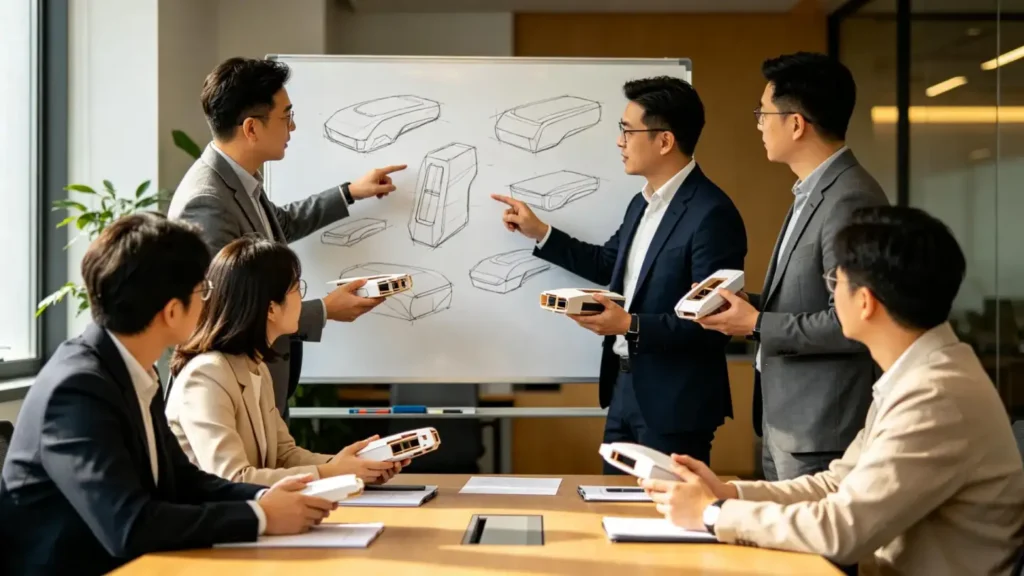
From Idea to Mass Production: A Systematic Process
A complete hardware journey includes:
Idea → Validation → Product Definition → ID → MD → Prototyping → Tooling → Pilot Run → MP → Launch
Each stage has its own traps. Most hardware product development mistakes happen at the transitions between stages.
The role of a product design company China like OPD Design is to navigate these stages with a structured NPI process — reducing risk, controlling cost, and compressing timelines.
We are not just a design studio. We are an end-to-end product development partner from POC to MP.
About OPD Design
OPD Design is a product design company China offering end-to-end product developmentservices. We specialize in smart hardware, consumer electronics, medical devices, and pet products.
Our track record:
- 50+ commercial projects delivered
- 300+ partner factory network
- Core capabilities: Product Strategy, Industrial Design, Mechanical Design, Hardware & Software Development, Manufacturing Support
From concept to mass production — one partner, one NPI process.
📧 Contact us through www.opd-design.com