

Smart hair comb
Client country: China
Services: industrial design|machine design|functional prototyping
Project Background
The hair care personal appliance market grows 27% annually, with searches for portable all-in-one tools surging 40%. Users face fragmented routines, no easy hair-fix solutions, and limited scenarios; existing tools have single functions. OPD targets this gap, launching the project to build a portable comb integrating brushing, mist nourishment, etc., to solve pain points and stand out.
Solution
Innovative Design of Smart Hair Comb
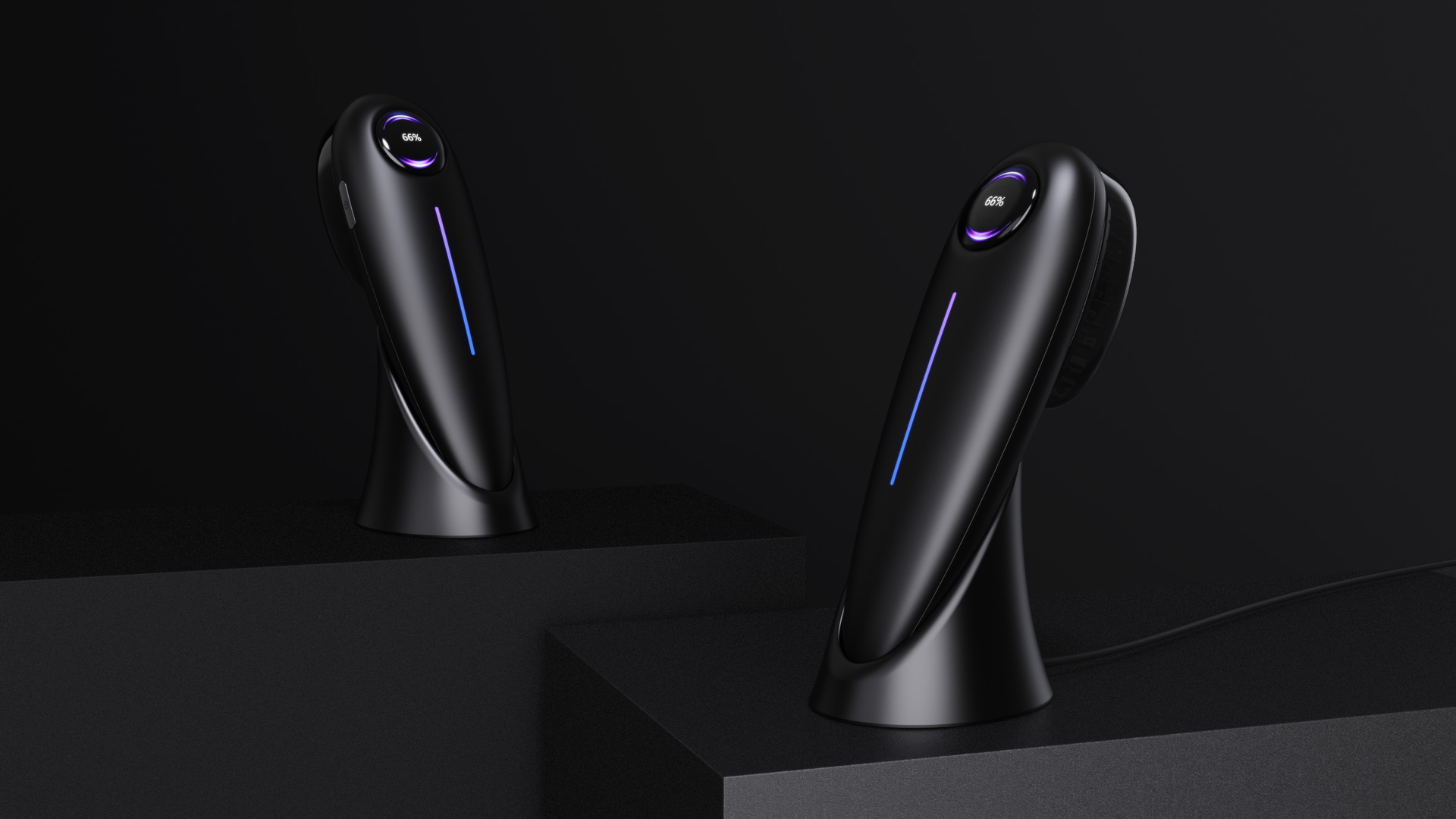
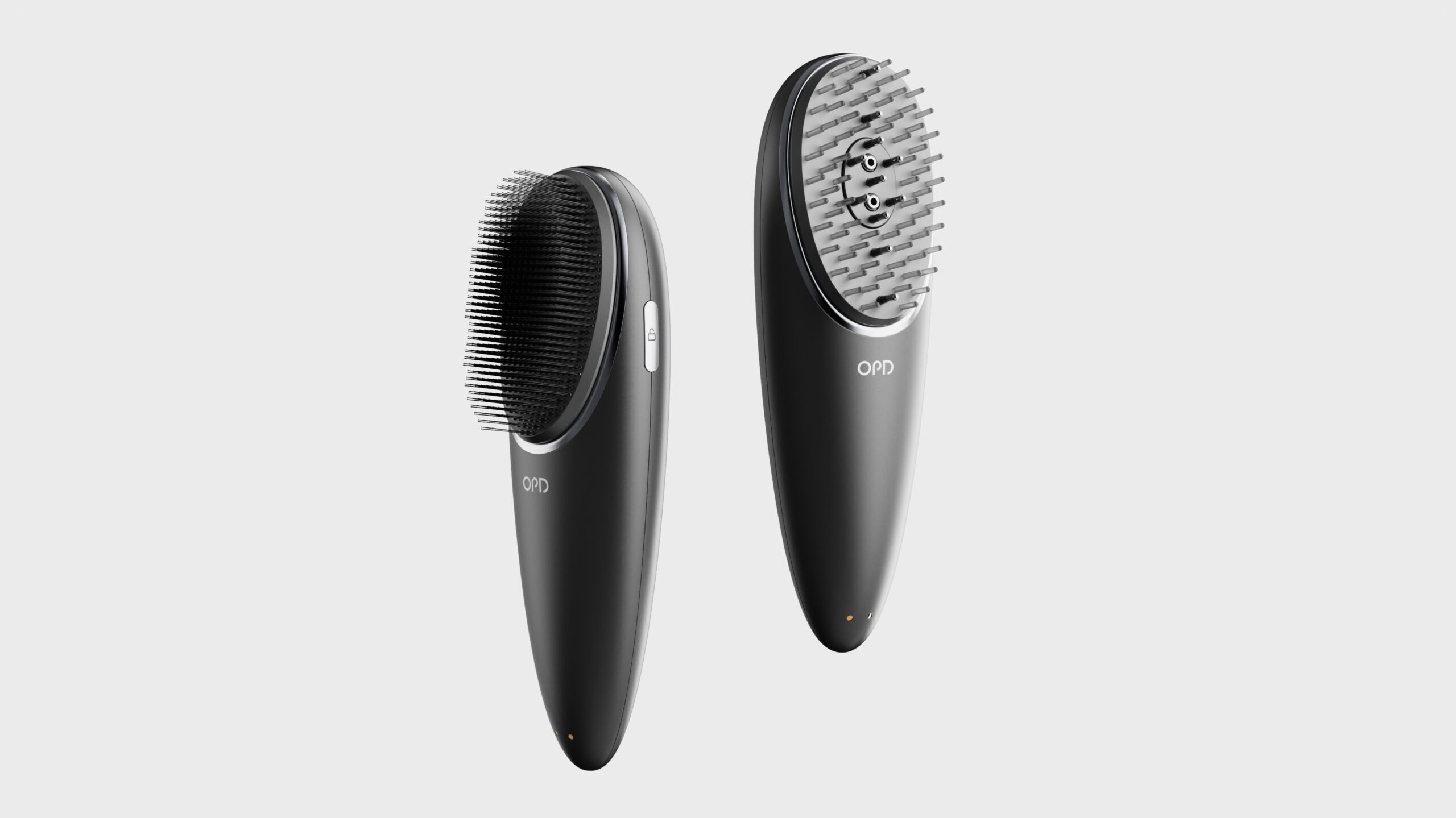
- A. Integrated Multi-Functional Design: The comb body integrates a micro essential oil tank and an atomization spray system, allowing the addition of hair care essential oil or water. It delivers uniform atomized nourishment synchronously during combing, paired with soft rubber round-tip comb teeth (gentle on the scalp, reducing hair pulling) to achieve “combing + nourishment” in one step, completely solving the pain points of fragmented traditional hair care routines and uneven essential oil application.
- B. Targeted Pain Point Resolution: Equipped with a high-concentration negative ion module, it neutralizes static electricity on hair in real time to quickly eliminate frizz. A low-power red light care zone is built in, which emits mild red light while the comb teeth massage the scalp, promoting local blood circulation and nutrient absorption. This dual-action design accurately addresses common issues such as static electricity, dry hair, and scalp tightness.
- C.Portable Scene Adaptation + Wireless Charging Upgrade: Adopting a lightweight ABS body (weight ≤ 150g), it features a contact-based wireless charging design with a dedicated charging base—no need for plugging or unplugging cables; simply place the comb on the base to charge, avoiding wear and tear of wired interfaces and liquid leakage risks. The base also serves as storage, keeping the comb dustproof and moisture-proof for neater home storage. With one-key control for all functions, the detachable and washable essential oil tank (prevents residue and bacterial growth) makes it suitable for fragmented scenarios such as home use, commuting, and business trips. It not only remedies the lack of portability in existing tools but also enhances the user experience with the safety, convenience, and durability of wireless charging.
Electric Hair Care Comb Design Process
Phase 1: Preliminary Research and Requirement Definition (1-2 Weeks)
- Market Research: Analyze competitors’ functions, forms, etc., to verify the feasibility of the differentiated positioning of “multi-functional integration + wireless charging”;
- User Research: Cover core scenario users through questionnaires and interviews, and clarify requirements such as uniformity of atomization, convenience of wireless charging, and body weight ≤ 150g;
- Requirement Transformation: Output the “User Requirement Specification” and convert core pain points into quantifiable indicators such as atomization particle size and charging efficiency;
- Technical Evaluation: Collaborate with the engineering team to verify the integration compatibility of modules such as contact-based wireless charging and avoid technical risks.
Phase 2: Concept Design and Scheme Selection (2-3 Weeks)
- Functional Layout: Draw multiple sets of structural sketches to solve core issues such as the matching of essential oil tank and atomization hole, and leakage prevention of wireless charging;
- Appearance Design: Design 3-5 sets of body sketches, optimizing grip curvature, one-key position and the form of storage and dust-proof charging base;
- Scheme Review: Conduct cross-team review from the dimensions of structure, experience and cost, and select 2 optimal schemes.
Phase 3: Detailed Design and Engineering Verification (3-4 Weeks)
- Structural Design: Output the overall 3D model through 3D modeling, clarify component dimensions and assembly relationships, and optimize the stability of the charging base;
- Material and Process: Select ABS body and soft rubber comb teeth, and clarify key processes such as sealing and anti-oxidation;
- Electronic Design: Collaborate to complete circuit design, determine wireless charging parameters and one-key control logic;
- Engineering Verification: Conduct simulation analysis on body strength and sealing performance to avoid assembly interference and leakage issues.
Phase 4: Prototype Production and Multi-Dimensional Testing (2-3 Weeks)
- Prototype Production: Produce 10-20 handboard prototypes with all core functions;
- Function Testing: Verify core performances such as atomization and negative ions, as well as charging efficiency and battery life to ensure compliance with indicators;
- Experience Testing: Recruit users for scenario-based testing and collect feedback on grip and operation;
- Reliability Testing: Complete environmental, durability and leakage prevention tests to verify product stability;
- Problem Iteration: Optimize the design and correct the prototype according to test problems.
Phase 5: Engineering Mass Production Preparation (3-4 Weeks)
- Mold Development: Develop mass production molds for core components and optimize precision through trial molding;
- Supply Chain Construction: Finalize suppliers and OEMs, and clarify supply and quality requirements;
- Quality Formulation: Output the “Mass Production Quality Control Standard” and clarify key inspection items and qualified thresholds;
- Process Planning: Formulate mass production assembly processes and clarify process specifications and production capacity planning.
Phase 6: Market Launch Verification and Iterative Optimization (Continuous)
- Small-Batch Launch: Complete trial production and 3C certification, and collect sales volume and user reviews after launch;
- Feedback Analysis: Collect feedback on wireless charging and function practicality through multiple channels and screen optimization points;
- Iterative Optimization: Formulate revised/next-generation design schemes based on feedback issues to enhance competitiveness.

Featured Projects
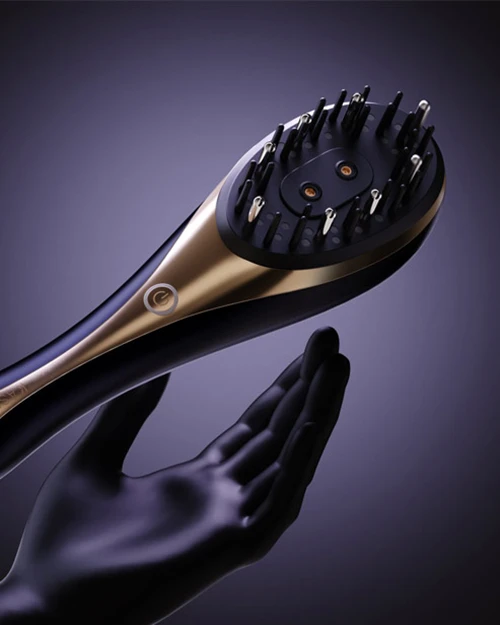
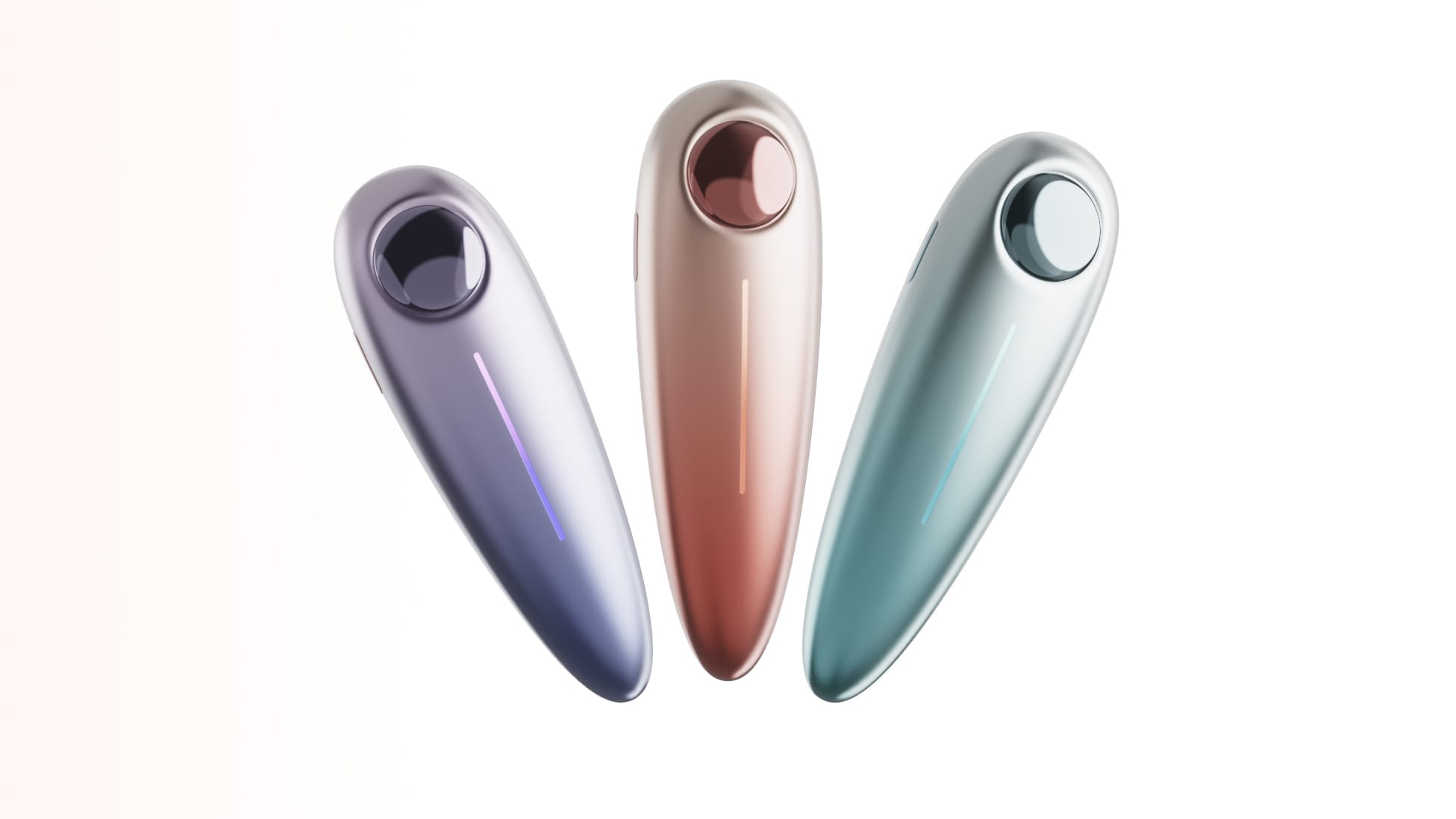
Smart Comb
A scalp care comb with a misting function, featuring an ergonomic design that combines style and practicality.
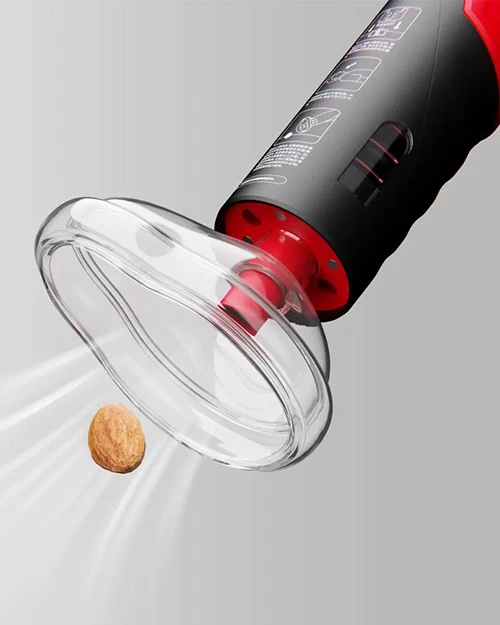
Anti-Choking Device
A home-use Heimlich maneuver device developed based on the principles of the Heimlich maneuver.
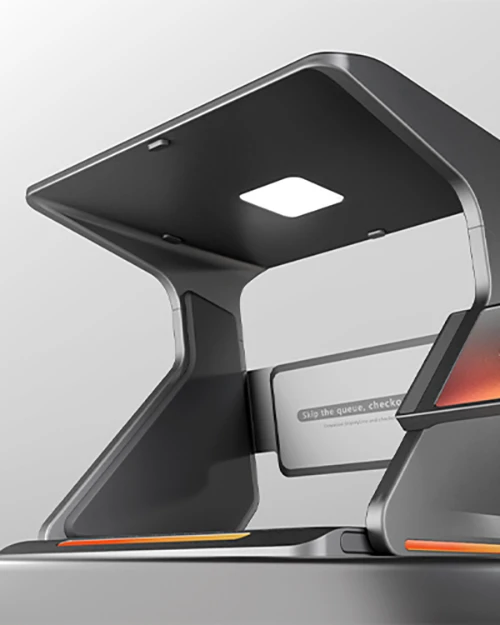
Self-Service Checkout System
These are the core devices supporting the "unmanned shopping" scenario and the key terminals for improving shopping efficiency.
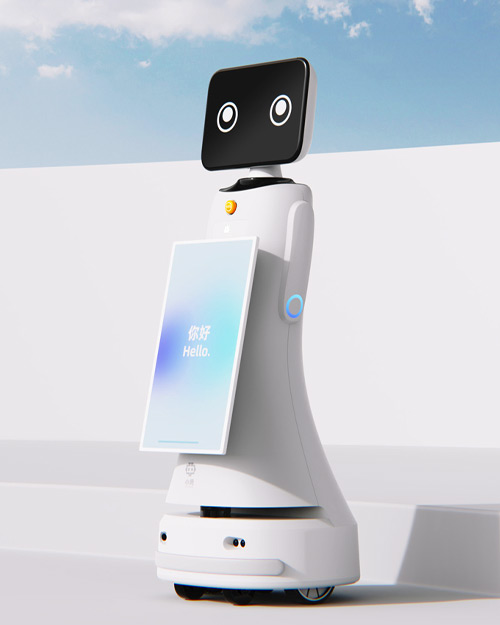
Care Robot
A care robot that integrates safety monitoring, daily assistance, and emergency response.
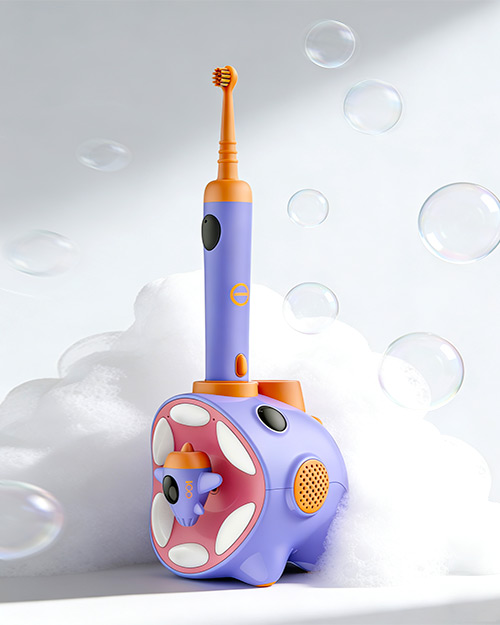
Kids Smart Toothbrush
Let children learn to brush their teeth independently in a fun way.
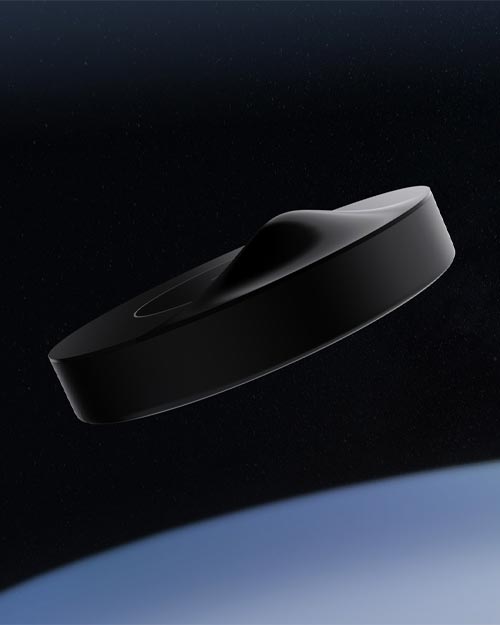
Sci-fi style electric ceramic stove
Spaceship-themed electric ceramic stove: a modern lifestyle.
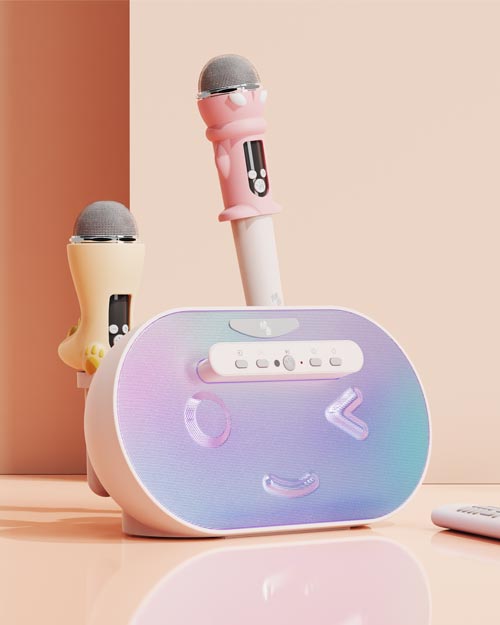
Children's KVT
Allowing children to learn through play and grow through learning.

AI interactive terminal
This project uses AI to recognize NFC chips, match IP-specific audio effects, enabling “one Baji, one exclusive interaction”