
Chapter 1: Sparking Innovation – Defining the Toaster Development Vision
The Challenge:
“Create a toaster that masters 7 global bread types, fits compact kitchens, and delivers café-quality results at home – all while consuming 40% less space than traditional models.”
Development Milestones:
- 3 functional prototypes built
- Core achievements:
- Adaptive heating zones: 82% uniformity (target: ≥90%)
- AI bread recognition: 89% accuracy (200+ bread types trained)
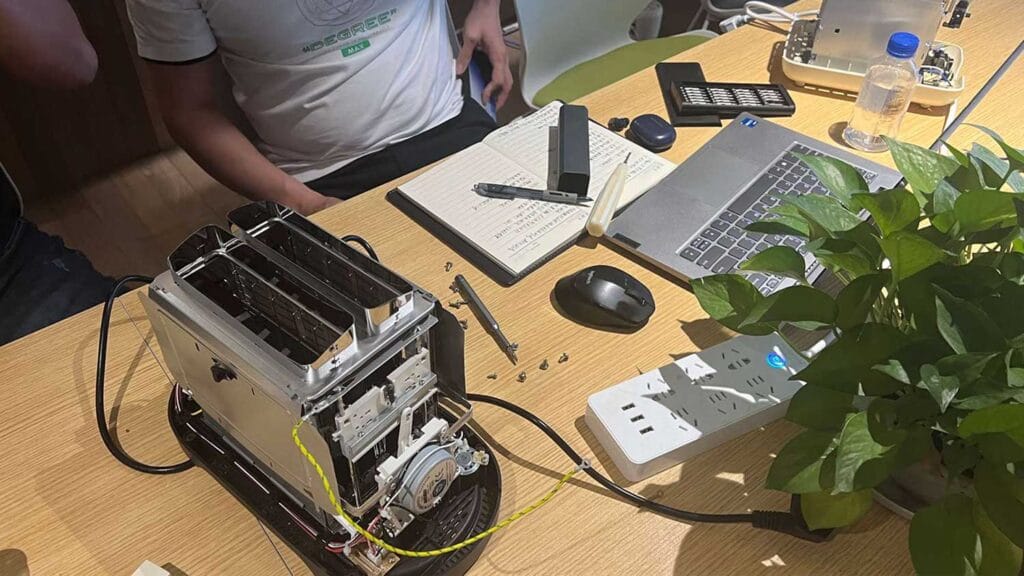
Chapter 2: Toaster Development in Action – Prototyping Breakthroughs
Current Technical Hurdles:
| Module | Solution | Development Focus |
|---|---|---|
| Heating System | Quad-Zone Infrared + Convection | Reduce edge from ±8℃ to ±3℃ |
| Lift Mechanism | Magnetic-Assisted Springs | Achieve ±5%consistency |
| Safety Features | Multi-Layer Protection | Integrate arc-fault detection |
Latest Development Data:
- Surface temperature: 68°C under stress (target: ≤55°C)
- Durability: Survived 8,000/15,000 lift cycles
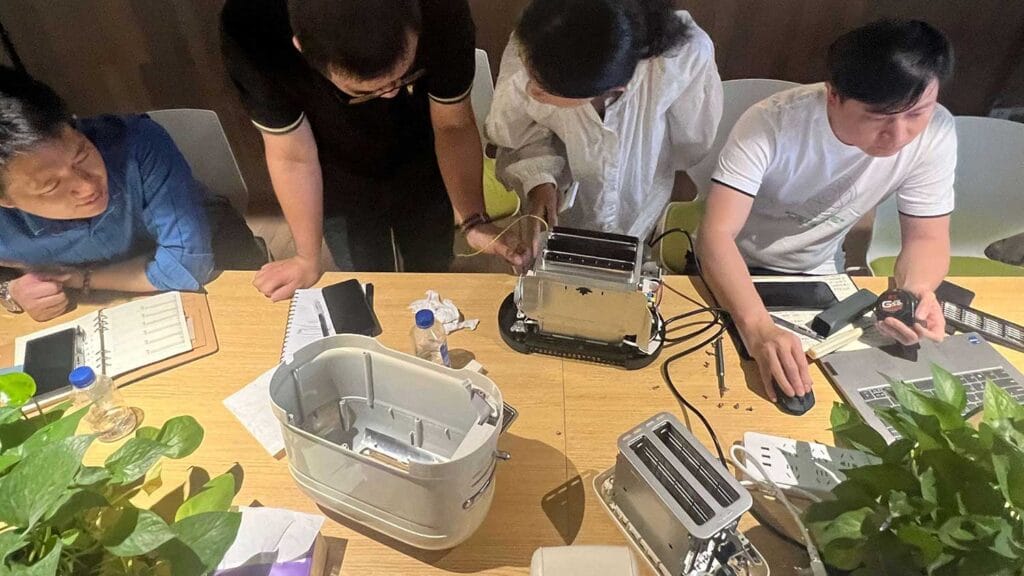
Chapter 3: Development Labs – Rigorous Testing Protocols
3.1 Thermal Engineering – The Heart of Toaster Development
- Heat Distribution:
- Problem: 25℃ between center and edges
- Solution: Testing hexagonal airflow channels (inspired by beehives)
- Energy Efficiency:
- Current standby power: 0.8W → Targeting 0.5W via dynamic clock gating
3.2 Mechanical Innovation in Toaster Development
- Noise Reduction:
- Baseline: 48dB → Goal: ≤42dB using automotive-grade dampers
- Lifetime Optimization:
- Spring fatigue detected at 8k cycles → Testing titanium alloy alternatives
3.3 Smart Tech Integration – The Brain of Toaster Development
- Bread Recognition AI:
- Training dataset expanded to 500 global bread varieties
- Current false-positive rate: 11% → Target: ≤3%
- Voltage Adaptability:
- 110V/220V auto-switching achieved with 93% efficiency
Chapter 4: Toaster Development Crossroads – Balancing Act
Critical Trade-Offs:
- Aesthetics vs. Function:
- Streamlined design caused 15℃ internal temp rise → Testing stealth cooling vents
- Cost vs. Performance:
- Heating element options:
- $8.2 Japanese alloy vs. $5.7 nano-coated steel (lifespan TBD)
Chapter 5: Development Metrics – Progress Dashboard
| Metric | Prototype v1 | Current | Target |
|---|---|---|---|
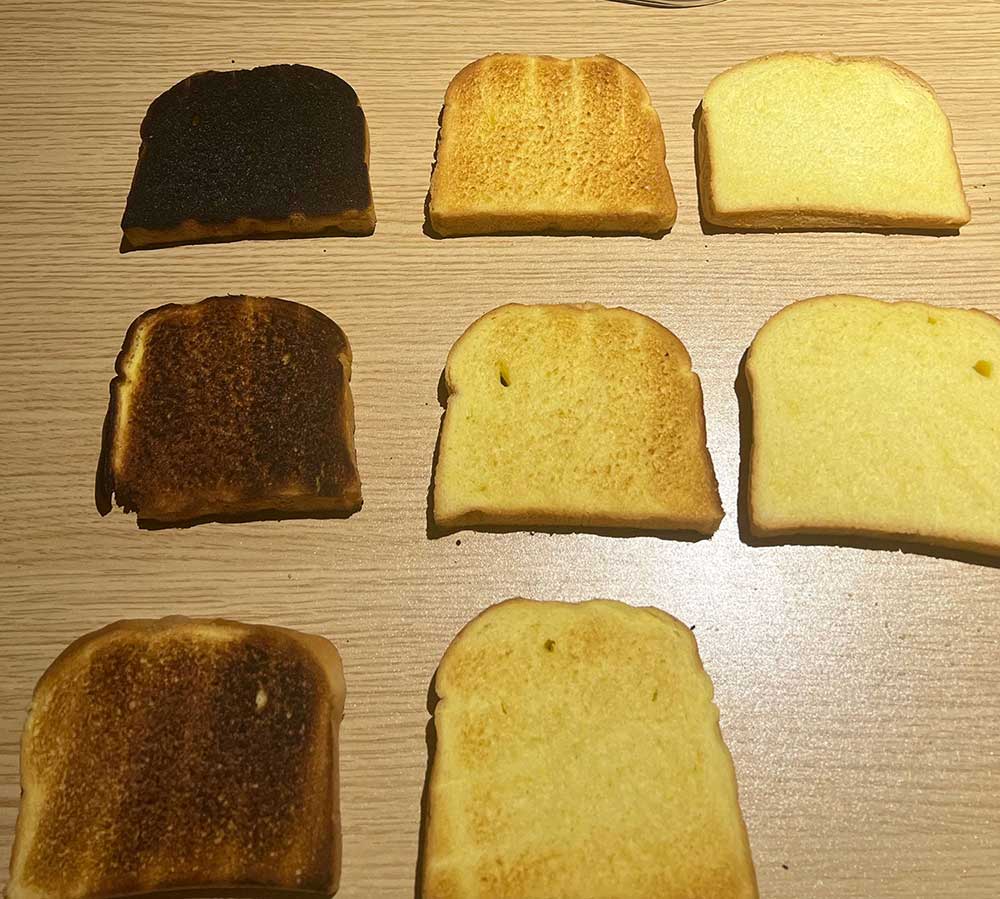
| Browning Consistency | 65% | 82% | ≥90% |
| Preheat Speed | 110s | 75s | ≤60s |
| Error Rate | 38% | 15% | ≤5% |
| Energy Star Rating | – | 0.73 | ≥0.85 |
Chapter 6: The Road Ahead in Toaster Development
Next-Phase Development Goals:
- Global Compliance Testing:
- Voltage fluctuation (85V-264V)
- EU Food Contact Certification (EC 1935/2004)
- User Safety Innovations:
- Child-lock mechanism validation
- Anti-fingerprint coating durability
Epilogue: Redefining Breakfast Through Toaster Development
This toaster’s development journey – 137 tests, 23 iterations, and counting – proves innovation thrives at the intersection of engineering and everyday life. When the latest prototype perfectly toasted sourdough at 3 AM during a 48-hour marathon test, we knew: The kitchen of tomorrow is being forged in today’s labs.