
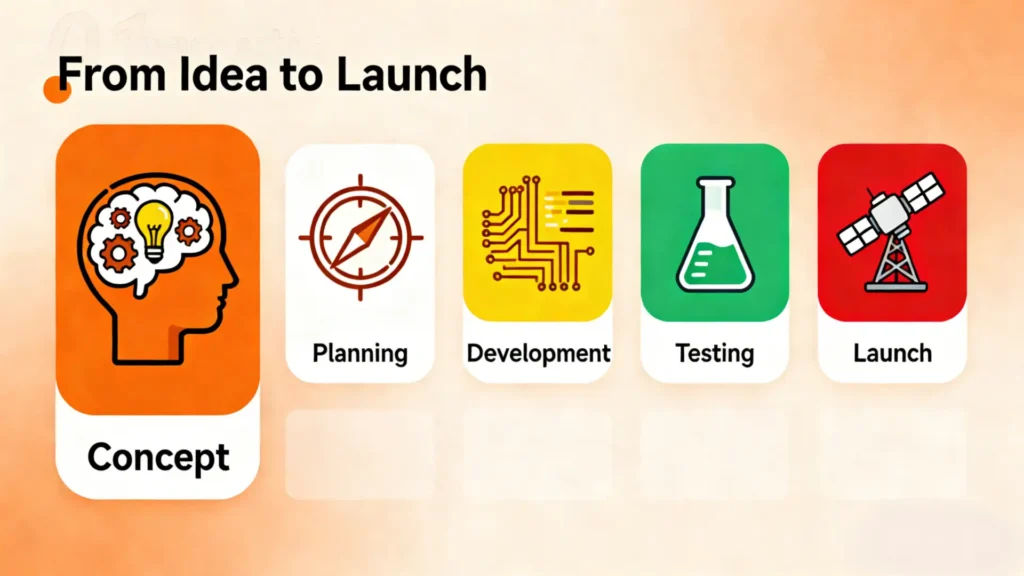
Turning your groundbreaking idea into a market-ready product is the defining journey of a startup. Yet, without a clear map, this journey is fraught with wasted resources and misaligned efforts. A robust product development strategy is that essential map—a tactical plan that guides your startup from concept to launch, ensuring every limited resource is focused on creating real value. This guide breaks down how to build one.
What is a Product Development Strategy (And Why It’s Not Just a Process)
Many founders confuse strategy with process. Here’s the difference: A product development process is the operational “how-to”—the steps for designing, building, and testing. A product development strategy, however, is the tactical “why and what for.” It’s the overarching plan that aligns your product build with market opportunities, customer needs, and core business goals.
For a resource-constrained startup, this strategy is your compass. It prevents scattered efforts, mitigates risk by validating assumptions early, and accelerates learning. It ensures you’re not just building a product, but building the right product for the right people.
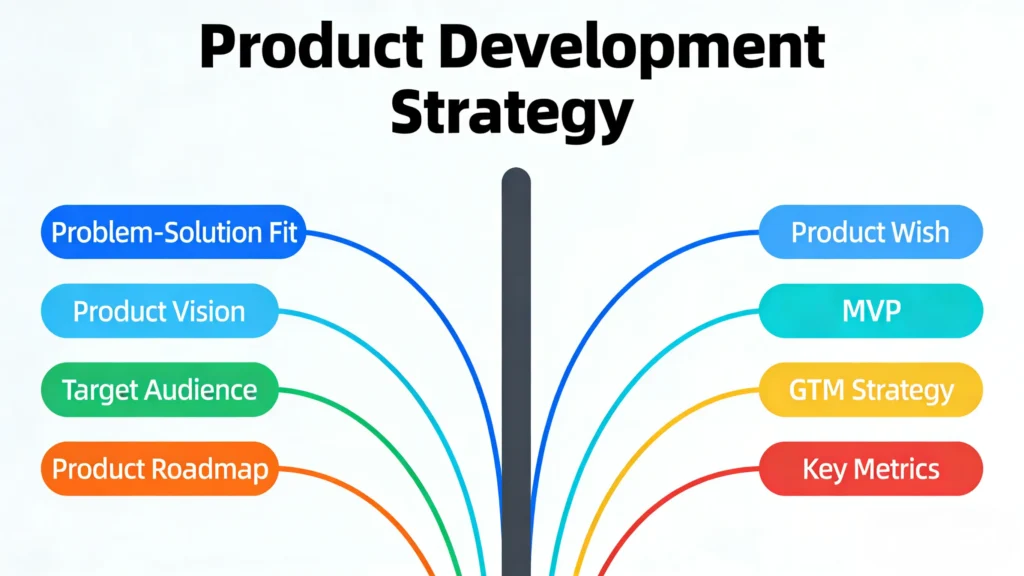
Core Components of a Startup Product Development Strategy
A comprehensive strategy is built on several interconnected pillars.
1. Validated Problem-Solution Fit
Before writing a single line of code, you must confirm you’re solving a real, painful problem for a specific audience. This requires:
- Market Research: Analyze competitors, industry trends, and market size.
- Direct User Research: Conduct customer interviews and surveys to get firsthand insight into pain points.
2. Crystal-Clear Product Vision & Goals
Define your product vision in 2-3 compelling sentences. What world does it create? Pair this with SMART goals (Specific, Measurable, Achievable, Relevant, Time-bound) to give your team a tangible target.
3. Hyper-Defined Target Audience
Go beyond demographics. Develop detailed user personas. Understand their behaviors, motivations, and daily challenges. This empathy is crucial for every subsequent product decision.
4. A Laser-Focused Minimum Viable Product (MVP)
Your MVP is your most powerful learning tool. It is not a minimal product, but the smallest versionthat tests your core value proposition. Rule: One core feature solving one main problem. Its purpose is to validate fundamental assumptions with minimal effort.
5. A Flexible Product Roadmap
A product roadmap visualizes your strategic priorities over time. For startups, it should be a flexible guide—not a rigid contract—focusing on delivering essential customer value and adapting to feedback.
6. Integrated Go-to-Market (GTM) Strategy
Your product’s launch must be woven into the development strategy from day one. Consider early:
- Positioning & Messaging: How will you describe your product’s unique value?
- Pricing & Channels: How will you reach customers and make money?
- Early Marketing: How will you build anticipation?
7. Key Success Metrics
Define what success looks like with clear metrics. Common startup KPIs include Customer Acquisition Cost (CAC), Monthly Recurring Revenue (MRR), and User Retention Rate. These metrics keep the team aligned and accountable.
Essential Frameworks to Shape Your Strategy
Use these proven models to make smarter strategic decisions:
- Business Model Canvas: Visualizes how your startup creates, delivers, and captures value on a single page.
- Value Proposition Canvas: Deeply maps your customer’s pains and gains against your product’s features and benefits.
- Impact vs. Effort Matrix: Prioritizes features by plotting them based on potential business value and required development effort. Focus on high-impact, low-effort wins first.
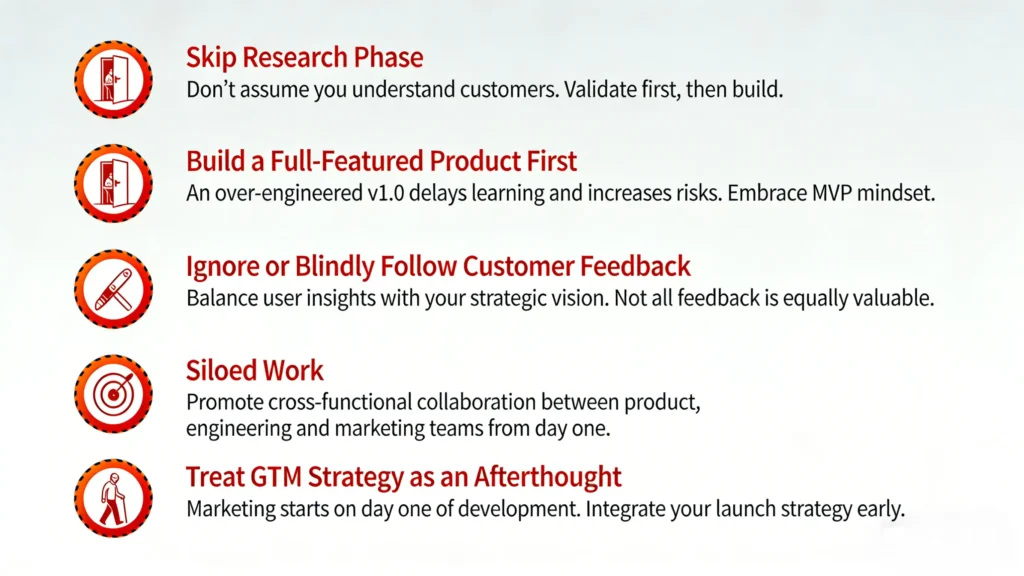
Common Pitfalls to Avoid in Your Product Development Strategy
- Skipping the Research Phase: Don’t assume you know the customer. Validate, then build.
- Building a Feature-Rich Product First: An overbuilt v1.0 delays learning and increases risk. Embrace the MVP mindset.
- Ignoring or Blindly Following Customer Feedback: Balance user insights with your strategic vision. Not all feedback is equally valuable.
- Working in Silos: Foster cross-functional collaboration between product, engineering, and marketing from the start.
- Treating GTM as an Afterthought: Marketing begins the day development does. Integrate your launch strategy early.

From Blueprint to Reality
A product development strategy transforms your vision from a abstract idea into an actionable plan. It is the framework that enables disciplined experimentation, focused execution, and adaptive learning—the very things a startup needs to survive and thrive.
Remember, the goal is not to create a perfect, unchanging document, but to establish a clear direction that evolves with real-world evidence. Start by defining your problem-solution fit, build your MVP, listen to your users, and iterate relentlessly. Your strategy is the blueprint; your execution builds the future.
Ready to turn your product vision into a actionable strategy? Bookmark this guide and start mapping your path to market today.