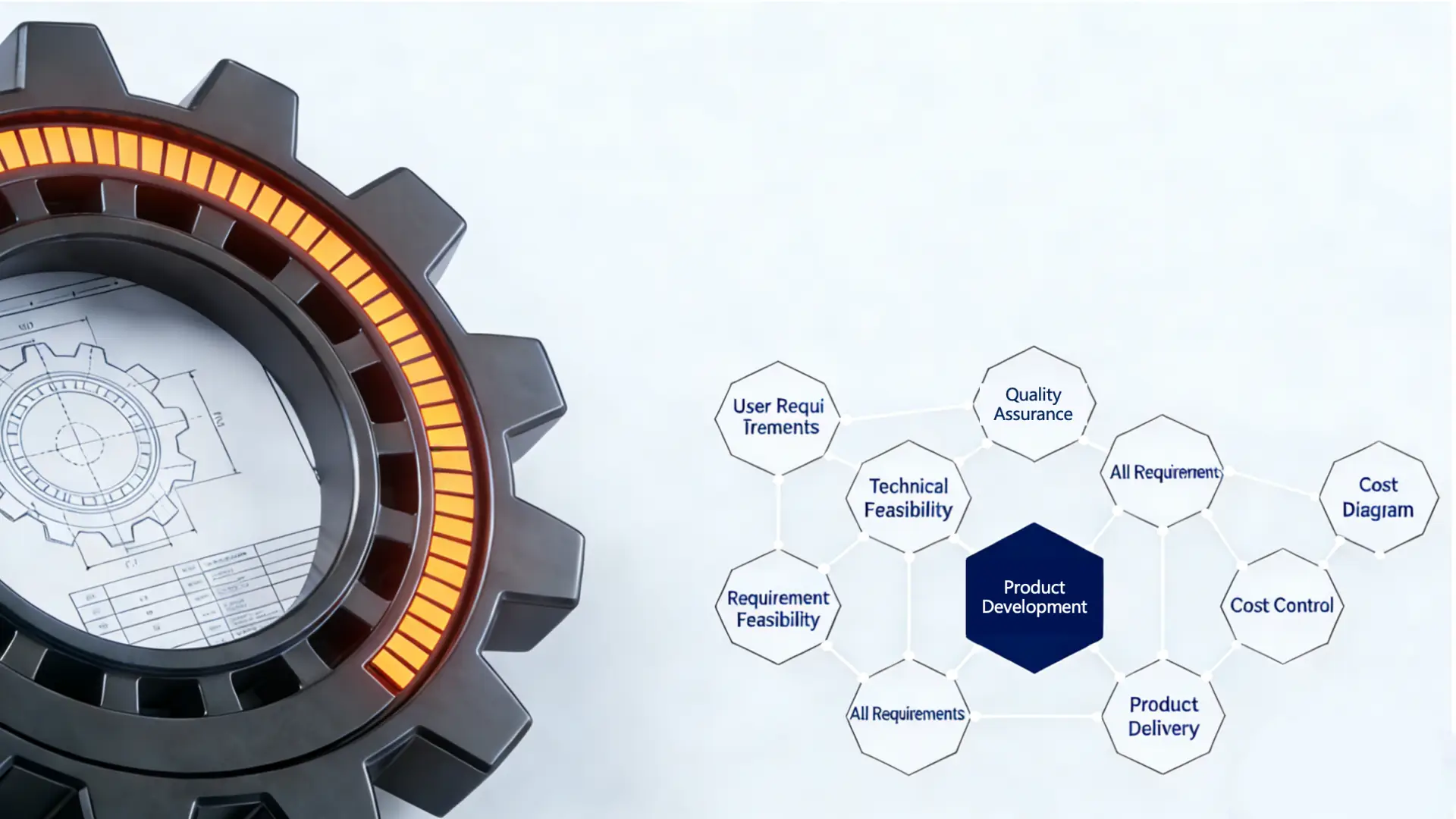


Every successful product begins with a clear direction and informed decisions. Without a well-defined approach, even the best ideas can struggle to meet user needs or achieve market success. By implementing product strategy services early in the development process, businesses can align vision with actionable steps, reduce uncertainty, and make decisions based on data, research, and market insight.
Early planning helps connect vision with execution while supporting scalability and usability. Businesses that invest in strategic thinking are better positioned to deliver products that are not only functional but also relevant, competitive, and ready for long-term growth. Structured strategy ensures that every design, engineering, and business decision contributes to overall success, reduces costly missteps, and provides a roadmap for stakeholders and teams alike.
What Product Strategy Services Include
Product strategy services help define the purpose, direction, and scope of a product before design and development begin. These services guide teams in understanding what to build, who the product is for, and how it fits within the competitive landscape.
A well-structured strategy ensures alignment across teams and stakeholders while reducing confusion during execution. Decisions are made based on evidence rather than assumptions, improving confidence and efficiency. This approach enables businesses to build products that resonate with users and are better positioned for market adoption.
By clearly defining goals and priorities, product strategy services help identify opportunities and challenges early, making development more predictable and outcomes-focused.
Aligning Business Goals with Product Vision
Products should always support larger business objectives. Product strategy translates high-level goals into actionable product vision, creating a roadmap for design, engineering, and marketing teams. This alignment ensures that each feature or improvement directly supports the company’s strategic objectives.
When business and product goals are in sync, teams can operate with clarity, reduce redundancy, and maintain focus throughout the development lifecycle. This alignment also fosters stronger communication between leadership and development teams, keeping the product on track while maintaining market relevance.
Creating Strategic Alignment
- Clearly defining measurable business objectives
- Translating objectives into achievable product outcomes
- Establishing shared success criteria across teams
- Aligning all stakeholders around a unified vision and direction
Strategic alignment also allows teams to anticipate potential conflicts and resolve them early, creating a smoother development process.
Market Research and User Understanding
Understanding target users and competitive dynamics is essential for creating market-ready products. Product strategy relies on thorough market research to uncover insights, validate assumptions, and ensure products meet real user needs.
These insights help teams make informed decisions and design solutions that solve actual problems. Research-driven strategies increase product-market fit and reduce the risk of developing features that may go unused.
Research That Shapes Strategy
- Market and competitor analysis to identify opportunities and gaps
- User interviews, surveys, and behavioral observations
- Development of detailed personas and use-case scenarios
- Mapping user pain points to product features
By leveraging these insights, teams can prioritize features that deliver real value, ensuring the product resonates with users and meets business objectives.
Turning Insights into Product Requirements
Once research and analysis are complete, insights are converted into actionable product requirements. These requirements outline the scope, functionality, and priorities, serving as a blueprint for design and engineering teams.
Clear and well-documented requirements reduce ambiguity, improve collaboration, and minimize rework. Teams understand exactly what needs to be built, why, and how it will deliver value, ensuring development remains aligned with strategic goals.
In addition, structured requirements help teams anticipate challenges and allocate resources efficiently, resulting in faster execution and higher-quality output.
Product Roadmapping and Strategic Planning
A product roadmap provides clarity, direction, and structure while allowing flexibility to adapt to new information. It highlights priorities, timelines, and milestones, offering teams a visual guide for product development.
Strategic planning through roadmaps ensures resources are used effectively and development remains aligned with long-term goals. It also provides stakeholders with transparency and confidence in the product’s direction.
Benefits of Strategic Roadmapping
- Clear vision and structure for all teams
- Improved planning and resource allocation
- Enhanced stakeholder communication and buy-in
- Flexibility to iterate and respond to market feedback
Roadmaps bridge the gap between strategy and execution, keeping teams focused on delivering value at every stage.
Connecting Strategy with Design and Engineering
Product strategy connects high-level goals with practical execution. It ensures that design and engineering efforts are aligned with the overall vision, reducing the risk of misalignment and rework.
When strategy informs every technical and design decision, teams create a cohesive product experience that resonates with users and achieves business objectives. This connection ensures that every component, feature, and interaction serves a clear purpose within the overall product framework.
Role of Product Strategy Consulting
As products become more complex, expert guidance plays a critical role in shaping successful outcomes. Product strategy consulting brings structure, industry experience, and objective insights that help refine direction and keep teams focused on delivering market-ready solutions. Many organizations partner with the best product design companies to validate ideas, align stakeholders, and strengthen planning while maintaining development momentum.
This collaborative approach ensures products stay aligned with market trends, business objectives, and user needs. By combining strategic consulting with design expertise, teams can make confident decisions, reduce risk, and move efficiently from concept to execution.
Supporting Innovation Through Strategy
Innovation thrives when guided by strategy. Product strategy services allow teams to explore creative solutions while maintaining feasibility and ensuring that products meet real user needs.
This approach encourages teams to experiment responsibly, validate ideas early, and ensure that innovations lead to practical, user-centered solutions that can be successfully brought to market.
Managing Cross-Functional Collaboration
Developing a product requires collaboration between design, engineering, marketing, and business teams. Product strategy provides a shared framework that improves communication, aligns expectations, and fosters teamwork.
Clear strategy reduces friction and ensures that everyone understands their roles and responsibilities, resulting in more efficient and cohesive development.
Collaboration Benefits
- Stronger alignment across functional teams
- Faster and clearer decision-making
- Defined responsibilities and ownership
- Consistent product vision throughout the development lifecycle
Adapting Strategy Across Product Stages
Products evolve from concept to launch and beyond. Strategy services adapt to each stage of development, from exploration and validation to refinement and scaling.
This adaptability ensures that strategy remains relevant as products mature and markets change. Teams can adjust priorities, incorporate feedback, and respond to emerging opportunities without losing sight of overall objectives.
Measuring Strategic Progress
Defining measurable success metrics is an integral part of product strategy. These metrics help teams track performance, make data-driven decisions, and adjust direction as needed.
Tracking progress ensures that the strategy is actionable and outcome-focused, helping teams deliver consistent value while maintaining alignment with business goals.
Long-Term Value of Product Strategy Services
Investing in a strong product strategy delivers long-term benefits beyond initial launch. It supports consistent execution, scalability, and adaptability as products grow.
Businesses that adopt strategic planning are better prepared to expand into new markets, introduce additional features, and respond to evolving customer expectations. A strong strategy ensures products remain relevant and successful over time.
Conclusion
Product strategy services are essential for turning ideas into market-ready products. By combining research, planning, and execution, businesses can move forward with confidence and clarity.A structured approach enhances decision-making, cross-functional collaboration, and long-term success. For companies seeking guidance to strengthen product vision and execution, expert advice can make a meaningful difference. To explore how strategic planning can support your goals, feel free to contact us today and start your journey toward market-ready success.
FAQs
1.What is product strategy?
Product strategy defines the direction and approach for building products that meet user needs and business objectives.
2. Why are product strategy services important?
They provide clarity, alignment, and structure, helping teams build products that are ready for the market.
3. How does product strategy support teams?
It aligns stakeholders, guides decision-making, and improves collaboration across teams.
4. What outcomes can product strategy deliver?
Clear direction, better decisions, and products positioned for long-term success.
5.When should product strategy be applied?
Strategy is valuable at every stage, from early ideation through scaling and growth.